



Men’s Health Check with 48 biomarkers
The Men’s Health Check is a comprehensive health check designed for men who want a clearer understanding of their health through blood testing. The test includes 48 biomarkers covering areas such as blood count, blood glucose, blood lipids, liver and kidney function, thyroid function, vitamins, minerals, iron status, testosterone and hs-CRP.
The health check can provide information about abnormal blood test results and potential risk factors that may need further follow-up. It is suitable both for those who want to monitor their health over time and for those experiencing symptoms such as fatigue, low energy, reduced stamina, lack of motivation, difficulty concentrating or poor recovery.
Why have a health check?
Several risk factors for conditions such as cardiovascular disease and type 2 diabetes can develop over a long period without causing noticeable symptoms. By monitoring important blood values, you have a better opportunity to identify changes and abnormal results that may need to be followed up.
The health check may also be relevant if you want to investigate possible causes of symptoms or gain a broader understanding of how lifestyle, age and other individual factors may affect your health.
What is included in the Men’s Health Check?
The Men’s Health Check includes 48 biomarkers that together provide a broad overview of several important areas of the body. The analysis includes both general health markers and markers that are particularly relevant to men, including testosterone, blood lipids, blood glucose, liver and kidney values, and the inflammatory marker hs-CRP.
Doctor’s report included
All test results are reviewed by a licensed doctor. Once all your results are available, you complete a health questionnaire and request your doctor’s report. The doctor then makes a medical assessment of your results in relation to the laboratory’s reference ranges and the information you have provided.
The doctor’s report includes a summary of your results, information about any abnormal values and guidance on whether anything may need further follow-up.
Biological age included
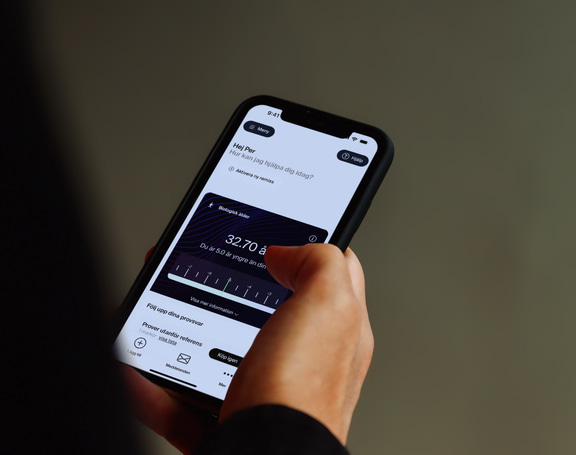
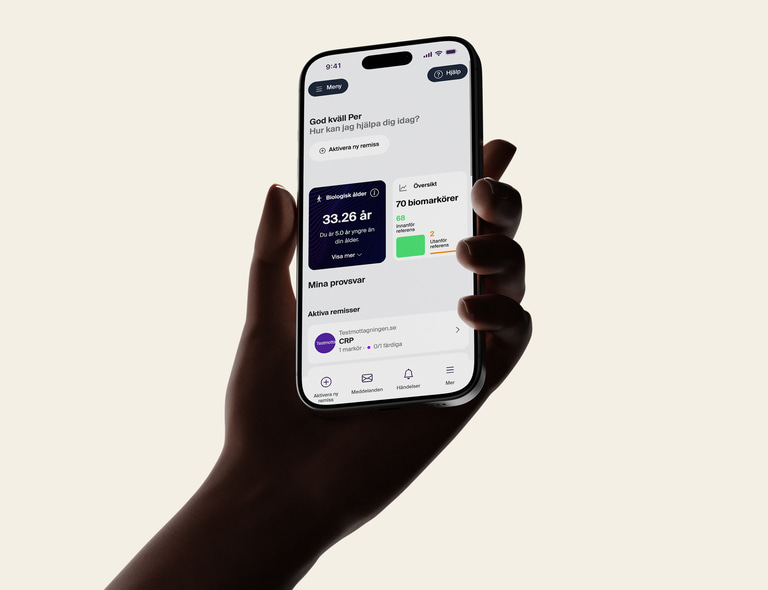
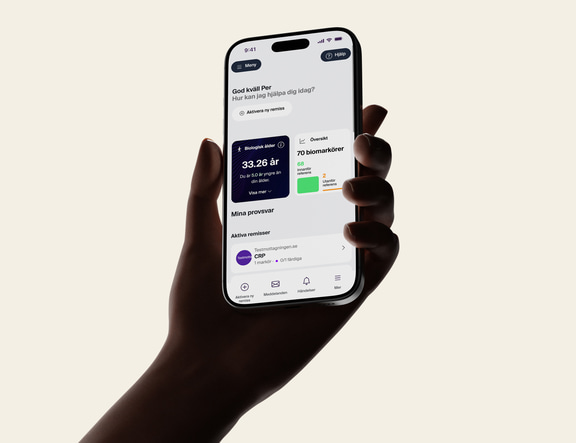
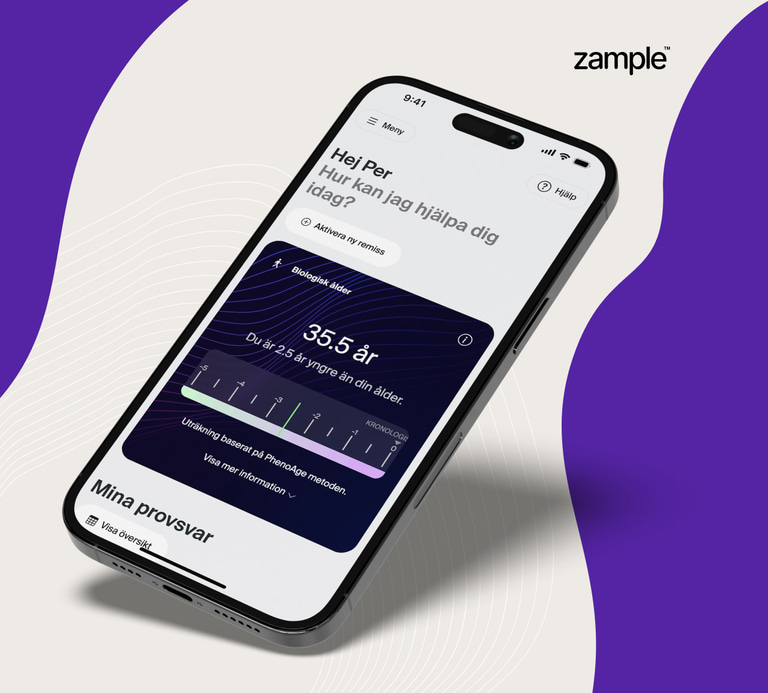
The health check also includes an assessment of your biological age. This is an estimate of how your body is functioning in relation to your chronological age, based on several biomarkers that may be influenced by factors such as lifestyle, metabolism and organ function.
The result can add another dimension to your health check and be used to monitor how your health develops over time.
What can the Men’s Health Check show?
The health check can provide information about several important aspects of your health. Risk factors for cardiovascular disease, stroke and type 2 diabetes may sometimes be present without causing noticeable symptoms. By analysing blood lipids, blood glucose, hs-CRP, and liver and kidney values, you gain a clearer understanding of whether any results may need further follow-up.
The analysis can also provide information about possible vitamin or mineral deficiencies, iron status, thyroid function and testosterone levels. An abnormal result does not necessarily mean that you have a medical condition, but it may indicate that further assessment or follow-up is appropriate.
What is analysed in the Men’s Health Check?
The samples are analysed by an accredited laboratory and subsequently reviewed by a licensed doctor as part of your doctor’s report.
Blood count
A full blood count provides an overview of the different types of blood cells and may show signs of anaemia, infection or other abnormalities in the blood.
Blood glucose and diabetes risk
Blood glucose markers provide information about the body’s glucose metabolism and may show signs of elevated blood glucose, prediabetes or type 2 diabetes. Elevated blood glucose levels can be present for a long time without causing noticeable symptoms, which makes them important to identify and monitor.
Heart and cardiovascular health
Blood lipids are analysed because elevated levels are an important risk factor for cardiovascular disease, including heart attack and stroke. Abnormal values may need to be followed up through lifestyle changes or further medical assessment.
Testosterone
Testosterone is a hormone associated with sexual function, muscle mass and bone health. An abnormal testosterone result should always be interpreted in relation to symptoms, age, the time of sampling and other test results.
Thyroid function
Thyroid markers are used to assess thyroid function. Abnormal results may sometimes be associated with symptoms such as fatigue, palpitations, sensitivity to cold, low mood, changes in weight or reduced stamina.
Liver function
Liver markers provide information about the liver and can show whether liver values fall outside the reference range. Elevated liver values may have several causes, including alcohol consumption, excess weight, medication, infection or other factors, and must be interpreted in context.
Kidney function
Kidney function is assessed using markers that provide information about how effectively the kidneys filter and regulate substances in the blood. Abnormal kidney values may require further follow-up.
Vitamins and minerals
The analysis of vitamins and minerals can show whether levels fall below or above the reference range. Deficiencies in certain vitamins and minerals may affect energy levels, concentration, immune function and muscle function.
Iron status
Iron and ferritin are analysed to provide information about the body’s iron status. Iron is needed for oxygen transport, energy metabolism and blood formation. Low values may be consistent with iron deficiency, while elevated values may require further assessment.
Inflammation
hs-CRP is analysed as a high-sensitivity inflammatory marker and can provide information about low-grade inflammation in the body. Elevated levels may occur with infection, inflammation and other conditions. Persistently elevated levels may also be associated with an increased risk of cardiovascular disease.
The result must always be assessed together with symptoms and other test results.
Muscles and tissues
Creatine kinase, CK, and lactate dehydrogenase, LDH, are analysed as markers that may be affected by strain or damage involving muscles and other tissues. The results may be influenced by intense physical activity, injury, inflammation or other conditions.
Strenuous physical activity can temporarily increase CK in particular. You should therefore avoid intense exercise before your blood test and always follow the preparation instructions provided for the health check.
Health check for fatigue, low energy and reduced stamina
Fatigue, low energy, reduced stamina, lack of motivation or reduced sex drive, difficulty concentrating and poor recovery can have many different causes. These may include lack of sleep, stress, vitamin or mineral deficiencies, thyroid dysfunction, abnormal testosterone levels or elevated blood glucose.
By analysing several relevant biomarkers at the same time, the Men’s Health Check can provide a broader overview of possible contributing factors. The test does not replace a medical investigation if you have clear or severe symptoms, but it can be a first step towards gaining a better understanding of your blood values.
How often should you have a health check?
How often a health check may be relevant depends on factors such as age, lifestyle, previous test results, family history, symptoms and individual risk factors. Some people choose to monitor their values regularly to identify changes over time, while others have a health check when experiencing symptoms or as part of a preventive approach to health.
If you have abnormal test results, clear symptoms or an increased risk of certain conditions, more frequent follow-up or contact with healthcare services may be appropriate.
How the blood test works
Once you have ordered the Men’s Health Check, you activate your referral and choose a clinic. You can then provide your samples in accordance with the instructions that apply to the health check.
Once the laboratory has analysed the samples, your results become available digitally together with the laboratory’s reference ranges. When all results are available, you can complete the health questionnaire and request your doctor’s report.
Before your blood test and receiving your results
Always read the information under “Before your blood test or examination” before providing your sample. This explains what applies regarding fasting, the time of sampling, medication and supplements.
Results are often available within a few days of sampling, although turnaround times may vary depending on the laboratory, analysis and sample collection location. You will usually receive your results within 1–5 working days.
What happens if a test result is abnormal?
If a test result falls outside the reference range, this will be shown in your digital results view in our test results service. In the doctor’s report, a licensed doctor makes a medical assessment of the results and explains whether any value may need further follow-up.
If a result is significantly abnormal or considered to require urgent attention, a doctor may also contact you by telephone to explain the result and provide guidance on the next steps.
Where necessary, you may be advised to contact healthcare services for further assessment or investigation.