
MRI of the pancreas – examination of the pancreas and pancreatic duct
MRI of the pancreas or MR pancreas, is a detailed magnetic resonance imaging examination of the pancreas and nearby structures. The examination can be used to investigate changes in the pancreas, pancreatic duct and bile ducts, for example in the case of long-term problems, abnormal test results or findings that have previously been detected with ultrasound or computed tomography.
With MRI, the doctor can assess, among other things, inflammation, cysts, dilated or narrowed ducts and suspected tumor changes. The examination does not use ionizing radiation and provides detailed images of both the pancreas and surrounding tissues.
Can MRI of the pancreas detect cancer?
MRI of the pancreas can be part of the investigation for suspected pancreatic cancer, also called pancreatic cancer. The examination can show suspicious changes in the pancreas and provide information about the size, location and relationship of the change to nearby tissues and bile ducts.
An MRI result always needs to be assessed together with symptoms, blood tests, previous examinations and the doctor's overall medical assessment. MRI alone cannot in all situations confirm or rule out cancer. If findings are made, additional investigation may be needed, such as computed tomography, endoscopic ultrasound, tissue samples or other medical examinations.
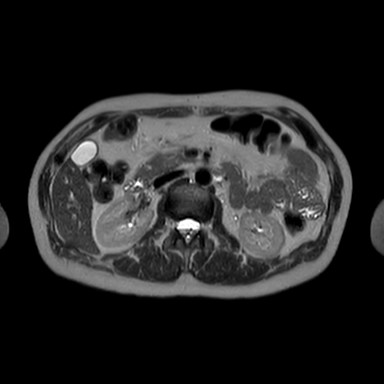
The image above shows a clear example of an MRI image of the pancreas and surrounding structures in the upper abdomen.
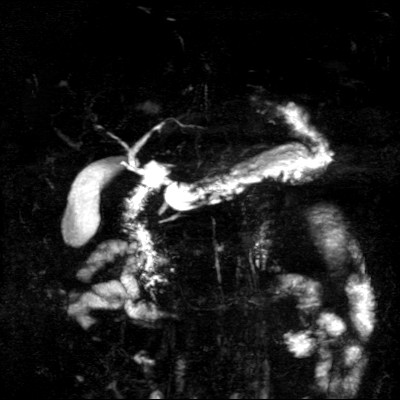
Example of an MRCP image where the gallbladder, bile ducts and pancreatic duct appear bright. The image is illustrative and should not be used for your own diagnosis.
When can an MRI of the pancreas be relevant?
An MRI examination of the pancreas may be relevant if there are symptoms or findings that need to be investigated further. Many stomach symptoms are non-specific and are usually not due to cancer, but recurring or unexplained problems should be evaluated medically.
- Long-lasting or recurring pain in the upper abdomen.
- Pain that radiates from the stomach to the back.
- Unexplained weight loss or decreased appetite.
- Elevated pancreatic values or abnormal liver tests.
- Suspected acute or chronic pancreatitis.
- Suspected cyst or other change in the pancreas.
- Dilated or narrowed pancreatic duct or bile duct.
- Follow-up of a previous finding from ultrasound, CT or other examination.
- Suspected tumor in the pancreas or nearby organ.
What can an MRI examination do? of the pancreas show?
MR pancreas can provide the doctor with information about the appearance, structure and duct system of the pancreas. The examination can be used, among other things, to assess the following conditions:
- Acute or chronic inflammation of the pancreas, known as pancreatitis.
- Pancreatic cysts and cystic tumor changes.
- Changes in the pancreatic duct.
- Narrowing, blockage or dilation of the bile ducts.
- Benign or malignant tumor changes.
- Changes that affect tissues or organs around the pancreas.
MRCP – detailed images of the pancreatic duct and bile ducts
The examination may include a special MRI technique called MRCP, magnetic resonance cholangiopancreatography. MRCP is used to image the gallbladder, bile ducts, pancreas and pancreatic duct. The technique can provide information about narrowings, blockages, stones, inflammation and other changes in the duct system.
How an MRI of the pancreas is done
During the examination, you lie on a table that is inserted into the MRI camera. It is important to lie still while the images are taken. You may also need to hold and move for short periods of time so that the images are as clear as possible. The examination generally takes around 20–35 minutes, but the time can vary depending on the question and examination protocol. In some cases, the examination is performed with contrast media. The need for contrast is determined based on the medical question and the X-ray department's routines.
MRI does not use ionizing radiation. The examination is normally not painful, but some people may find it uncomfortable to lie still in the MRI camera. Please inform the healthcare professional before the examination if you have a metal implant, pacemaker, impaired kidney function, are pregnant or have strong anxiety about confined spaces.
Order an MRI of the pancreas with a referral
You do not need to have a completed referral before placing your order. After the order is placed, a medical assessment is made together with one of the doctor. Provided that the examination is deemed medically appropriate, a referral is issued and sent to the relevant radiology department. After the MRI examination, the images are reviewed by a specialist in radiology. You will then receive a written statement with the examination results from your doctor at our office, as well as information about any recommended follow-up or further referral for further investigation.
Important for symptoms from the pancreas
MRI of the pancreas does not replace an urgent medical assessment. Seek medical attention urgently if you experience yellow skin or yellow whites of the eyes, dark urine, very light stools, severe or rapidly increasing abdominal pain, repeated vomiting or a clearly worsening general condition.