
Ferritin

119 kr85 kr
FER

Ferritin

Iron deposit test

Marker Icon 1 marker
Sample Icon Blood sample
How does the blood test take place?
Sampling for this test is done via a venous blood sample. The sample is usually taken from a vein in the crook of the elbow and is performed by trained healthcare professionals. How much blood you are allowed to give depends on the number of health markers to be analyzed. The sampling usually takes a few minutes.
119 kr85 kr
  • Measuring your levels of ferritin
  • Get insight into the body's iron stores
  • Indication of iron status and possible iron deficiency
Read more

Related Products


FE

Iron

Iron deficiency test

99 kr69 kr

TRA

Transferrin

Transferrin test

129 kr

Add-ons

Affiliate Icon

Here it is empty.

Try removing filters or reloading.
Reload
Registered caregiver

What is ferritin and why is it important?

The ferritin test measures the body’s iron stores and can reveal whether you have iron deficiency or iron overload. Ferritin is a protein that stores iron in the cells and releases it when needed. This means that your ferritin level reflects how much iron you actually have stored in the body – not just temporarily in the blood. By analysing ferritin, you can get a clear picture of your iron status and detect deficiency before it leads to symptoms or anaemia.

Iron deficiency can lead to fatigue, reduced concentration, paleness, hair loss and shortness of breath. Ferritin levels often decrease early in iron deficiency, making the test a sensitive marker for detecting problems in time. At the same time, elevated levels can provide important information about inflammation or diseases that affect the body’s iron metabolism.

Why should you test your ferritin?

Analysing ferritin levels can be essential for understanding the cause of fatigue, anaemia or other non-specific symptoms. The test is used to:

Detect iron deficiency

Low ferritin is an early sign of iron deficiency and may occur before haemoglobin is affected.

Rule out iron deficiency

Normal ferritin often rules out iron deficiency as the cause of symptoms.

Monitor treatment

Check whether iron supplements or dietary changes are improving your iron stores.

Identify iron overload

High ferritin may indicate excess iron, for example in haemochromatosis or chronic inflammation.

Ferritin analysis when iron deficiency is suspected

A ferritin test is particularly recommended for people who:

  • Experience fatigue, dizziness or difficulty concentrating without a clear cause.

  • Have low haemoglobin or suspected anaemia.

  • Are pregnant, breastfeeding or have heavy menstrual bleeding.

  • Are vegetarian or vegan and have limited dietary iron intake.

  • Have chronic inflammation or suspected iron overload.

How is the blood test performed?

Ferritin is analysed through a venous blood sample taken by healthcare staff and sent to an accredited laboratory. You receive an exact measurement of your ferritin level, and the result can be compared with reference ranges adapted for sex and age.

What affects ferritin levels in the body?

Ferritin levels are influenced not only by iron intake, but also by the body’s general condition. Because ferritin is an acute-phase protein, levels can rise during inflammation, infection or liver disease – even if your iron stores are actually low. This is important to keep in mind when interpreting the result. Factors that can affect ferritin levels include:

Inflammation or infection

Ferritin can be elevated in temporary or chronic inflammatory conditions, such as rheumatism or inflammatory bowel diseases.

Liver disease

Because ferritin is stored in the liver, levels can rise in liver damage or fatty liver disease.

Overweight and metabolic syndrome

Elevated levels are common in insulin resistance and low-grade inflammation.

Pregnancy

Ferritin often decreases during pregnancy as iron stores are used for foetal development.

Diet and alcohol

A low intake of iron-rich foods or excessive alcohol consumption can negatively affect levels.

To get a complete picture of your iron status, ferritin is often analysed together with iron, transferrin and transferrin saturation. The combination of these values makes it possible to distinguish between iron deficiency, inflammation or iron overload (haemochromatosis).

High ferritin – not always too much iron

Elevated ferritin levels are sometimes incorrectly interpreted as iron overload, but in many cases they are due to the body reacting to inflammation or disease. It is therefore important to interpret the test in context. If ferritin is elevated, complementary markers such as CRP or transferrin saturation should be analysed to distinguish between iron overload and inflammatory influence.

Iron is important for oxygen transport, energy metabolism and blood formation. Deficiency or excess can cause fatigue, anemia or storage diseases. Blood tests that measure iron, ferritin, transferrin and transferrin saturation provide a comprehensive picture of the body's iron stores.

FER
Ferritin
The body's iron is stored by ferritin, which is a protein. A normal level of ferritin is important for the body's formation of hemoglobin which takes place through iron.
Read more

Before visiting a reception for sampling, you need to do the following:

Activate referral and select reception

To activate your referral, simply follow the instructions that you will receive via email after completing the purchase. The email contains an activation code, by clicking on the link in the email you enter the flow to fill in any information, activate the referral and select reception in the sample answer service zample.

Before the sampling

  • Rest for 15 minutes in place on the sampling device.
  • Bring identification.

The referral is available digitally at the sampling unit after you activate it, follow the instructions you receive via email.Here you can read our guidelines before taking samples.

Ferritin levels often differ between women and men, as men generally have larger iron stores. Normal values ​​for ferritin are usually between:

  • Women: 15–150 µg/L
  • Men: 30–300 µg/L

In women, ferritin can be lower due to menstruation, pregnancy and breastfeeding, which increases the risk of iron deficiency. Men usually have higher ferritin levels because they do not have the same natural iron losses.

A ferritin test is therefore particularly important for women of childbearing age, pregnant women and people with symptoms of iron deficiency. At the same time, it is important for men to check for possible iron overload, especially if a condition such as hemochromatosis is suspected.

Common symptoms of low ferritin (iron deficiency) include fatigue, dizziness, pale skin, palpitations, shortness of breath, headaches, and decreased physical performance. Iron deficiency can also affect hair growth and the immune system.

Elevated ferritin may indicate iron overload, but can also be seen in infections, inflammation, liver disease or certain chronic diseases. It is important to interpret high values ​​in conjunction with other blood tests, such as CRP and liver tests.

You will normally receive your results within 1–3 business days after sampling.

In the case of low ferritin, an iron-rich diet is recommended, such as meat, liver, green leafy vegetables and legumes. Iron supplements may be needed, but should be taken after consultation, especially if the cause of the deficiency is not clear. Follow-up is usually done after a few months.

Yes, it is common for ferritin to drop before blood counts are affected. This is called early iron deficiency and can cause symptoms even if hemoglobin is still within reference. Therefore, ferritin is a sensitive measure for detecting iron deficiency at an early stage.

Ferritin also functions as an acute phase protein, which means that levels can rise during inflammation, infection or chronic diseases – even if iron stores are actually low. This can mask an underlying iron deficiency.

If inflammation is suspected, it is therefore important to also measure CRP or other inflammation markers at the same time, in order to interpret the ferritin value correctly. A normal or high ferritin does not always rule out iron deficiency if there is ongoing inflammation in the body.

A low ferritin level means that the body's iron stores are depleted, which often leads to iron deficiency. If this is not addressed, it can develop into iron deficiency anemia, a form of anemia in which the body cannot produce enough healthy red blood cells. This can lead to symptoms such as extreme fatigue, palpitations, dizziness, headaches and a weakened immune system.

Low ferritin is not dangerous in itself, but it is a clear signal that the body does not have enough iron. If the deficiency is prolonged and untreated, it can affect the heart and muscles, and lead to a reduced quality of life. It is therefore important to investigate the cause and start treatment in time, especially for women with heavy menstruation, pregnant women or people with a one-sided diet.

In the case of severely low ferritin levels, iron supplements or in some cases iron injections may be necessary. Regular follow-up ensures that iron levels are safely restored.

High ferritin levels can sometimes be seen in cancer, but it is important to understand that elevated ferritin is a nonspecific marker and is more often due to inflammation, infection or liver disease than cancer.

In some types of cancer, ferritin may rise, especially in:

  • Leukemia (blood cancer)
  • Lymphoma (lymph node cancer)
  • Liver cancer or spread to the liver
  • Hodgkin's lymphoma

Ferritin may also be elevated in other chronic diseases, which do not necessarily mean cancer.

Elevated ferritin is not used as a diagnostic test for cancer. If ferritin is high without an obvious cause, additional tests are often performed, such as liver tests, inflammation markers (CRP), and sometimes further tests depending on symptoms. A high ferritin value alone is rarely a cause for concern, but should be assessed in its context.

Ferritin is primarily a marker of the body's iron stores and also functions as an acute phase protein in inflammation. High ferritin levels in the blood are not in themselves a sign of iron toxicity, but must be assessed together with other tests such as serum iron and transferrin saturation.

In cases of true iron overload or iron toxicity, such as in genetic hemochromatosis or acute iron overdose, ferritin can rise sharply. Medically, the following limits are considered indicative:

  • Mild to moderate toxicity: Ferritin approximately 350–500 µg/L
  • Hepatotoxicity (liver damage): Often at ferritin > 500 µg/L
  • Severe toxicity: Ferritin > 800 µg/L, in combination with elevated serum iron levels

It is important to note that high ferritin levels do not always indicate toxicity, as ferritin can be elevated in e.g. inflammation, infection or liver disease without iron poisoning. Diagnosis of iron poisoning is based on a comprehensive assessment with complementary tests.

Find the nearest test location

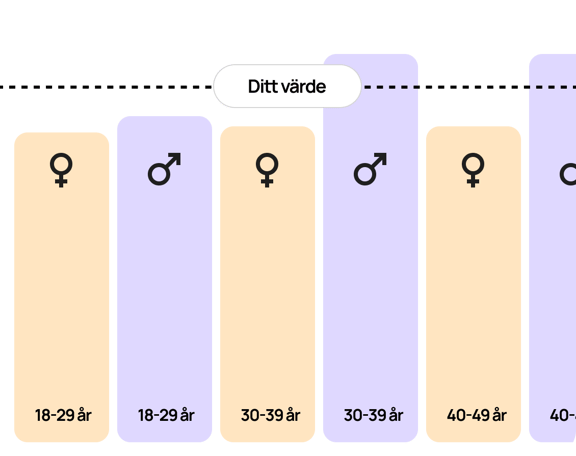
Compare with others

Compare with others

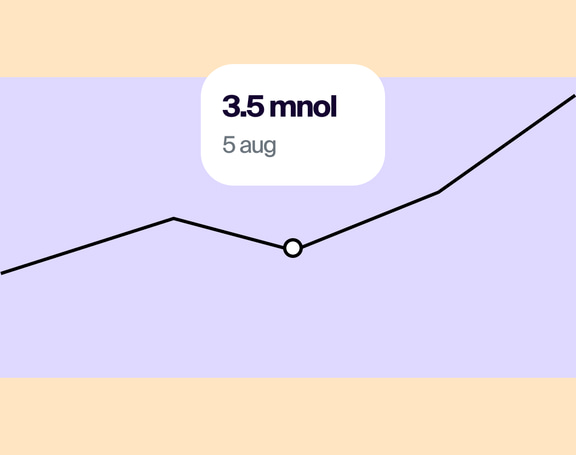
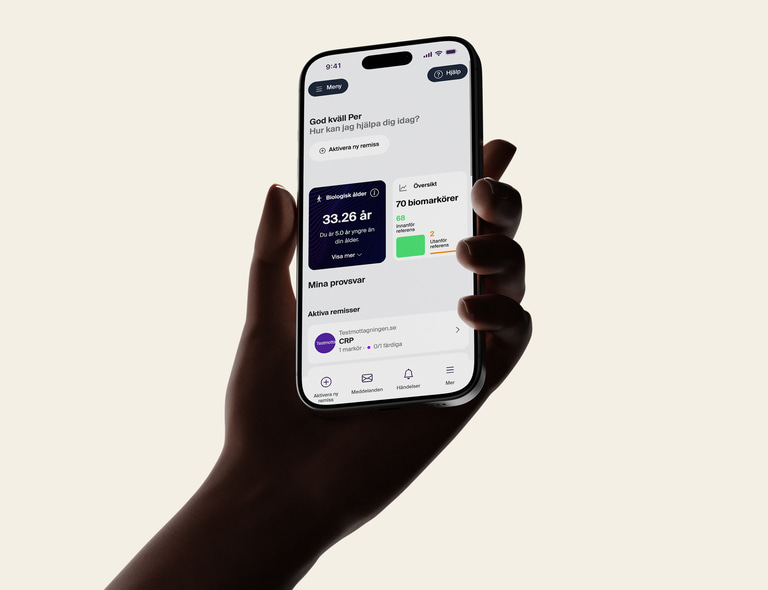
In our test-taking service Zample, your result is displayed as a line on top of bars representing average values for others in different age groups. This way, you can instantly see how your values compare to others your age, giving you a clearer and more intuitive picture of your health.

How does it work?

Get control of your health - four simple steps

Step 1

1. Order a health check

Choose a health check or create your own by adding optional health tests to your cart.

Show more health tests
Step 2

2. Activate the referral

After payment, you will receive an activation code via email. Log in via "My test results" or click on the link in the email, and use the code to activate the referral and choose reception.

Sign in
Step 3

3. Leave the blood sample

You visit the chosen reception to do your test. Your referral is valid for 5 months after activation.

Show all clinics
Step 4

4. Test answers and statement

You will receive your test answers within 1-5 working days, the test answers are received continuously. Once all test results are received, they are reviewed and issued by a doctor.

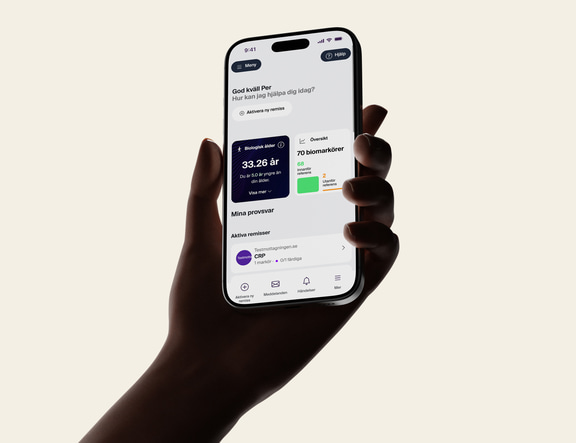
Your test answers in zample™

– A smarter tool for understanding your health

zample app

Why Testmottagningen.se?

With us you always get:

Qualitative analysis

To offer you the highest possible quality and service we collaborate with accredited laboratories and trained healthcare personnel.

Lowest possible price

Our vision is that as many people as possible should have the opportunity to improve their health. That's why we always strive to keep prices low.

Your needs – your choice

With us, you can always choose freely among all our health markers and design your own personal health check based on your needs.

Quick test results – reviewed by doctors

Within 1-5 working days you will receive your test results, these are reviewed and assessed by a doctor. In the event of significantly deviating test answers, you will be called. You can also make an appointment with a doctor for a personal review.

Simon Mäntylä

Simon Mäntylä

Gives a blood test before a health check

Why should I test myself?

Take health into your own hands

Track your inner self

With insight into your blood values ​​and health data, you can take control of your well-being and make conscious adjustments to your lifestyle.

Healthy diet

A healthy and varied diet is said to be a trick to reduce the risk of ill health, with full insight into your health data you can see the balance of your vitamins, minerals and hormones.

Optimize your health

Your lifestyle choices affect your general health, based on your values you can create the conditions for increased well-being - and a healthier life.

With us you are always safe with our satisfied customer guarantee!

With us you are always safe with our satisfied customer guarantee!

We want to help people improve their health. That's why it's important that you feel safe with us. As a healthcare provider, safety is our top priority and we always strive to deliver the highest quality in our services. If for any reason you are not completely satisfied with your experience with us - do not hesitate to contact us. We listen and will do what we can to make you feel safe and satisfied. Our satisfied customer guarantee is an expression of our commitment to you and your health - where we want to take our responsibility when you use our services to access your health data and improve your health.