Quick version
A well-planned vegan diet is healthy, but requires attention to certain nutrients to avoid deficiencies. The most important substance to keep an eye on is vitamin B12, as it requires supplements or fortified products to avoid causing nerve damage and anemia. Iron (where the depot measure ferritin is more important than just hemoglobin) and vitamin D are also relevant to check, especially in cases of fatigue, hair loss or heavy menstruation. Substances such as iodine, zinc and selenium rarely need to be tested routinely in the blood, but are best assessed by reviewing your dietary habits or checking thyroid values such as TSH. Taking targeted blood tests in case of symptoms or changing needs helps you fine-tune your diet in time before the deficiencies become too deep.
Eating vegan can be excellent for your health, but many people only notice afterwards that their energy has dropped, their recovery has worsened or their hair loss has increased. This raises a common question: is it enough to “eat varied”, or are there blood tests that can actually show whether the body is getting what it needs?
Vegan diet – which blood tests may be relevant to check?
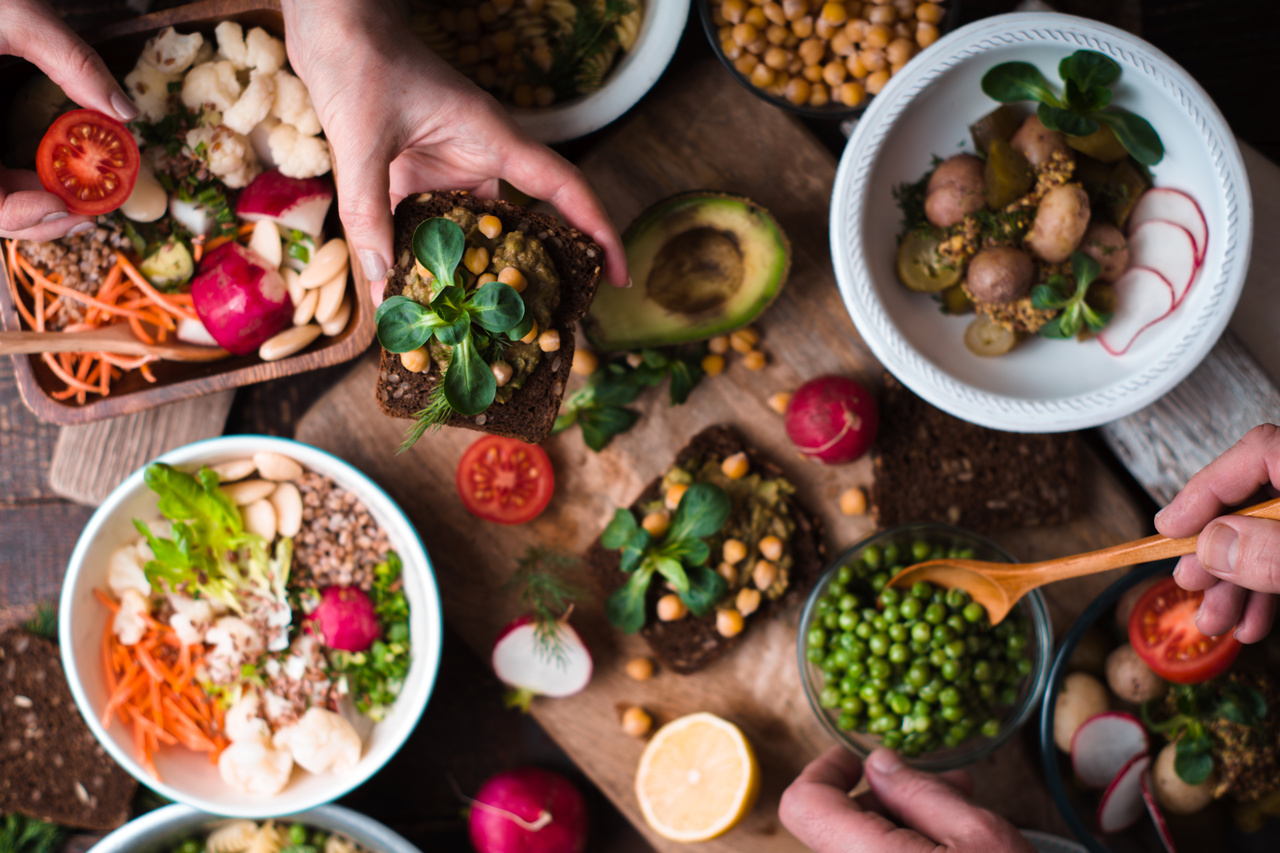
A well-planned vegan diet can be nutritionally adequate for adults. At the same time, there are some nutrients that require extra attention when animal foods are excluded, especially vitamin B12, iron, vitamin D, iodine and sometimes zinc or selenium. These are the nutrients that are highlighted as nutrients to keep an eye on when following a vegan diet.
Blood tests are most valuable when they are used to answer a specific question: why do I feel tired, why do I get colder than usual, why do I have less energy to exercise, or do I need to adjust my diet and supplements? A test result should always be interpreted together with symptoms, dietary habits, menstruation, pregnancy, medications and how long you have been eating vegan.
Vegan diet and blood tests for B12 and anemia
If you had to choose just one nutrient to be extra careful with on a vegan diet, vitamin B12 is the clearest choice. B12 is basically only found in animal foods and in fortified vegetable products or dietary supplements. Therefore, vegans are recommended to have a safe source of B12.
B12 is needed, among other things, for the nervous system and for the bone marrow to form normal red blood cells. A deficiency can cause fatigue, shortness of breath, tingling in the hands and feet, difficulty concentrating and in some cases depression or balance problems. Not everyone gets clear symptoms early on, which makes laboratory testing particularly relevant if you don't take supplements regularly.
Relevant tests are often:
- B12 in the blood
- Holotranscobalamin, also called active B12
- Methylmalonate, often abbreviated MMA
- Homocysteine
- Blood status with hemoglobin and the size of the red blood cells, for example MCV
Serum B12 can provide an initial picture, but additional tests are sometimes needed for borderline values. MMA is a more sensitive marker for functional B12 deficiency and can help confirm deficiency when a regular B12 test is in an uncertain range. Homocysteine can also rise in B12 deficiency, but is less specific because folate deficiency and other factors can also affect the value.
In practice, this is a common situation: you eat vegan, feel unusually tired and think your iron is low, but the test instead shows B12 deficiency or a combination of several deficiencies. Therefore, it is wise not to guess.
Iron status: ferritin is often more informative than just hemoglobin
Iron is another common reason why people on a vegan diet want to take blood tests. Plant-based foods can contain plenty of iron, but absorption is generally lower than from animal sources. The risk of low iron stores is greater during heavy menstruation, endurance training, pregnancy or if you have recently changed your diet and have not yet found good routines around legumes, whole grains and iron-fortified foods.
Common symptoms of iron deficiency are fatigue, palpitations during exertion, dizziness, headaches, restless legs and reduced physical energy. Sometimes the deficiency first appears as low ferritin, i.e. depleted iron stores, while hemoglobin is still normal. That is why it is easy to miss early iron deficiency if you only look at the blood count. Relevant tests are often: Ferritin Blood status with hemoglobin, MCV and MCH Possibly transferrin saturation or other iron markers depending on the question CRP in some cases, since inflammation can raise ferritin and hide iron deficiency Ferritin is the most useful test to assess the body's iron stores, but the value needs to be interpreted with caution. In the event of a concurrent infection or inflammation, ferritin may be normal or high even though iron stores are low. Therefore, doctors may sometimes want to see ferritin together with inflammation markers and other blood values.
For those who exercise a lot or menstruate heavily, it may be reasonable to check iron status even without pronounced symptoms. This is especially true if you often become short of breath at levels you previously managed, or if your recovery has suddenly become worse.
Vitamin D and iodine - two nutrients that are easily forgotten
Vitamin D is often discussed in the winter, but the issue is especially relevant in a vegan diet if you do not regularly consume fortified products or supplements. Vitamin D is needed for, among other things, bone, muscle function and immune function. Low levels can cause diffuse pain, muscle weakness or fatigue, but many people do not notice anything obvious at all.
The test that is commonly used is 25-OH-vitamin D, i.e. 25-hydroxyvitamin D. If you rarely drink vitamin D-enriched herbal drinks, avoid supplements or spend little time in the sun, it may be a relevant test, especially during the winter months.
Iodine receives less attention, but is particularly interesting in Sweden because dairy products and fish are traditionally important sources of iodine and Swedish soil is iodine-poor. Iodine is needed for the thyroid gland's hormone production. Too little iodine can eventually contribute to goiter or affect thyroid function, while too much iodine can also cause problems.
There is an important limitation here: there is no simple routine blood test that reliably shows individual iodine status in everyday life. Urinary iodine is primarily used to assess iodine status at a group level, not to diagnose individuals. If iodine intake is suspected to have affected the thyroid, it is often more practical to check thyroid tests such as TSH and sometimes free T4, while also reviewing the use of iodized salt, algae products and supplements.
Pregnancy is a special situation. This increases the importance of both iodine and B12, and the need for a structured diet review and the right supplements becomes greater.
Zinc, selenium and other tests – when they can be justified
Also zinc and selenium as nutrients to keep an eye on when following a vegan diet. This does not mean that all vegans need to routinely test them, but they may be relevant in the event of symptoms or a one-sided diet. Examples include prolonged diarrhea, poor appetite, recurrent infections, changes in taste, slow wound healing or hair loss.
Zinc can be measured in plasma or serum, but the test has clear limitations. The value is affected by, among other things, inflammation, meal, time of day, pregnancy, birth control pills and sample handling. Therefore, zinc tests are less accurate than many believe and should be interpreted with caution.
Selenium may be relevant if the diet is very limited or if common sources are completely avoided for a long time, but it is rarely a first-choice test in otherwise healthy adults. Often, the dietary history provides more guidance than a broad battery of trace element tests. The same applies to calcium, where the primary assessment is usually to assess intake of fortified herbal drinks and other sources of calcium rather than starting with a blood test.
Folate can also be discussed, but pure folate deficiency is often less typical than B12 deficiency in vegan diets because green leafy vegetables, legumes and whole grains usually contain folate. However, folate can sometimes be included in the investigation of anemia or elevated homocysteine.
When is it wise to get tested?
There is no rule that says that everyone who eats vegan must test everything regularly. But in some situations, blood tests are particularly reasonable. This applies both to symptoms and in periods when needs or risk change.
It may be wise to consider testing if you:
- have eaten vegan for a long time without regular B12 supplementation
- feel tiredness, lack of energy, dizziness, tingling or impaired recovery
- have heavy periods
- are pregnant, trying to get pregnant or breastfeeding
- train hard, especially endurance sports
- have a one-sided diet, low appetite or gastrointestinal problems that can affect absorption
For many, a targeted check is better than “everything that can be tested”. A well-thought-out approach could include, for example, blood count, ferritin, B12 or active B12, possibly MMA in case of unclear answers, and 25-OH vitamin D. If you also have symptoms from the thyroid gland, use little iodized salt or eat a lot of algae products, TSH and free T4 may be relevant complements. This is partly a clinical assessment, but is based on which nutrients most often require extra attention in a vegan diet and which markers actually provide useful information.
A test result is also not a rating of your diet. It is a way to get facts instead of going by feeling, especially when the symptoms are diffuse and can be due to several different things at the same time.
A well-thought-out vegan diet is not just about what you choose to eliminate, but about how to build something that works over time. The right sampling can therefore become a tool for fine-tuning rather than troubleshooting only when the body has already started to protest.