
Total cholesterol is a measure of the total amount of cholesterol in your blood. There are two types of cholesterol: LDL cholesterol (low density lipoprotein) and HDL cholesterol (high density lipoprotein). LDL cholesterol, also known as "bad cholesterol", can build up in the arteries and cause heart disease if there is too much of it. HDL cholesterol, or "good cholesterol", on the other hand, helps transport LDL cholesterol away from the arteries and back to the liver where it can be broken down. If you want to know your exact values of LDL cholesterol and HDL cholesterol, you need to add these to the shopping cart as well. The total cholesterol value does not give specific answers divided into LDL and HDL cholesterol.
It is important to have a good total cholesterol value because high levels of cholesterol in the blood can increase the risk of cardiovascular diseases. The cholesterol test is important for those who want to gain insight into your cholesterol levels to see if you have high cholesterol or are at a good level. To gain deeper insight into your cholesterol levels, HDL-cholesterol, LDL-cholesterol, LDL-carb/HDL-carb ratio and triglycerides are analyzed.
Regular cholesterol tests can help you identify any abnormalities early and provide an opportunity to take preventive measures. Cholesterol levels can also be affected by various medical conditions, such as diabetes, metabolic syndrome and thyroid disorders. If necessary, drug treatment in the form of statins or other cholesterol-lowering agents can be used to reduce the risk of cardiovascular disease in people with elevated levels.
Risks of high total cholesterol
Elevated cholesterol levels can lead to the deposition of fat in the blood vessels, which increases the risk of hardening of the arteries (atherosclerosis), heart attack and stroke. High cholesterol can also contribute to impaired blood circulation and other cardiovascular-related complications, especially if it occurs together with high blood pressure and/or diabetes.
Total cholesterol – an important part of your lipid profile
Total cholesterol serves as a starting point to understand your lipid status. Although the value itself does not show the whole picture, it is one of the most important markers in a blood test to detect disorders in fat metabolism. In case of deviating total values, an extended lipid profile should always be performed to distinguish between the different types of cholesterol and assess the individual risk.
How is total cholesterol interpreted?
Total cholesterol shows the total amount of cholesterol transported in the blood's various lipoproteins, including LDL, HDL and VLDL. The value gives an overview of blood fats but does not show how cholesterol is distributed between the different particles.
An elevated total cholesterol can be due to high LDL cholesterol, but the value can also be affected by high HDL cholesterol. Therefore, it is not possible to assess the individual risk of cardiovascular disease based solely on total cholesterol. The result needs to be put in relation to, above all, LDL cholesterol, HDL cholesterol and triglycerides.
What is non-HDL cholesterol?
Non-HDL cholesterol is calculated by subtracting HDL cholesterol from total cholesterol. The value therefore includes the cholesterol in LDL and other lipoproteins that can contribute to atherosclerosis.
Non-HDL cholesterol can provide additional information about the amount of cholesterol in potentially harmful blood fat particles, especially in cases of elevated triglycerides, diabetes or metabolic syndrome. In order for the value to be calculated, both total cholesterol and HDL cholesterol need to be analyzed.
What affects the cholesterol value?
Cholesterol levels are affected by both genetic factors and lifestyle habits. Elevated values may be linked to, among other things:
- heredity and familial hypercholesterolemia
- dietary composition
- overweight and low physical activity
- smoking
- diabetes and metabolic syndrome
- hypothyroidism
- kidney or liver disease
- certain medications
A clearly elevated cholesterol value, especially in combination with early cardiovascular disease in the family, may warrant further investigation of a possible hereditary blood lipid disorder.
The cholesterol value is part of the overall risk assessment
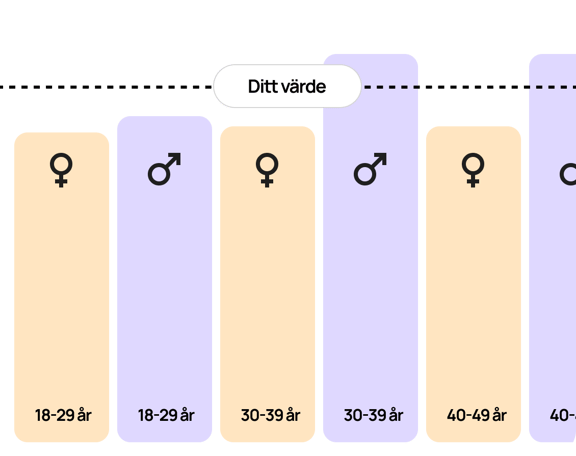
The risk of heart attack and stroke is not determined by the cholesterol value alone. In a medical risk assessment, factors such as age, gender, blood pressure, smoking, diabetes, kidney function, heredity and previous cardiovascular disease are also taken into account.
Two people with the same total cholesterol may therefore have different risks and different needs for follow-up or treatment. In the case of elevated values, a broader lipid profile and an assessment of the overall cardiovascular risk are recommended.
Which additional blood tests may be relevant?
For a more detailed assessment of blood fats, total cholesterol can be supplemented with LDL cholesterol, HDL cholesterol and triglycerides. Apolipoprotein B can provide information about the number of blood fat particles that can contribute to atherosclerosis, while lipoprotein(a), Lp(a), can identify a mainly hereditary risk factor for cardiovascular disease.
Which analyses are relevant depends on the result, age, heredity and other risk factors. A deviating test result should therefore always be assessed in its medical context.