
Quick version
Colorectal cancer includes cancer that occurs in the colon or rectum, and the vast majority of tumors are adenocarcinomas that develop from cells in the intestinal mucosa. The disease often develops gradually and many tumors are preceded by polyps that can undergo changes over several years and develop into cancer.
Common symptoms are blood in the stool, changes in bowel habits, abdominal discomfort and iron deficiency anemia. Diagnosis is primarily based on colonoscopy with tissue samples. When cancer has been diagnosed, CT scans of the chest and abdomen are used to map the spread of the disease, and in the case of rectal cancer, MRI of the pelvis is also used for detailed local staging.
Treatment is guided by where the tumor is located and how widespread the disease is. Surgery is central in localized disease and can be supplemented with cytotoxic drugs, radiation therapy and other medications. The prognosis is generally best when the cancer is detected at an early stage.
What is colorectal cancer?
Colorectal cancer is a collective name for cancer that occurs in the large intestine or rectum. Cancer in the large intestine is called colon cancer and cancer in the rectum is called rectal cancer. Both conditions have many common characteristics but differ in some respects when it comes to local investigation and treatment.
Most colorectal cancer tumors are adenocarcinomas, which means that they develop from gland-forming cells in the intestinal mucosa. Many tumors develop gradually from polyps, adenomas or certain serrated polyps, where the cells can accumulate genetic changes over several years and eventually develop into cancer.
Colorectal cancer can grow locally through the intestinal wall and spread to regional lymph nodes. In disseminated or advanced disease, however, cancer cells can spread to other organs, especially the liver and lungs. How the cancer is treated and what its prognosis is depends largely on the location, stage and biological properties of the tumor.
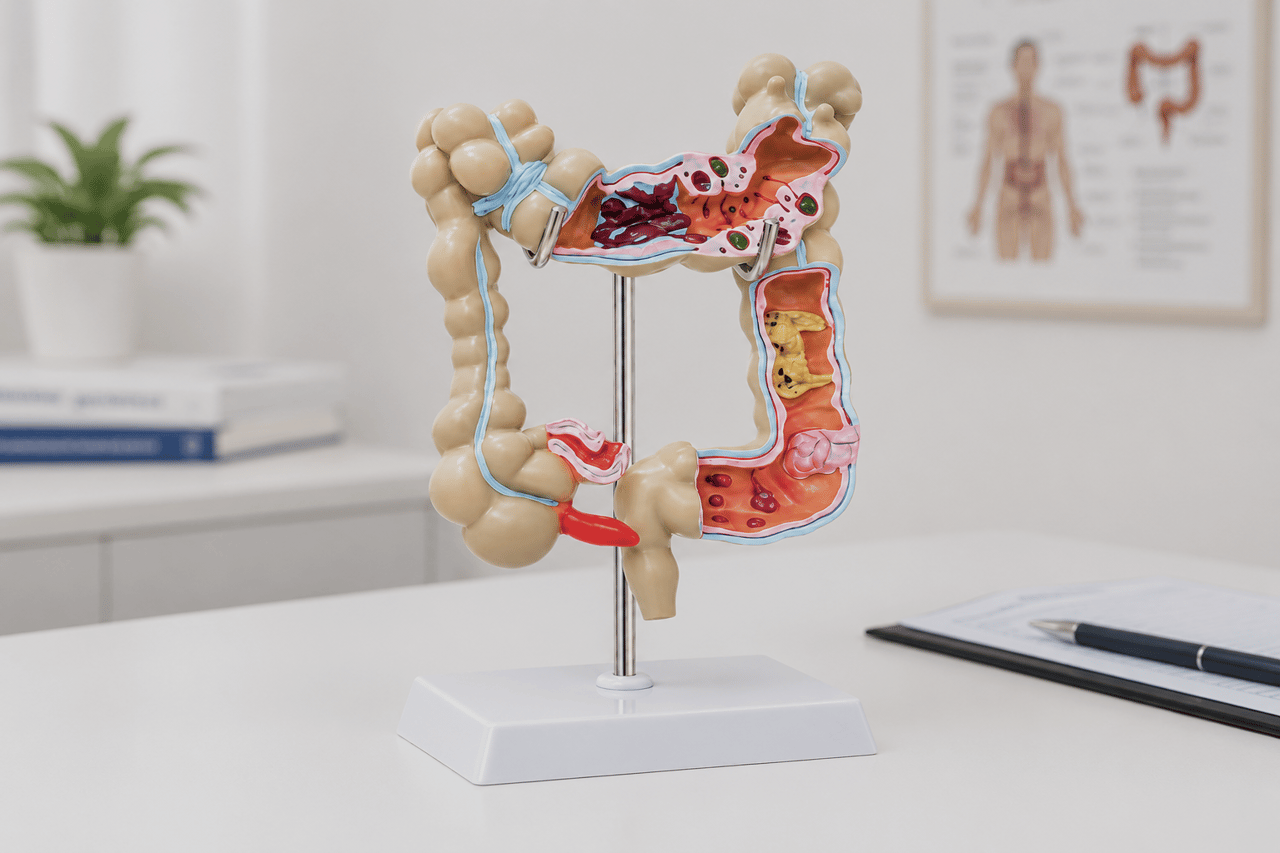
Colorectal cancer - colon cancer
Colorectal cancer occurs in the colon, which is the part of the intestine that extends from the appendix to the transition to the rectum. The tumor can be located in the right or left part of the colon and the symptoms can differ depending on where it is located. For example, tumors in the right side of the colon can cause slow and sometimes hidden blood loss that leads to iron deficiency anemia, fatigue and decreased energy without clearly visible blood in the stool. Tumors further down the colon can more often cause changed bowel habits, constipation, diarrhea or visible blood in the stool.
Rectal cancer - rectal cancer
Rectal cancer occurs in the rectum, the lowest part of the colon closest to the anal opening. In the Swedish health program, rectal cancer is defined as adenocarcinoma within about 15 centimeters of the anal opening. The location in the pelvis makes the investigation and treatment different from colon cancer. In rectal cancer, it is very important to map how the tumor relates to the rectal wall, mesorectum, pelvic structures and regional lymph nodes. Therefore, MRI of the pelvis may be considered as part of the preoperative investigation.
How common is colorectal cancer?
Colorectal cancer is actually one of the more common cancers in Sweden. Every year, over 5,000 people are diagnosed with colon cancer and around 2,500 people with rectal cancer. Most people who get the disease are older and around three out of four are over 65 years old at diagnosis.
Colorectal cancer occurs about equally often in women and men, while rectal cancer is slightly more common in men. Colorectal cancer can also occur in younger people, although the disease is significantly more common in older people.
Symptoms of colorectal cancer
The symptoms of colon cancer and rectal cancer vary depending on where the tumor is located, how large it is and whether it affects the passage of the intestine or causes bleeding. The disease can develop gradually and some people have relatively discreet symptoms for a long time. Common symptoms and findings may include:
- blood in the stool.
- changed bowel habits, such as diarrhea or constipation.
- changed shape or consistency of the stool.
- mucus in the stool.
- feeling that the bowel is not completely emptied.
- recurrent abdominal pain or discomfort in the stomach.
- unintentional weight loss.
- fatigue and decreased energy in case of anemia.
- iron deficiency anemia without another clear explanation.
Note that the symptoms can also occur in much more harmless and temporary conditions such as; hemorrhoids, anal fissures, IBS and inflammatory bowel disease. New or persistent symptoms should still be evaluated medically, especially if there is blood in the stool, unexplained iron deficiency anemia, or a change in bowel habits.
Blood in the stool
Blood in the stool is an important symptom of colorectal cancer but does not automatically mean that cancer is present. Bleeding can also be caused by, for example, hemorrhoids, a crack in the anal opening, polyps, or inflammation of the intestine. The bleeding may be visible but may also be so small that it is not detected with the naked eye. A fecal immunochemical test, FIT or F Hb, can be used to identify small amounts of human blood in the stool and is used both in screening and in some parts of the investigation of intestinal symptoms.
Iron deficiency and anemia in colorectal cancer
A tumor in the intestine can bleed small amounts for a long time. This can gradually deplete the body's iron stores and lead to iron deficiency anemia. Fatigue, decreased physical strength, shortness of breath and paleness can therefore sometimes be the first signs of colorectal cancer.
Iron deficiency anemia in an adult, especially when there is no clear explanation, may warrant further investigation of the gastrointestinal tract. Hemoglobin, iron status and other blood tests can show that anemia is present but cannot determine whether the cause is colorectal cancer.
Intestinal torsion in advanced tumors
A tumor growing in the intestine can in some cases make the passage so narrow that the intestinal contents can no longer pass normally. This can cause intestinal torsion, ileus.
Symptoms may include severe or intermittent abdominal pain, bloating, nausea, vomiting, and failure to pass stool or gas. Intussusception is an acute condition and needs to be assessed urgently.
What causes colorectal cancer?
Colorectal cancer occurs when cells in the lining of the intestine undergo genetic changes that alter the control of cell division and cell death. In many people, the disease develops gradually from a polyp, where additional genetic changes accumulate over several years. In most individual cases, it is not possible to state a specific cause for why the cancer has arisen. However, the risk is influenced by a combination of age, heredity, inflammatory bowel diseases, and lifestyle.
Polyps and adenomas
A significant proportion of colorectal cancer tumors develop from precursors in the form of polyps. Adenomas and some serrated polyps can develop more and more cell changes over time and in some cases turn into invasive cancer.
Most polyps never become cancer, but because some polyps pose an increased future risk, they can be removed during colonoscopy. This is an important reason why colorectal cancer screening can also prevent cancer and not just detect already established disease.
Heredity and family history
The risk of colorectal cancer is higher if close biological relatives have had the disease, especially if several people in the family have been affected or if the cancer has arisen at a young age. A smaller proportion of all colorectal cancer is linked to clear hereditary cancer syndromes. Two of the most important are Lynch syndrome and familial adenomatous polyposis, FAP. If a hereditary disease is suspected, genetic counseling and targeted genetic testing may be relevant.
Lynch syndrome
Lynch syndrome is caused by hereditary changes in genes that are important for the cells' repair of DNA. The condition involves an increased risk of colorectal cancer and several other cancers, including cancer of the uterine corpus.
Tumors are therefore often analyzed today for mismatch repair proteins and microsatellite instability, MMR and MSI. The results can help identify people who need to be investigated for Lynch syndrome and are also important for prognosis and certain treatment decisions.
Inflammatory bowel disease
Long-term inflammation of the colon, such as ulcerative colitis or Crohn's colitis, can increase the risk of colorectal cancer. The risk is affected by, among other things, how much of the intestine is inflamed, how long the disease has existed and the degree of inflammation. People with long-term inflammatory bowel disease can therefore be included in special programs for recurrent colonoscopies.
How is suspected colorectal cancer investigated?
The investigation is based on symptoms, clinical examination, colonoscopy and, if necessary, imaging diagnostics. If there is a well-founded suspicion, the investigation is carried out within a standardized course of care. The doctor can, among other things, examine the stomach and perform a rectal palpation where the lower part of the rectum is assessed with a finger. In the case of symptoms from the rectum, rectoscopy can also be performed. Blood tests are used, among other things, to identify anemia and assess the patient's general condition and organ function.
Colonoscopy is the most important examination
Colonoscopy with tissue sampling is the first-line method for suspected colorectal cancer. During the examination, a flexible instrument with a camera is passed through the rectum so that the entire mucosa of the colon can be inspected. If a suspicious tumor is detected, the doctor can take tissue samples that are analyzed histopathologically. Colonoscopy can also identify other changes in the intestine and polyps can be removed directly in many cases.
If it is not possible to examine the entire colon with colonoscopy, the investigation can be supplemented with CT colonography.
How is colorectal cancer diagnosed?
The definitive diagnosis is usually made through microscopic analysis of tissue samples from the tumor. The pathologist assesses, among other things, whether the change is cancer and what type of tumor it is. The vast majority of colorectal cancer tumors are adenocarcinomas. The tumor tissue can also be analyzed molecularly. Among other things, MMR and MSI are examined, and in advanced disease, analyses of, for example, RAS and BRAF can be important before choosing drug treatment.
CEA in colorectal cancer
CEA is a tumor marker that may be elevated in some people with colorectal cancer. The analysis can be taken before treatment as a baseline value and is primarily used together with other examinations during follow-up after treatment. An elevated CEA does not automatically mean that a person has colorectal cancer. CEA can also be elevated in other cancers, smoking and certain benign conditions. At the same time, people with colorectal cancer can have a normal CEA value. The analysis cannot therefore be used alone to diagnose or rule out the disease.
After colorectal cancer surgery, CEA can be monitored in certain stages together with imaging to detect signs of recurrence.
CT of the chest and abdomen in colorectal cancer
If colon cancer or rectal cancer is confirmed, computed tomography of the chest and abdomen with contrast agent is used to map the spread of the disease. The examination is used, among other things, to assess whether there are metastases in the liver, lungs, lymph nodes or peritoneum. In colon cancer, CT is also used to assess the spread of the local tumor prior to treatment. The results from the imaging are weighed together with colonoscopy, tissue analysis and other clinical findings before deciding on treatment.
MRI in rectal cancer
MRI pelvic plays a central role in the investigation of rectal cancer. The examination is used to map the local spread of the tumor and its relationship to the rectal wall, mesorectal fascia, surrounding organs and regional lymph nodes. MRI can provide information about how deep the tumor has grown outside the intestinal wall, whether it is close to the mesorectal fascia and whether there are signs of vascular ingrowth or suspicious lymph nodes. The information is important when deciding whether the patient should be operated on immediately or whether radiotherapy and/or drug treatment should be given before surgery.
MRI pelvic is therefore a standard examination for the local staging of rectal cancer. However, it is not routinely used for the local staging of all tumors in the colon.
How do you know if the cancer has spread?
Colorectal cancer is staged according to the TNM system, among other things. T describes how far the primary tumor has grown through the intestinal wall and into surrounding tissue, N describes whether regional lymph nodes contain tumor cells, and M describes whether distant metastases are present. Common locations for distant metastases are the liver and lungs, but the cancer can also spread to the peritoneum and other organs. Stage, together with the biological properties of the tumor, are crucial for treatment and prognosis.
Screening for colorectal cancer
In Sweden, organized screening for colorectal cancer is offered with a stool test for occult blood. The screening is based on FIT and is offered every two years to people between the ages of 60 and 74. If the test is positive, a colonoscopy is offered. The purpose of the screening is both to detect cancer at an earlier stage and to identify polyps that can be removed before they develop into cancer. Screening can therefore reduce both the incidence and mortality of colorectal cancer.
A positive FIT does not automatically mean cancer. Blood in the stool can have several other causes and therefore colonoscopy is needed to determine where the bleeding is coming from.
How is colon cancer treated?
Surgery is the main curative treatment for localized colon cancer. The part of the colon where the tumor is located is removed along with the associated blood vessels and regional lymph nodes. The remaining ends of the intestine can usually be connected together.
After surgery, the tumor and lymph nodes are analyzed to determine the final stage of the disease. In some tumors in stage II and especially in stage III, additional chemotherapy may be recommended to reduce the risk of recurrence.
How is rectal cancer treated?
The treatment of rectal cancer is largely guided by the local extent of the tumor on MRI and whether the disease has spread. In early localized tumors, surgery may be the main treatment.
In more locally advanced rectal cancer, radiation therapy, chemotherapy or a combination of treatments is often given before surgery. The aim is to reduce the risk of local recurrence and in some cases shrink the tumour prior to surgery.
Which surgery is possible depends, among other things, on where in the rectum the tumour is located and its relationship to the sphincter muscle. In some cases, a temporary or permanent stoma needs to be created.
Treatment of metastatic colorectal cancer
In the case of disseminated colorectal cancer, the treatment is adapted to the location of the metastases, how extensive the disease is and the molecular properties of the tumour. Treatment may include chemotherapy, targeted drugs and immunotherapy.
In some people with a limited number of liver or lung metastases, surgery, ablation or other local treatment may be possible with curative intent. Therefore, a careful mapping of metastases is important before treatment is planned.