Quick version
Lipodystrophy is a rare disease in which the body loses fat tissue or stores fat in the wrong places. As a result, fat may accumulate in organs such as the liver and muscles, increasing the risk of insulin resistance, diabetes, high triglycerides, and fatty liver disease—even in people who are not overweight.
Common signs include unusual fat distribution, prominent muscles, and visible veins. Blood tests may reveal high triglycerides, high blood sugar, or fatty liver disease. Diagnosis is based on a physical examination, blood tests, and, in some cases, genetic testing.
Treatment focuses on preventing complications through dietary management, treatment of diabetes and blood lipid disorders, and regular follow-up. If you have unusual fat distribution together with diabetes, high triglycerides, or fatty liver disease without a clear explanation, you should seek medical attention for further evaluation.
Lipodystrophy is an uncommon but important condition in which the body loses fat tissue or stores fat in an abnormal way. For many people, the questions begin in everyday life: Why does my body suddenly look different? Why are my blood sugar and blood lipid levels rising even though I am not overweight? This combination is characteristic of lipodystrophy—a condition that affects not only physical appearance but also metabolism, liver health, and cardiovascular risk. Fat tissue is more than just an energy store; it is a hormonally active organ that helps the body store energy in the right places. When this function is disrupted, it can lead to severe insulin resistance, high triglycerides, and fatty liver disease.
What is lipodystrophy?
Lipodystrophy is a collective term for a group of disorders in which subcutaneous fat is either completely or partially absent, either from birth or after a period of previously normal fat distribution. In clinical practice, the condition is usually divided into two main groups:
Generalized lipodystrophy – almost all body fat is absent
Partial lipodystrophy – fat is missing only in certain parts of the body
The conditions can also be:
Congenital/genetic
Acquired, for example as a result of autoimmune disease, inflammation, or, in some cases, medication exposure.
In lipodystrophy, the body is unable to store fat normally. Instead, fat accumulates in organs such as the liver and muscles. This contributes to insulin resistance, meaning the body becomes less responsive to insulin, which in turn can lead to diabetes, blood lipid disorders, and liver damage.
In some people, the disease is noticeable early in life, especially in congenital generalized forms where the child may have very little subcutaneous fat and clearly marked musculature from birth. In partial forms, the changes often become more apparent only in puberty or adulthood. For example, a person may lose fat from the arms, legs, and buttocks while gaining fat around the face, neck, or abdomen. This is precisely why partial lipodystrophy is often missed and can be incorrectly interpreted as “unusual body type”, PCOS, regular Type 2 diabetes or metabolic syndrome.
What symptoms and signs can lipodystrophy cause?
The symptoms vary depending on the type and severity, but several often recur. A key sign is abnormal fat distribution:
clear loss of subcutaneous fat throughout the body or in selected areas
prominent muscles and tendons
visible veins under the skin
sunken face or fat loss in the cheeks
fat accumulation in other areas, such as the neck, face or abdomen in some partial forms
Because adipose tissue also produces hormones—including leptin, which regulates hunger and energy balance—a lack of adipose tissue can have significant metabolic consequences.
Since adipose tissue also produces hormones, including, which help regulate hunger and energy balance, a lack of adipose tissue can have severe metabolic consequences. Common consequences are:
severe insulin resistance
high blood sugar or diabetes
very high triglycerides
fatty liver and sometimes inflammation of the liver
acanthosis nigricans, a darker, velvety skin change in skin folds that is often a sign of insulin resistance
Women may also experience hormonal symptoms such as absent or irregular menstruation, increased hair growth and reduced fertility, especially in partial lipodystrophy with pronounced insulin resistance.
A common question is: “Can you have lipodystrophy even if you are not thin?” The answer is yes. Especially in partial lipodystrophy, the person may have normal weight or even abdominal obesity, but still have significant fat loss on the arms, legs or buttocks. Therefore, it is not enough to just look at BMI. Fat distribution and blood tests are often more indicative. This is also the reason why the diagnosis is sometimes delayed for many years.
What causes lipodystrophy?
The causes vary depending on the type of lipodystrophy.
Congenital lipodystrophy is due to genetic changes that affect how fat cells form, function or store fat. In congenital generalized lipodystrophy, several different genes have been linked to the disease, including AGPAT2, BSCL2, CAV1 and PTRF. In familial partial lipodystrophy, LMNA and PPARG are well-known genes.
Acquired lipodystrophy can occur later in life. It can be linked to:
autoimmune diseases
inflammatory processes
previous panniculitis, i.e. inflammation of the subcutaneous fat
certain infections or other unusual medical conditions
There is also a localized form of lipodystrophy, in which fat tissue disappears from a small area, for example after repeated insulin injections or injections of other medications. This form usually does not cause the same serious metabolic problems as generalized or partial systemic lipodystrophy, but is important to recognize.
From a biological perspective, the problem is that the body loses its normal "safe storage" for fat. When fat cannot be stored in subcutaneous adipose tissue, it accumulates in organs such as the liver and muscles instead, driving many of the metabolic complications. This is what drives many complications. It can therefore be said that lipodystrophy is the opposite of ordinary obesity in appearance, but that many of the metabolic risks paradoxically resemble or exceed those seen in severe obesity.
How is the diagnosis made and which tests are important?
The diagnosis of lipodystrophy is based primarily on the medical history, physical examination, and laboratory tests. The doctor looks at the pattern of fat loss, when it started and whether there are signs of insulin resistance or liver disease. A careful clinical examination is particularly important, since partial lipodystrophy is otherwise easily missed.
The investigation may include:
fasting blood glucose and HbA1c to assess blood sugar
blood lipids, especially triglycerides and HDL
assessment of signs of insulin resistance
sometimes leptin levels
genetic testing when a hereditary form is suspected
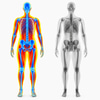
if necessary, imaging diagnostics or body composition assessment using DEXA to map fat distribution
A question that many people ask is: “What test results can raise suspicion?” The combination of:
high triglycerides
rising blood sugar or diabetes
fatty liver
pronounced insulin resistance in a person without typical overweight
should raise suspicion that the body's adipose tissue may not be functioning normally.
Treatment of lipodystrophy and when to seek care
Treatment aims to manage both the underlying condition and its complications. It often consists of several parts:
dietary treatment and individually adapted lifestyle
treatment of diabetes
treatment of high blood fats, especially triglycerides
monitoring of liver effects
sometimes genetic guidance
psychological support, since physical changes can affect self-esteem and quality of life
In generalized lipodystrophy with leptin deficiency, targeted treatment with metreleptin is available. In the United States, metreleptin is approved as replacement therapy to treat complications of leptin deficiency in patients with congenital or acquired generalized lipodystrophy. However, safety and efficacy have not been established for partial lipodystrophy, which is important to know.
Standard diabetes medications are often used to control blood sugar levels, but treatment should always be individualized. New guideline documents and reviews indicate that medications such as GLP-1 receptor agonists and SGLT2 inhibitors may also be helpful in selected cases, but this requires specialist assessment and is not a standard solution for everyone.
You should seek medical attention if you experience any of the following:
clear or unexplained loss of subcutaneous fat
unusual fat distribution
diabetes or high triglycerides at a young age
fatty liver without a clear explanation
severe insulin resistance despite not being typically overweight
family history of similar body type, early diabetes or unusual blood lipid disorders
Early detection plays a major role. The earlier lipodystrophy is identified, the better the chances are of reducing the risk of pancreatitis in the case of very high triglycerides, slowing down liver damage and improving blood sugar control.
Lipodystrophy is therefore much more than a cosmetic condition. It is a rare but potentially serious group of disorders in which the body's adipose tissue does not function normally, affecting metabolism throughout the body. If you have symptoms or test results that do not seem to fit together, it is worth discussing them with a healthcare professional and considering further evaluation.