






Androstenedione for hormonal balance assessment
Do you want to gain a better understanding of your hormonal balance or investigate symptoms such as acne, irregular periods, increased hair growth or fertility problems? With a blood test for S-Androstenedione, you can easily and safely check the levels of this important androgen hormone. With us, you can order a referral online with analysis performed at Karolinska.
Androstenedione is a sex hormone that functions as a precursor to both testosterone and estrogens such as estradiol. The hormone is produced in both the adrenal glands and gonads and plays a central role in the interaction between the body's androgens and estrogens. Elevated or abnormal levels can be a sign of hormonal imbalance and occur in PCOS and certain adrenal-related conditions, among other things.
Why analyze androstenedione?
Analysis of S-Androstenedione is mainly used in the investigation of androgen influence, especially in women. The test provides valuable information about where the androgens come from (adrenal glands or ovaries) and is often used as a complement to other hormone tests.
- Investigation of suspected PCOS (polycystic ovary syndrome).
- Symptoms of hyperandrogenism, such as acne or increased hair growth.
- Irregular or absent menstruation.
- Infertility or suspected absence of ovulation.
- Suspected adrenal influence.
Common symptoms that may be linked to abnormal androstenedione
In women, elevated levels of androstenedione can contribute to symptoms such as:
- Acne and oily skin
- Increased hair growth on the face or body (hirsutism)
- Male pattern hair loss
- Menstrual disorders
- Impaired fertility
Low levels are more unusual as an isolated finding, but can occur with reduced hormone production and sometimes cause symptoms such as low energy and reduced vitality.
Analysis at an accredited laboratory
Analysis is only performed at Karolinska with the highest demands on quality, precision and patient safety. Regardless of where in the country you submit your sample, you can feel confident that the analysis meets the same high medical standards as in public healthcare.
Interpretation of S-Androstenedione
Androstenedione should always be interpreted in relation to other hormones, such as testosterone, DHEA-S, SHBG, LH and FSH. Note that it is the overall picture, together with symptoms and clinical context – that determines whether a value is of medical significance.
Reference range for androstenedione
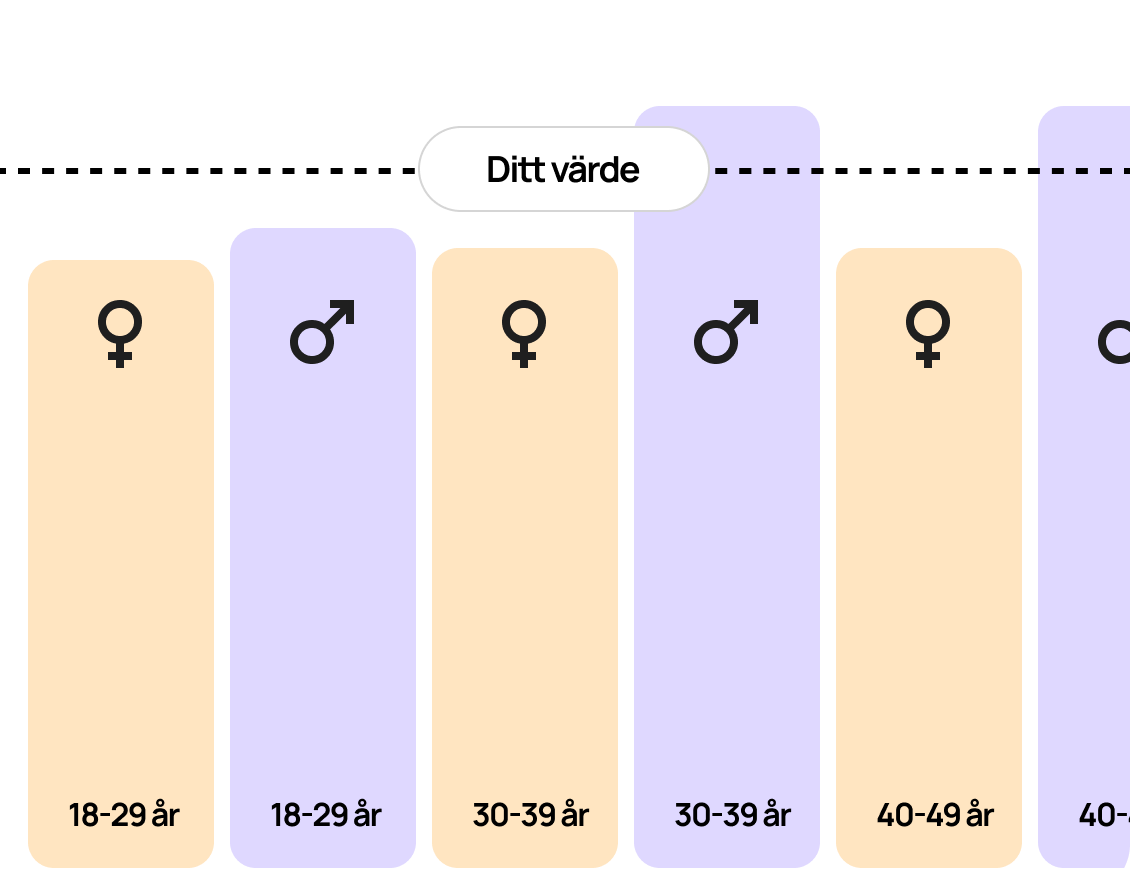
The analysis is given in nmol/L and the reference ranges differ between women and men:
- Women 18–49 years: 1.0–7.2 nmol/L
- Women ≥ 50 years: 0.5–3.0 nmol/L
- Men ≥ 18 years: 1.2–5.0 nmol/L
In women of childbearing age, levels can vary with the menstrual cycle. The result should therefore always be assessed based on the time of sampling and in relation to other hormone samples.