Quick version
A sharp pain deep in the groin when you get out of the car. Stiffness after a workout even though you haven't stretched. Or a hip that "catches" when you squat deeply. FAI syndrome can be behind just that type of problem, especially in younger and middle-aged people who are physically active.
The pain often comes on insidiously and can easily be confused with muscle problems, back problems or ordinary overload. That's why many people go for a long time without a clear explanation, even though the symptoms follow a fairly typical pattern.
What is FAI syndrome (femuroacetabular impingement syndrome)?
FAI syndrome means that there is an unfavorable contact between the femoral head and the hip socket when the hip is bent or twisted. The abbreviation itself comes from the English femoroacetabular impingement.
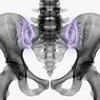
The hip joint is a ball and socket joint where the upper part of the femur moves in the socket of the pelvis. In FAI, the shapes do not fit together optimally. Then, tissues in the joint, especially the labrum and articular cartilage, can be subjected to repeated stress. The labrum is a ring of cartilage that surrounds the socket and contributes to stability and sealing in the joint.
There are usually three shapes. In the cam type, the transition between the femoral head and femoral neck is less round than normal. In the pincer type, the socket covers the femoral head more than usual. Many people have a mixed shape where both mechanisms are present at the same time.
Abnormal skeletal shape in the hip does not automatically mean disease. Many people have cam or pincer features on X-ray without having pain. Therefore, an imaging abnormality alone is not enough to explain hip pain.
What symptoms does FAI syndrome cause?
The most common symptom of FAI syndrome is pain in the groin or front of the hip, especially when the hip is deeply bent or rotated inward. The symptoms are often triggered by sitting for a long time, climbing stairs, running, playing soccer, skating, doing squats or getting out of a low car.
Many also describe stiffness, reduced mobility or a feeling that the hip is hooking up. Sometimes the pain is felt not only in the groin, but also in the buttock, thigh, knee or lower back. The varying pain pattern is a common reason for delaying diagnosis.
A typical patient question is: “Can it really be the hip if I mostly feel it in the thigh?” Yes, it can. Hip pain can be projected to nearby areas, which means that the discomfort is sometimes misinterpreted as muscle tightness, back pain or knee problems.
In some, the symptoms come on gradually during exercise. In others, they are most noticeable in everyday life, for example when sitting in a meeting for a long time, tying your shoes or playing on the floor with children.
Why does FAI syndrome occur?
The cause is fundamentally mechanical. When the bony shapes of the hip do not interact well, early contact occurs in the joint during certain movements, especially flexion, internal rotation and adduction. Over time, this repeated contact can irritate the labrum and cartilage and cause pain.
Cam morphology is often thought to develop during the growth years, especially in young people who train intensively in sports that put a lot of strain on the hip. This does not mean that exercise is dangerous, but it can contribute to the shape of the hip developing differently in some individuals.
At the same time, the connection is not simple. One person may have clear changes on X-ray and be completely symptom-free, while another experiences significant pain from more moderate findings. This suggests that anatomy, load patterns, muscle control and individual sensitivity all play a role.
Many wonder if FAI syndrome leads to osteoarthritis. FAI is considered a possible contributing factor to early cartilage and labrum damage, and thus to hip joint degeneration in some patients. However, the course varies, and not everyone with FAI develops osteoarthritis.
How is FAI syndrome diagnosed?
The diagnosis is made by the doctor starting by asking when the pain occurs, what movements provoke it, whether the discomfort is in the groin and how everyday life or exercise is affected. Since several other conditions can cause similar symptoms, it is also necessary to consider, for example, hip osteoarthritis, dysplasia, gluteal tendinopathy, snapping hip, lower back problems and sometimes stress fracture or osteonecrosis.
The examination looks in particular at mobility and whether the pain is provoked when the hip is bent and rotated inward. A common test is FADIR, where the hip is brought into flexion, adduction and internal rotation. The test can support the suspicion, but is not sufficient on its own for diagnosis.
X-rays are usually the first step in imaging diagnostics and are used to assess the bone shape in the hip. In some cases, MRI of the hip is supplemented, especially if you want to assess the labrum or cartilage in more detail. The key is that the findings must match the patient's symptoms and clinical picture.
Treatment of FAI syndrome - when is physiotherapy enough and when is surgery needed?
The first step in treatment is usually non-surgical. This usually involves adjusting activities that provoke the pain, targeted physiotherapy and sometimes pain relief for a period of time. The goal is not just to “rest” the discomfort, but to improve load tolerance, hip control and movement patterns.
Physiotherapy can, for example, focus on the gluteal muscles, trunk stability, control in one-legged standing, a gradual return to running and adjustment of movements that cause pinching. For a person who exercises a lot, this may involve temporarily reducing deep squats, rapid changes of direction or long sessions in a seated cycling position. For an office worker, it may be more about breaking the sedentary lifestyle and finding sitting positions that do not provoke the hip.
If the discomfort persists despite well-conducted rehabilitation, surgery may be considered. The most common is hip arthroscopy, where the surgeon uses small incisions to remove bone spurs and treat damage to the labrum or cartilage. Randomized studies have shown that arthroscopic surgery in selected patients can provide greater symptom relief than physiotherapy and activity modification alone in the short term, but treatment must be individualized and surgery is not suitable for everyone.
Surgery is less suitable for severe osteoarthritis of the joint. Therefore, correct patient selection is crucial. It is also important to know that surgery does not replace rehabilitation; recovery is largely based on structured training after the procedure.
When should you seek care and what can you do yourself?
You should seek care if you have recurring pain in the groin or hip that occurs with weight bearing, sitting or deep bending and does not go away within a few weeks. The same applies if you notice a clear decrease in mobility, cannot exercise as usual or experience repeated stabs in the hip during everyday movements.
Seek care more urgently if the pain came on suddenly after trauma, if you cannot put weight on the leg, or if you also have a fever or general ill feeling. Then you need to rule out causes other than FAI syndrome.
What you can do yourself before an assessment is to observe the pattern. Does it hurt more after sitting for a long time? When doing deep squats? When the knee is pulled up to the chest? This information helps the healthcare provider distinguish FAI syndrome from other causes of hip pain. You can also try temporarily reducing the movements that provoke it the most, without becoming completely sedentary.
In some people with hip pain, there are other factors that affect recovery and performance, such as low energy availability, iron deficiency, Vitamin D deficiency or metabolic illness.
A hip that hurts when loaded does not necessarily mean that the joint is “done”, but it deserves a thoughtful assessment. The sooner you understand whether the problem lies in the mechanics of the joint, the easier it will be to choose the right path back to everyday life, training and work.
Do you want to get a clearer picture of your health in general? Order a health check up from the Test Clinic and see what your values look like.