
Quick version
Tendinosis is a chronic tendon injury that develops due to long-term overuse without adequate recovery. The condition involves degeneration of the tendon structure, making it weaker and leading to pain and reduced function. It commonly affects areas such as the Achilles tendon, knee, elbow, and shoulder—especially during repetitive movements or physical activity.
Common symptoms include load-related pain, stiffness (particularly in the morning), tenderness, and reduced strength. Symptoms often develop gradually and may become long-lasting if not treated.
The diagnosis is primarily clinical and may be supplemented with ultrasound or MRI when needed. Treatment focuses on load management and exercise, particularly eccentric strength training, to promote tendon healing. Early intervention improves prognosis and reduces the risk of persistent symptoms.
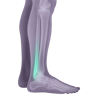
Tendinosis is a chronic condition of a tendon that occurs as a result of prolonged overload without adequate recovery. Unlike acute inflammation (tendinitis), tendinosis is characterized by degenerative changes in the tendon's structure, where the collagen fibers break down and are replaced by weaker tissue. This leads to reduced strength and function in the tendon. The condition is common in both athletes and people with repetitive work tasks, and often affects tendons in the shoulder, elbow, hip, knee and heel (for example, the Achilles tendon).
Causes of tendinosis
Tendinosis develops gradually when a tendon is subjected to repeated stress that exceeds its ability to recover. Common causes include unilateral movements, sudden increases in training intensity, incorrect technique or biomechanical imbalances. Age also plays a role, as the elasticity and healing ability of the tendon decreases over time. Reduced blood circulation in the tendon also contributes to the long-term damage.
Symptoms of tendinosis
The symptoms of tendinosis often develop slowly and can persist for a long time. The pain is usually strain-related and may initially decrease with activity but return afterwards or at rest.
- Local pain when straining.
- Tenderness over the affected tendon.
- Stiffness, especially after rest or in the morning.
- Reduced strength and function in the area.
- Sometimes a thickening of the tendon.
Tendinosis most often occurs in tendons that are exposed to repeated strain over a long period of time. Common areas affected are the Achilles tendon (Achilles tendon), the knee tendon (patellar tendon), the elbow (so-called tennis or golf elbow) and the rotator cuff tendons in the shoulder. The tendon attachments of the hip can also be affected, especially in people who walk or stand a lot. Which area is affected often depends on the individual's activity level, load pattern and any biomechanical factors.
Symptoms vary depending on which tendon is affected and how far the condition has progressed. At first, the symptoms may be mild and transient, but without action they can become more prolonged and affect everyday life to a greater extent.
If you have tendinosis, you may notice that the pain creeps up with repeated strain, for example during exercise or work. You may experience that the area feels stiff in the morning and that it takes time before it "gets going". After activity, the pain can worsen, and sometimes even light movements can cause discomfort. This is a sign that the tendon does not have time to recover between loading events.
Examinations and diagnostics for tendinosis
The diagnosis of tendinosis is made primarily based on the patient's symptoms and a clinical examination. The doctor assesses the location of the pain, range of motion and function in the affected area. In some cases, imaging diagnostics can be used to confirm the diagnosis or rule out other conditions.
Common examinations:
- Ultrasound of the tendon.
- Magnetic resonance imaging (MRI).
- Clinical functional assessment.
Treatment of tendinosis
The treatment of tendinosis aims to stimulate healing in the tendon and reduce the load. The most important measure is adapted training, especially eccentric strength training, which has shown a good effect on the structure and function of the tendon. Rest from provocative activities may be necessary initially, but total inactivity should be avoided.
Pain relief can be achieved with the help of physiotherapy, adapted loading and in some cases anti-inflammatory drugs, although these have limited effect on the degenerative process itself. In more long-term cases, treatments such as shock wave therapy or injections may be considered. Surgery is uncommon and is used only in severe, therapy-resistant conditions.