
Quick version
Regular scales and BMI give a very rough picture of health because they do not distinguish between fat, muscle, water or where on the body the fat is located. This allows you to improve your body composition significantly without changing your total weight. A DEXA scan, on the other hand, provides a detailed mapping of muscle mass, bone density and fat mass, including the metabolically active visceral abdominal fat around the organs, which is strongly linked to health and disease risks.
The analysis is particularly valuable when making lifestyle changes, exercising, aging or losing weight with modern medications, where it is crucial to ensure that you do not lose too much muscle mass. By interpreting it together with other health markers, DEXA serves as a practical tool that shows whether your current plan is working, or whether you need to adjust, for example, protein intake and strength training to achieve the best possible results.
DEXA often only shows up when the scale has stopped behaving as expected. You eat better, exercise regularly and feel stronger – but the number on the scale remains the same, or moves in the “wrong” direction. For many, it becomes frustrating, even though the body may actually have changed in a favorable direction.
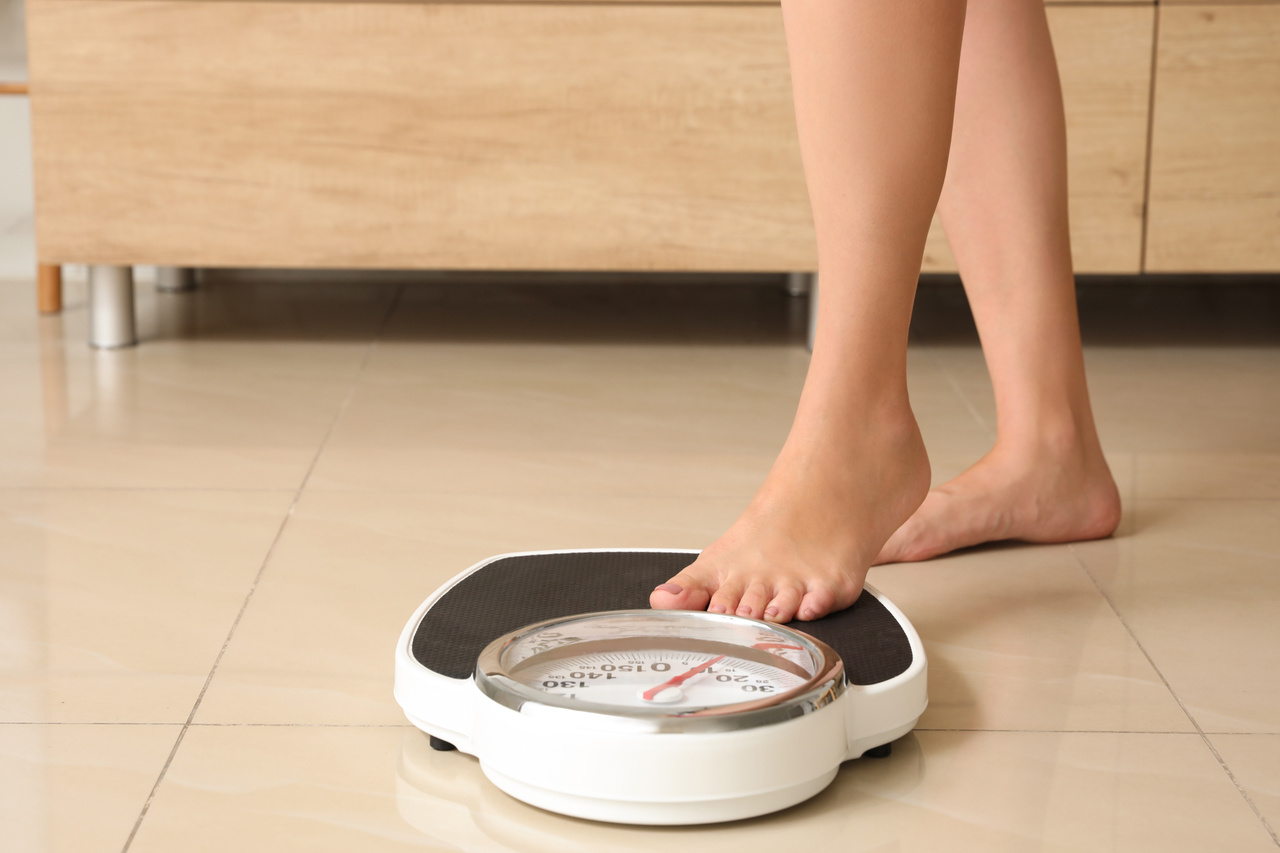
This is where DEXA becomes interesting. A regular scale only tells you how much you weigh in total. It does not say anything about how much of the weight is fat, muscle or bone mass, and it cannot show where in the body the change has occurred. This means that the scale sometimes misses what actually plays the biggest role in health, function and long-term results.
Why body weight alone is often misleading with DEXA
Body weight is a rough measure. It is affected by fat mass, muscle mass, fluid, intestinal contents and sometimes also medications or hormonal changes. Two people can weigh the same and have the same BMI, but still have completely different body composition and risk profiles.
This also applies over time. If you start strength training at the same time as improving your diet, you can reduce fat mass but maintain or increase muscle mass. Then the scale may stand still even though your body composition has clearly improved.
BMI still has value in healthcare, especially at group level and as an initial screening. But BMI cannot distinguish between fat and muscle, and it also does not capture where the fat is located. Belly fat and visceral belly fat are particularly linked to an increased risk of, among other things, type 2 diabetes, high blood pressure and cardiovascular disease.
A common example is someone who has "only" lost two kilos in three months and feels disappointed. If the same person has simultaneously lost four kilos of fat and built two kilos of fat-free mass, this is a completely different development biologically than what the scale suggests. That is why monitoring body composition can be more meaningful than staring blindly at the total weight.
What a DEXA actually measures in the body
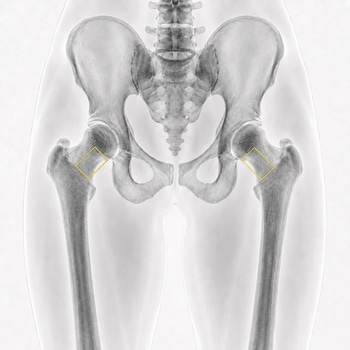
DEXA stands for dual-energy X-ray absorptiometry. The technique has long been used to measure bone density, but can also analyze body composition by estimating how much is made up of fat mass, fat-free soft tissue and bone mineral content. The examination is quick, painless and is done while you lie still on a table.
A body composition analysis does not only give you a total value. DEXA can also show how the tissue is distributed between the arms, legs and torso. This makes it possible to see whether the change has mainly occurred centrally around the stomach or more evenly over the body, which can be important for how health risk is interpreted.
In many cases, DEXA can also estimate the amount of visceral fat, i.e. fat that is located inside the abdominal cavity around the organs. It is not the same as subcutaneous fat. Visceral fat is metabolically active and has a stronger link to insulin resistance, blood lipid disorders and metabolic syndrome than fat that is more superficial.
This is also one reason why two people with the same waist size may have different risk profiles. Waist circumference is useful, but DEXA can provide a more detailed picture of how much fat is actually located where the risks are greatest.
When DEXA provides answers that the scale cannot
DEXA is a valuable tool for monitoring lifestyle changes from a medical perspective. It is particularly useful for regular exercise, weight loss, recovery from illness or for preventing metabolic ill health – even when the scale is stationary.
A common and legitimate question when losing weight is whether it is the "right" kind of weight that has disappeared. When the body loses weight, it is rarely just fat that is lost, but some of it consists of fat-free mass (muscle and tissue). How large that proportion is depends on factors such as protein intake, exercise, age and any medical treatment.
This has become particularly relevant as modern obesity drugs (such as GLP-1 analogues) are increasingly used. Studies show that most of the weight loss from these treatments consists of fat mass, but that about a quarter to a third consists of fat-free mass.
For the elderly, this distinction is especially important. It is possible to have both high fat mass and low muscle mass at the same time, a condition called sarcopenic obesity. In these cases, body weight can look stable on the scale, while muscle decreases and metabolic health, balance and energy deteriorate. DEXA makes it possible to detect and evaluate these types of changes in body composition.
How to interpret a DEXA in a medically reasonable way
A DEXA should not be read as a score on the body. It should be interpreted in the context of symptoms, waist circumference, blood pressure, blood lipids, blood sugar, physical capacity and sometimes bone density. One person may have a “normal weight” but still carry an unfavorable amount of abdominal fat, and another may have a high BMI but good muscle mass and a better metabolic profile.
The most important thing is therefore not a single percentage, but the change over time and the pattern behind the numbers. Has fat mass decreased? Has muscle mass been preserved? Has the central fat accumulation become smaller? Such questions provide more clinical information than whether the weight happens to be minus three or minus six kilograms.
You also need to be aware of the limitations. DEXA is an advanced and useful tool, but the results can be affected by, among other things, hydration, meals, machine differences and how the follow-up is carried out. International guidelines therefore emphasize the importance of standardized methodology and that comparisons are preferably made with the same equipment over time.
This does not mean that DEXA is unreliable. It means that the measurement is most valuable when it is used structured and together with other medical information. Just as a blood test makes more sense when put into context, body composition becomes most useful when it is linked to the overall picture.
What to do if DEXA shows the “wrong” type of change
If DEXA shows that you have lost a lot of muscle or fat-free mass during a weight loss program, the next step is not to stop everything, but to adjust your strategy. Often, this involves ensuring adequate protein intake, incorporating regular strength training, and avoiding overly aggressive calorie restriction for a long time.
Those who primarily carry fat around their abdomen often need to focus less on rapid weight loss and more on sustainable changes that improve insulin resistance and muscle metabolism. Regular physical activity, better sleep, reduced alcohol intake and treatment of concomitant risk factors such as high blood lipids or elevated blood sugar may be more important than chasing a certain target weight.
If DEXA instead shows that you have preserved or increased muscle mass while reducing fat mass, despite little change on the scale, it is often a sign that the plan is working. This is especially true for people who started exercising late in life, resumed exercise after illness or implemented a slower but more sustainable lifestyle change.
In practice, DEXA therefore becomes not just a way to measure the body, but a way to guide the next decision. The result can determine whether you need more recovery, more strength training, more frequent follow-up or additional testing such as blood sugar, blood fats and liver values. For those who have already done the work, it can also be the first objective confirmation that the body has actually responded, even when the scale has not shown it.