
Quick version
PMOS is more than just "a lot of cysts on the ovaries". It is a hormonal and metabolic condition that can affect fertility, skin, weight, sleep and long-term health. Early detection makes a big difference – not to put a label, but to allow for the right treatment, symptom relief and better health decisions.
Your period doesn't come when it should, your skin suddenly feels harder to control, and your hair growth has changed. For many, the suspicion of PMOS begins just like that: not with a single clear symptom, but with several small signals that together cannot really be explained away.
7 common signs to know
PMOS stands for polycystic metabolic ovarian syndrome (also known as PCOS) and is a common hormonal and metabolic condition in fertile age. It is a condition that occurs in approximately 10–13 percent globally, but many are diagnosed late because the symptoms vary greatly from person to person. The diagnosis is not made based on a single blood test or a single symptom, but through a comprehensive assessment of menstrual patterns, signs of elevated androgens and sometimes ultrasound or AMH in the right diagnostic context.
The seven common signs below do not automatically mean that you have PMOS. However, they are typical enough to warrant a medical assessment, especially if you recognize yourself in several of them.
1. Irregular or absent periods
One of the most common signs of PMOS is that ovulation does not work regularly. Then the periods become sparse, unpredictable or do not occur at all. Some people only get a few periods per year, while others have long cycles with a delay of several weeks.
In adults, cycles that are shorter than 21 days, longer than 35 days or fewer than eight periods per year are considered irregular. If you often wait, test negative for pregnancy and still do not get your period as expected, it is a typical situation where PMOS should be considered as an explanation.
This also plays a role in the long term. When periods are missed for a long time, the uterine lining builds up without being expelled regularly. This increases the risk of endometrial hyperplasia and, in the long term, endometrial cancer, although the overall risk is still low.
2. Increased hair growth on the face and body
Many with PMS show signs of hyperandrogenism, which means that the body is more affected by androgens (often called male sex hormones). This can manifest as darker or coarser hair growth on the chin, upper lip, chest, stomach or inner thighs.
This should not be confused with normal, genetically determined hair growth. With PMS, it is more often about a clear change over time – for example, that you need to remove hair on your face more often than before or that hair growth occurs in new places. Hirsutism (male-patterned hair growth in women) is a classic sign of PMS and often provides more guidance than a single laboratory value.
Because increased hair growth can be psychologically stressful and affect self-esteem, it is important that it is taken seriously in healthcare and not dismissed as purely cosmetic.
3. Acne and thinning hair on the head
PMOS can also be noticed on the skin and scalp. Acne that persists after adolescence, recurs in adulthood or mainly occurs along the jawline, chin and neck may be linked to androgenic influences. Some people also notice that the hair on their head is thinning, especially in the front or on the crown.
It is important to be careful here: acne and female pattern hair loss are in themselves weaker markers of biochemical hyperandrogenism than hirsutism. However, together with irregular menstruation and other typical findings, they raise the suspicion of PMOS.
In practice, many have tried targeted skin care, over-the-counter acne treatments or changed shampoos without results. When the underlying problem lies in the hormonal balance and not in the skin, a broader medical assessment is needed.
4. Difficulty getting pregnant
PMOS is one of the most common causes of reduced fertility because the condition disrupts ovulation. If ovulation occurs infrequently or unpredictably, it is more difficult to get pregnant, even with regular intercourse.
This does not mean that pregnancy is impossible – many people with PMOS get pregnant, both spontaneously and with the help of treatment. However, if you have been trying for a long time and your periods are irregular, it is reasonable to investigate whether ovulation is working properly.
Even for those who are not currently trying to get pregnant, the knowledge is valuable. Understanding your cycle in good time makes it easier to plan contraception, future fertility and proper follow-up.
5. Weight gain, insulin resistance and darker skin folds
Not everyone with PMOS is overweight, but many have an increased level of insulin resistance. This means that the body's cells respond less well to insulin, which means that the body must produce more insulin to keep blood sugar stable. This hormonal environment can in turn exacerbate other PMOS symptoms.
It is often noticeable as slight weight gain (especially around the stomach), strong hunger, energy dips or difficulty to lose weight despite lifestyle changes. A more concrete sign in the skin is acanthosis nigricans: darker, velvety skin in, for example, the neck, armpits or groin. Small skin flaps also occur more often.
PMOS is associated with an increased risk of type 2 diabetes, blood lipid disorders and other metabolic disorders. Therefore, it is not enough to just control menstruation and fertility – blood suger, blood lipids, weight and waist circumference are also important parts of the overall picture.
6. Fatigue, snoring and depression
PMOS is not only noticeable in the menstrual cycle. Women with PMOS more often have symptoms of sleep apnea – such as snoring, daytime fatigue or the feeling of never waking up rested. This applies to a greater extent than in women without PMOS, regardless of BMI.
Mental health is also affected. There is an increased incidence of depression and anxiety symptoms and an affected quality of life in PMOS. For some it is about the hormonal and metabolic load itself, for others about how symptoms such as infertility, acne, hair loss and hair growth affect everyday life.
If you recognize yourself in this, it is not "just stress" until proven otherwise. If PMOS is suspected, sleep, mental well-being and energy levels also need to be evaluated.
7. How the diagnosis is made - and therefore a single test is not enough
There is no single test that gives the answer to whether you have PMOS. The diagnosis is usually made in adulthood when at least two of the following three criteria are met, while other causes have been ruled out:
- Signs of androgen excess (clinically or via blood test)
- Ovulation disorder (irregular/missed periods)
- Polycystic ovaries on ultrasound
Other conditions that may resemble PMOS and need to be ruled out include, for example thyroid disorders, elevated prolactin and non-classical congenital adrenal hyperplasia.
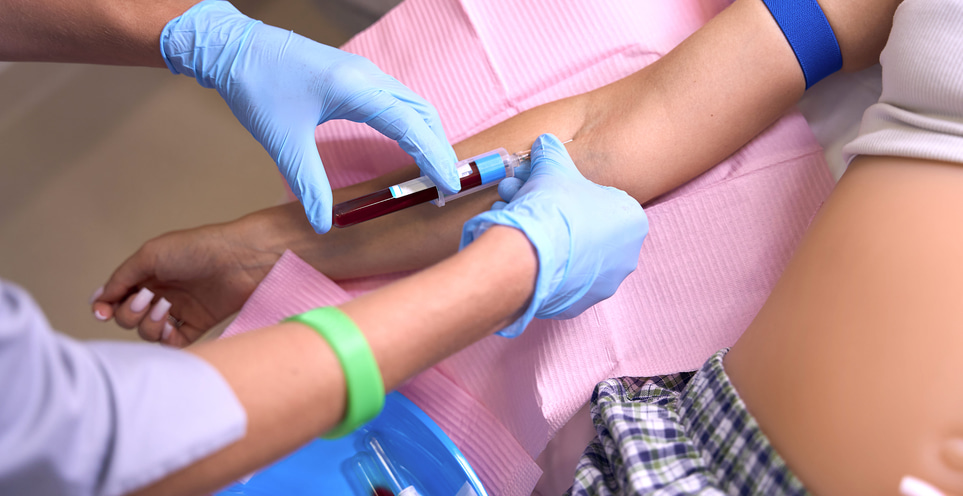
Blood tests provide important guidance but must be interpreted in context. Testosterone and other hormones are often measured, but normal test results do not rule out PMS if the symptoms are typical. AMH (anti-Müllerian hormone) can in some cases be used as part of the diagnosis in adults, but should not be used as the only marker.
A medical examination therefore combines symptoms, menstrual history and targeted laboratory tests. For many, the first step is to get a handle on their values in order to then decide whether further assessment or gynecological examination is needed.