
Quick version
It is common to notice that clothes fit differently around the waist in the 45–55 age group, even if the scale has barely moved. Many describe it as the body “changing shape” during menopause. Belly fat during menopause is often less about character and more about how hormones, muscle mass, sleep and metabolism change at the same time.
Why does belly fat accumulate during menopause?
During menopause, estrogen levels drop. This not only affects the menstrual cycle and hot flashes, but also how the body distributes fat tissue. Fat is then often stored more centrally, i.e. around the abdomen, instead of mainly over the hips and thighs.
This is usually described as a shift from a “pear-shaped” to a more “apple-shaped” pattern. For many, this is seen as an increased waistline even though the total weight has only increased slightly, or sometimes not at all. This means that body composition may have changed even when BMI appears unchanged.
Women who have been followed through the menopause transition show that the amount of visceral fat increases after menopause. Visceral fat is the deeper abdominal fat that surrounds the organs and is more metabolically active than subcutaneous fat. It is precisely this type of fat that is most strongly linked to insulin resistance, blood lipid disorders and increased cardiovascular risk.
Fat on the belly during menopause is not just a weight issue
A common question is: “Have I gained weight, or has the fat just moved?” Often the answer is that both things can occur, but the redistribution of fat is particularly typical during menopause. Studies show that women in the menopausal transition often gain more total fat mass, less muscle mass and more fat in the trunk region.
At the same time, age-related changes occur regardless of menopause. Muscle mass gradually decreases over the years, and since muscle tissue consumes energy, daily energy expenditure decreases. If eating habits and activity levels are about the same as before, the result can be a slow energy surplus that is first noticeable around the waist.
This explains why two people can weigh the same amount but have completely different health risks. One may have relatively high muscle mass and mostly subcutaneous fat, while the other has a larger proportion of abdominal fat and less muscle mass. Therefore, it is not always enough to just look at kilos or BMI when you want to understand what is actually happening in the body.
Visceral abdominal fat affects more than appearance
When patients ask if belly fat is “just cosmetic”, the answer is no. Visceral abdominal fat functions as an active hormone and inflammatory organ. It releases substances that can contribute to low-grade inflammation, poorer insulin sensitivity and unfavorable blood fats.
That is why increased waist circumference in menopause is associated with a higher risk of:
- type 2 diabetes
- high blood pressure
- blood fat disorders
- fatty liver
- cardiovascular disease
In practice, it may look like this: a woman seeks help for fatigue, poorer energy and that her trouser waistband has become tighter. Blood pressure has risen slightly, fasting blood sugar is in the upper normal range and blood fats have become less favorable. The weight may have only increased by three kilos in several years, but the body composition has changed significantly more than the number on the scale suggests. This is a typical example of why abdominal fat in menopause should be assessed medically and not just visually.
How a DEXA examination can provide a clearer answer
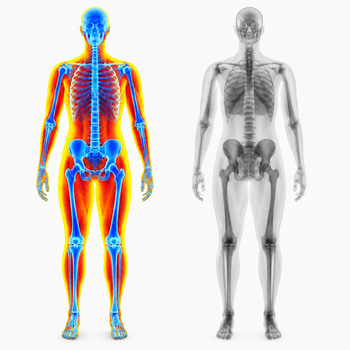
When you want to understand the fat distribution in menopause more precisely, DEXA, or DXA, is a valuable tool for analyzing body composition. The technique has long been used in healthcare and can, in addition to bone density, also be used to measure fat mass, lean mass and the distribution between different body regions. DXA-based measurements can also include, among other things, visceral fat and the ratio between android and gynoid fat distribution.
This means that the examination can show things that are not apparent from weight, BMI or a mirror image. For example, a person may have a normal weight but still have a relatively high percentage of abdominal fat and low muscle mass. For those who exercise regularly, DEXA can also provide a fairer picture than the scale, as increased muscle mass sometimes hides a positive reduction in fat mass. The result is most useful when interpreted together with waist circumference, blood pressure, laboratory tests, menopausal status, symptoms and lifestyle habits.
What can be done about belly fat during menopause?
The most helpful question is rarely “How do I get rid of my belly fast?” but “What specifically affects my body composition the most?” For some, lack of sleep and night sweats are an important part of the problem. For others, it is reduced movement, high stress, lower protein intake or strength training that has become too sporadic.
There are good reasons to focus on measures that preserve or build muscle mass while reducing visceral fat. This usually involves:
- regular strength training
- cardio training that can be maintained over time
- sufficient protein in the diet
- sleep treatment for nocturnal menopausal symptoms
- calorie adjustment when energy needs decrease with age
Many people wonder if hormone therapy solves weight gain. Evidence suggests that menopausal hormone therapy can affect fat distribution in a more favorable direction in some people, but it is not a weight loss treatment in itself. Hormone therapy itself does not lead to weight loss, although better sleep and fewer hot flashes can indirectly make it easier to maintain weight.