Quick version
TIA and stroke are conditions that occur when blood flow to the brain is disrupted and can cause sudden symptoms such as weakness, difficulty speaking or drooping of the corner of the mouth. A TIA often passes quickly, but should still be taken very seriously as it can be a warning sign. If you suspect something is wrong, call 911 immediately and do not wait for the symptoms to disappear.
If an arm suddenly becomes weak, words get stuck or the corner of your mouth droops, it is easy to hope that it will “go away”. That is what makes TIA and stroke so treacherous. The symptoms can be brief, diffuse or come in the middle of something everyday – during breakfast, in the car or at work – but the brain does not have time to wait.
How do you know if you are suffering from a TIA or a stroke?
TIA and stroke occur when the blood flow to a part of the brain is disrupted. In the case of a stroke, the damage is more long-lasting or permanent, while in the case of a TIA, transient symptoms occur that disappear again. For those affected, however, it is rarely possible to tell the difference at home, and therefore it is important to urgently seek care for both suspected TIA and suspected stroke.
The most typical thing is that the symptoms of both conditions come on suddenly. One side of the body may become weak or numb, speech may become slurred or difficult to make out, vision may disappear in one eye or in part of the visual field, and balance may fail without a clear other explanation. Brain hemorrhage can cause the same symptoms as a brain clot, but also headache, nausea, vomiting or decreased consciousness.
An easy way to recognize warning signs is ACUTE:
- Face: does the corner of the mouth droop?
- Body part: can the person lift both arms equally well?
- Pronunciation: is speech slurred or strange?
- Time: call 112 immediately.
If the symptoms have already passed, the same seriousness applies. A person who could not speak normally for ten minutes but then feels "as usual" may still have had a TIA and needs rapid specialist assessment, as the risk of a real stroke is increased in the near future.
What symptoms indicate a TIA or stroke?
The symptoms that arouse the strongest suspicion are those that indicate a neurological loss, that is, that a function in the brain suddenly does not work as it should. These symptoms often involve loss of strength, sensation, language or vision rather than a person experiencing a general feeling of illness.
Common examples include dropping a coffee cup from one hand, starting to speak incoherently even though you know what you want to say, or suddenly not seeing the person standing on one side of you. You may also feel numbness in one side of your face or have difficulty walking straight. When such symptoms come on suddenly, stroke should always be the first thought.
However, not all dizziness attacks are TIAs, and not all confusion is stroke. Isolated fainting, brief general dizziness or unspecific anxiety speak less clearly for TIAs if there are no focal neurological symptoms at the same time. However, it is the healthcare provider who should make that assessment when the illness is sudden and unusual.
What is the difference between a TIA and a stroke?
The difference lies primarily in how long the blood flow disturbance affects the brain and whether there is permanent brain damage. A TIA is a transient circulatory disorder in the brain that causes stroke-like symptoms but where the symptoms go away, often within minutes and sometimes within an hour. Stroke causes symptoms that persist longer and can cause permanent damage if treatment is not given quickly.
In practice, the line cannot be drawn safely without medical assessment and often brain imaging. A person may think it was “just a TIA”, but examination may later show that it was actually a minor stroke. It is therefore very important not to wait at home to see if things get better.
Another important difference between TIA and stroke is that TIA acts as a warning signal. It means that something in the blood circulation to the brain is not right – for example, it could be atherosclerosis, atrial fibrillation or other vascular disease – and that the risk of a new event may be high if the cause is not investigated and treated quickly.
What should you do immediately if you suspect a TIA or stroke?
The absolute first thing you should do is call 112 immediately. If you are the one affected, you should not drive to the emergency room yourself, and if someone else is affected, you should not let the person "rest a little first" to see if it passes and then go in. The ambulance staff can start the emergency treatment immediately and ensure that the person gets the right care without unnecessary delay.
Please note exactly when the person was last completely symptom-free. This time determines which treatments may be relevant when you get to the hospital. In the case of ischemic stroke, i.e. stroke caused by blood clot, clot-dissolving treatment may be possible within a limited time window, and in some cases, thrombectomy can also be performed where the clot is removed mechanically.
If the symptoms have resolved, the person should still be assessed urgently. According to guidelines, a suspected TIA should lead to immediate referral for specialist assessment within 24 hours, and some guidelines recommend that aspirin be given immediately if there are no contraindications. The latter should, however, be handled within the healthcare system, especially since cerebral hemorrhage must first be considered in the assessment.
While waiting for help
If you are not the one affected, while you are waiting for help, keep the person under observation, let them rest in a semi-sitting position and do not give them food or drink if swallowing seems affected. Should the person become unconscious and not breathe normally, follow the emergency operator's instructions and begin CPR.
Why is time so crucial?
Brain cells die quickly during a stroke because they do not receive enough oxygen and nutrients. The sooner blood flow is restored or the bleeding is identified, the greater the chance of saving brain tissue and reducing the risk of permanent problems with speech, movement, memory or vision.
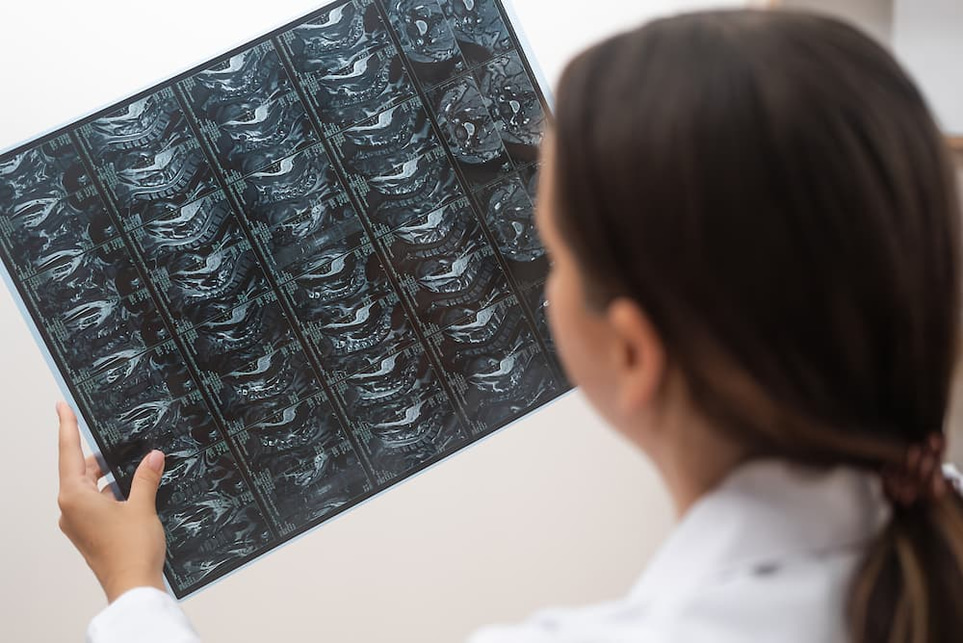
That is why healthcare works with rapid diagnostics, often computed tomography of the brain, to distinguish between a blood clot and bleeding. Treatment looks completely different depending on the cause, and you cannot determine this based on symptoms alone.
Even a TIA is time-critical. The risk of stroke is greatest early after the event, which means that investigations of, for example, blood pressure, heart rhythm, blood lipids, diabetes and narrowing of the carotid arteries need to start quickly.
What happens next?
After a person has experienced a TIA or stroke, healthcare tries to find the underlying cause and reduce the risk of it happening again. What can be done then is to provide blood thinning treatment for atrial fibrillation, antiplatelet drugs after a clot-induced TIA or stroke, statins for elevated blood lipids and treatment for high blood pressure. Rehabilitation often starts early and is adapted to the functions that have been affected.
It is important to work preventively to reduce factors that can cause high blood pressure, elevated blood sugar and unfavorable blood lipids, which are things that can last for a long time without clear symptoms but still increase the risk of vascular disease in the brain and heart. It is therefore also important to follow up and check your values to protect the brain going forward.