Quick version
How often your blood pressure should be measured depends on your age, risk factors, and whether you already have known hypertension. Healthy adults between the ages of 18 and 39 usually only need to have it checked every three to five years, while people aged 40 and younger – or younger with risk factors such as obesity – should be screened annually. If high blood pressure is suspected or needs to be monitored, random measurements are rarely helpful; instead, a structured period of 4 to 7 days is recommended, where you measure twice in the morning and twice in the evening while at rest with an approved upper arm monitor. A home average of 135/85 mmHg or higher is considered elevated and should be evaluated by a healthcare professional, while very high values around 180/120 mmHg – especially in combination with symptoms such as chest pain, shortness of breath, or severe headache – require prompt medical attention.
Blood pressure is rarely noticed in everyday life until something has happened. Many people feel completely healthy, exercise, work and sleep as usual – but still have elevated values for a long time. That is why the question of how often to measure blood pressure is more practical than many people think: too rarely can cause high blood pressure to be missed, and too often can create unnecessary concern if you interpret occasional peaks as a sign of illness.
How often should you measure blood pressure? Doctor's recommendations and guidelines
The short answer is that it depends on age, previous blood pressure values, risk factors and whether you already have treated hypertension. Hypertension means high blood pressure that is so persistent that it increases the risk of stroke, heart attack, heart failure and kidney damage, among other things. Current guidelines recommend regular screening in healthcare for adults and that elevated admission values are confirmed with measurements outside the clinic, preferably with 24-hour measurement or structured blood pressure measurement at home.
For those who have not been diagnosed with high blood pressure, it is mainly about detecting risk in time. For those who are already being treated, blood pressure measurement is about seeing whether the treatment is really working in everyday life, not just at the clinic. This also applies to employers who want to work preventively: blood pressure is one of the most valuable measurements in a health check because abnormalities often appear early and for a long time without symptoms.
How often should you measure your blood pressure if you are healthy?
If you are an adult and do not have known hypertension, regular screening is recommended, but not necessarily home measurement every week. Adults from the age of 40 are screened annually, and younger adults should also be screened annually if they are at increased risk, for example overweight, previous high-normal values or other risk factors. For adults aged 18–39 without increased risk and with previously normal blood pressure, checking every three to five years is often sufficient.
This can be translated into common situations. A 28-year-old person with normal blood pressure, normal weight and no other risk markers rarely needs to check at home on a regular basis. A 46-year-old person with sedentary work, abdominal obesity or blood pressure close to the borderline should, however, check significantly more often, even if there are no symptoms.
When do you need to measure your blood pressure more often at home?
Home blood pressure is particularly valuable when high blood pressure is suspected, when treatment has been adjusted or when the values at the clinic and how you feel do not quite match. An elevated blood pressure measured at the clinic should be confirmed with measurements outside of healthcare, primarily through 24-hour ambulatory blood pressure measurement (ABPM). If this is not appropriate, home blood pressure measurement (HBPM) is used instead.
You should therefore measure more often at home if you:
- have received an elevated value at a health center, health check or pharmacy
- are already being treated for hypertension and want to monitor the effect of medication or lifestyle changes
- are suspected of having white coat hypertension, i.e. high values in healthcare but normal at home
- are suspected of having masked hypertension, where blood pressure looks normal at the clinic but is elevated in everyday life
- have diabetes, kidney disease, cardiovascular disease or other conditions where blood pressure control is extra important
A common patient question is whether to measure every day just to be on the safe side. Often the answer is no. When investigating or following up, it is better to have a structured series of measurements over a few days than sporadic single values in stressful situations. Individual peaks after coffee, anger, pain or poor sleep are common and are not sufficient for diagnosis.
This is what a correct measurement period looks like
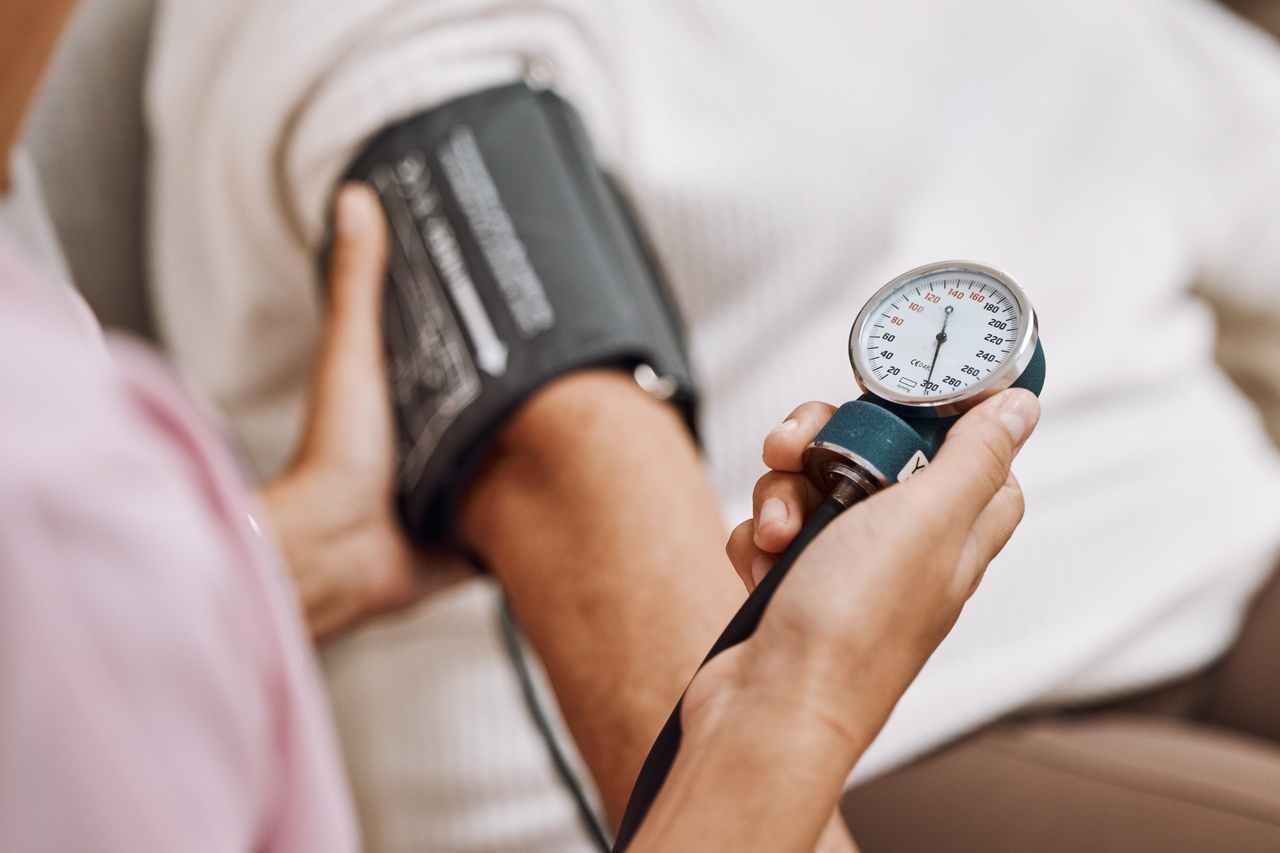
When using home blood pressure to assess whether blood pressure is truly elevated, the measurement should be done in a standardized way. Blood pressure should be measured twice daily, preferably morning and evening, for at least 4 days and preferably 7 days. On each occasion, two measurements are taken at least 1 minute apart while sitting.
Practically, a week can look like this:
- in the morning: measure after a few minutes of rest, before breakfast and before blood pressure medication if you are using such
- in the evening: measure in a quiet environment before going to bed
- take two measurements each time and note both
- sit with your back supported, feet on the floor and arm at heart level
- avoid exercise, nicotine, coffee and stress just before the measurement
For many, this is more useful than measuring a little now and then for several months. A structured series makes it easier for doctors to determine whether the values are really elevated, whether the treatment needs to be adjusted or whether the variation is normal.
What blood pressure values are too high?
Blood pressure is given in millimeters of mercury, mmHg, and is written as systolic over diastolic pressure. Systolic pressure is the upper number and reflects the pressure when the heart pumps blood. Diastolic pressure is the lower number and reflects the pressure when the heart is resting between beats.
Hypertension is further investigated when the admission blood pressure is between 140/90 and 180/120 mmHg, and the diagnosis is then confirmed with ABPM or HBPM. For home blood pressure, an average of 135/85 mmHg or higher is considered elevated in several established guidelines.
This means that single measurements such as 142/88 at home do not automatically indicate illness. However, if the average value after correct measurement over several days lands above 135/85, it should be evaluated medically. However, if the blood pressure is very high, especially around 180/120 mmHg or higher, prompt medical attention is required – especially if there is also chest pain, shortness of breath, severe headache, neurological symptoms or visual impairment.
Common mistakes that make blood pressure readings misleading
The most common mistake is not the device but the situation surrounding the measurement. Blood pressure is quickly affected by body position, conversation, stress, a full bladder, caffeine and if the cuff is not properly fitted. Therefore, two measurements with only a few minutes difference can be different without anything being wrong.
Another common mistake is to measure when you feel anxious and then repeat the measurement many times in a row. Then there is a risk that blood pressure measurement will become a control behavior rather than a medical tool. Instead, it is better to follow a specific schedule and look at the average value.
Also choose the right type of device, an automatic upper arm monitor with the right cuff size. Wrist monitors can give less reliable readings if they are not used very carefully.
When should you seek care or follow up with testing?
Seek planned care if you repeatedly get elevated readings at home, even if you feel well. high blood pressure often does not cause any symptoms at all, which is why regular monitoring is so important. If you have other risk markers, such as elevated blood sugar, blood lipid disorders, kidney damage or a history of premature cardiovascular disease, the overall assessment becomes even more important.
Seek care more quickly if your blood pressure is very high or if high readings are combined with new headaches, chest pressure, shortness of breath, confusion, weakness in an arm or leg or sudden vision changes. In these cases, simply monitoring at home is not enough.
A wise way of thinking is that blood pressure is not primarily a number to react to, but a signal of how the body is being strained over time. Those who follow their values in a structured way have a better basis for decisions – not only about medication, but also about sleep, stress, alcohol, exercise and metabolic health.