Quick version
Non-alcoholic fatty liver disease (MASLD) often develops silently without obvious symptoms and is mainly linked to metabolic risk factors such as abdominal obesity, type 2 diabetes, high blood pressure and elevated blood lipids rather than high alcohol consumption. If the condition is not detected in time, the fat accumulation can lead to liver inflammation, scarring (fibrosis) and an increased risk of both cirrhosis and cardiovascular disease. The diagnosis is made through a comprehensive assessment of blood tests, risk profile and sometimes ultrasound or elastography, as normal liver values may be normal despite fat accumulation. The good news is that early fatty liver disease can often be slowed or reversed with lifestyle changes – where even a 5–10 percent weight loss, regular exercise and a more Mediterranean-like diet have a clear effect.
Many people who get fatty liver feel completely healthy. You can go to work, exercise occasionally, have slightly too high blood lipids or a few kilos around your stomach – and still have a liver that slowly stores fat. This makes the condition easy to miss, especially since the symptoms are often absent in the beginning.
At the same time, fatty liver is not just a question of the liver. It is often linked to things like insulin resistance, abdominal obesity, type 2 diabetes, high blood pressure and elevated triglycerides. Therefore, for many, fatty liver is the first sign that your metabolism is under pressure.
Fatty liver can develop without you noticing it
Fatty liver means that fat has been stored in the liver cells. Today, the term MASLD is increasingly used for the form that is linked to metabolic risk factors, i.e. obesity, type 2 diabetes, blood lipid disorders or high blood pressure. The older term was often NAFLD, but the basic problem is the same: the liver begins to store fat without giving clear warning signals.
For many, the condition is discovered by chance. It may be during a health check, a blood test with slightly elevated liver enzymes or an ultrasound examination done for another reason. That is why many people only seek treatment when liver damage has already been present for a long time.
Why does fatty liver often cause no symptoms?
The liver is a durable organ with a large reserve capacity. It can function for a long time despite the accumulation of fat and the presence of low-grade inflammation. That is why it is common for early fatty liver to go unnoticed.
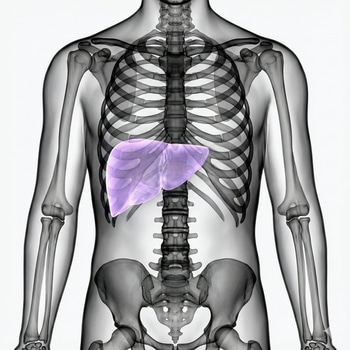
If symptoms do occur, they are often non-specific. Some describe fatigue, a diffuse feeling of heaviness under the right rib cage or a general feeling of being out of shape. This type of complaint is also common for other reasons, which means that few people think of the liver as the explanation.
That is also why the expression “silent liver disease” is sometimes used. Fat accumulation and early scarring can develop over a long time without any noticeable changes to everyday life. Only when the damage has become more pronounced does the risk of more obvious signs of the disease increase.
Who is most at risk of getting fatty liver?
The most common cause of fatty liver in Sweden is not high alcohol consumption, but metabolic effects. The condition is particularly common in people who are overweight or obese, abdominal obesity, prediabetes or type 2 diabetes. High triglycerides and high blood pressure are also often part of the same picture.
Risk factors that often go together are:
- increased waist circumference or abdominal obesity
- type 2 diabetes or pre-diabetes
- high blood fats, especially triglycerides
- high blood pressure
- low physical activity
- lack of sleep or sleep apnea
- regular alcohol intake that puts additional strain on the liver
This does not mean that only people who are clearly overweight are affected. Fatty liver can also occur in people of normal weight, especially if you have heredity, insulin resistance or an unfavorable fat distribution with more fat around internal organs. A person can therefore look “normal weight” but still have metabolic risk on the inside.
Many wonder if sugar plays a role. Yes, especially a high intake of energy-rich foods, sweet drinks and frequent excess calories can contribute to the liver storing more fat. It is rarely about a single food, but about how diet, weight, exercise and blood sugar regulation interact over time.
What can happen if fatty liver is not detected in time?
In many people, the condition stops at fat storage, and the liver can improve significantly with lifestyle changes. But in some, the process progresses to inflammation of the liver, which was previously often called NASH and is now included in what is called MASH. Then it is not just about fat, but also about the liver tissue becoming irritated and damaged.
The next step can be fibrosis, i.e. scarring. Fibrosis is also not necessarily noticeable with symptoms, but is medically important because it increases the risk of cirrhosis, impaired liver function and in some cases liver cancer. The earlier the development is detected, the greater the chance of slowing or reversing it.
There is also another important point: people with fatty liver often have a higher risk of cardiovascular disease than for the liver disease itself to become the first major problem. Fatty liver is therefore often a signal that the entire metabolic health needs to be reviewed. A slightly elevated ALT can in practice be a marker for something bigger than just the liver.
How is fatty liver detected and which tests are relevant?
Fatty liver cannot be diagnosed based on symptoms alone. The assessment is instead based on a combination of blood tests, risk factors and sometimes imaging diagnostics such as ultrasound. Common liver tests are ALAT, ASAT, ALP, GT and bilirubin, but they can be normal despite fatty liver.
It is a common patient question: “Can I have fatty liver even though my liver values are not that high?” The answer is yes. Normal or only slightly abnormal tests do not rule out the presence of fat in the liver, nor do they say for sure how much scarring has developed.
Therefore, a broader look at the entire risk profile is often taken. This may include:
- liver tests such as ALT and AST
- fasting glucose or HbA1c to assess blood sugar
- blood fats such as triglycerides and cholesterol
- weight, BMI and waist circumference
- blood pressure
- sometimes calculating a risk score such as FIB-4 to estimate the likelihood of more advanced fibrosis
FIB-4 is a simple calculated risk measure that uses age, AST, ALT and platelets. It does not establish a diagnosis in itself, but helps to sort out which people may need further investigation, such as elastography. Elastography is an examination that measures how stiff the liver is, which can provide guidance on the degree of scarring.
If the doctor suspects another liver disease, other causes also need to be ruled out. Examples include hepatitis, high alcohol consumption, certain medications, autoimmune liver disease or more unusual metabolic diseases. Fatty liver is common, but it should not be a casual explanation for all abnormal liver tests.
Can fatty liver be treated – and can it go back?
Yes, in many cases fatty liver can be improved, and early changes can be significantly reduced. Treatment is mainly based on reducing the liver's fat storage and improving the metabolic environment around the liver. The most effective is usually weight loss in the case of overweight, more physical activity and reduced alcohol intake.
Even a weight loss of around 5–10 percent can provide a significant improvement in fat storage and liver inflammation. This means that even a moderate change can play a role. For a person who weighs 90 kilos, this can be about 4.5 to 9 kilos – so a realistic goal rather than a total lifestyle change overnight.
What type of exercise is needed then? Both cardio and strength training help. The important effect is not only calorie consumption, but that the body becomes more insulin-sensitive and that the amount of liver fat can decrease even before the weight changes that much.
Dietarily, there is no requirement for an extreme diet. What usually works best in the long term is a pattern with less ultra-processed food, fewer sugary drinks, better portion balance and more vegetables, legumes, fish, whole grains, nuts and unsaturated fats. A Mediterranean-style diet is often mentioned in guidelines because it benefits both the liver and cardiovascular health.
Many people ask if there is a drug “for fatty liver”. At present, lifestyle treatment is the basis. Some drugs used for obesity or type 2 diabetes, such as GLP-1-based treatment, can be valuable in the right patient because they help with weight loss and improve metabolic risk. However, they are used based on their usual indications and as part of a larger treatment plan, not as a simple shortcut.
When should you take fatty liver seriously and seek further treatment?
If you have elevated liver values, type 2 diabetes, abdominal obesity or high triglycerides, it is wise not to dismiss the matter by saying “I don’t feel anything”. The absence of symptoms is part of the problem. An early check-up can provide a better starting point than waiting until the liver has become stiffer or the inflammation has lasted longer.
You should also seek medical attention if you experience symptoms such as significant fatigue, new pain or discomfort under the right rib cage, yellow skin or the whites of the eyes, severe itching, swelling in the abdomen or unexplained weight loss. Such signs do not necessarily have to be due to fatty liver, but they require medical evaluation.
For many, the best question is not “Does my liver hurt?” but “How is my metabolic health right now?” That is often the clue. The liver reacts early to long-term imbalances in blood sugar, blood fats and weight regulation, long before the body sends clear alarm signals.
Fatty liver is therefore not just a finding to note, but an opportunity to act in time. When you spot the pattern early, small, consistent changes can have a greater effect than you often think – not only for the liver, but for your entire future health.