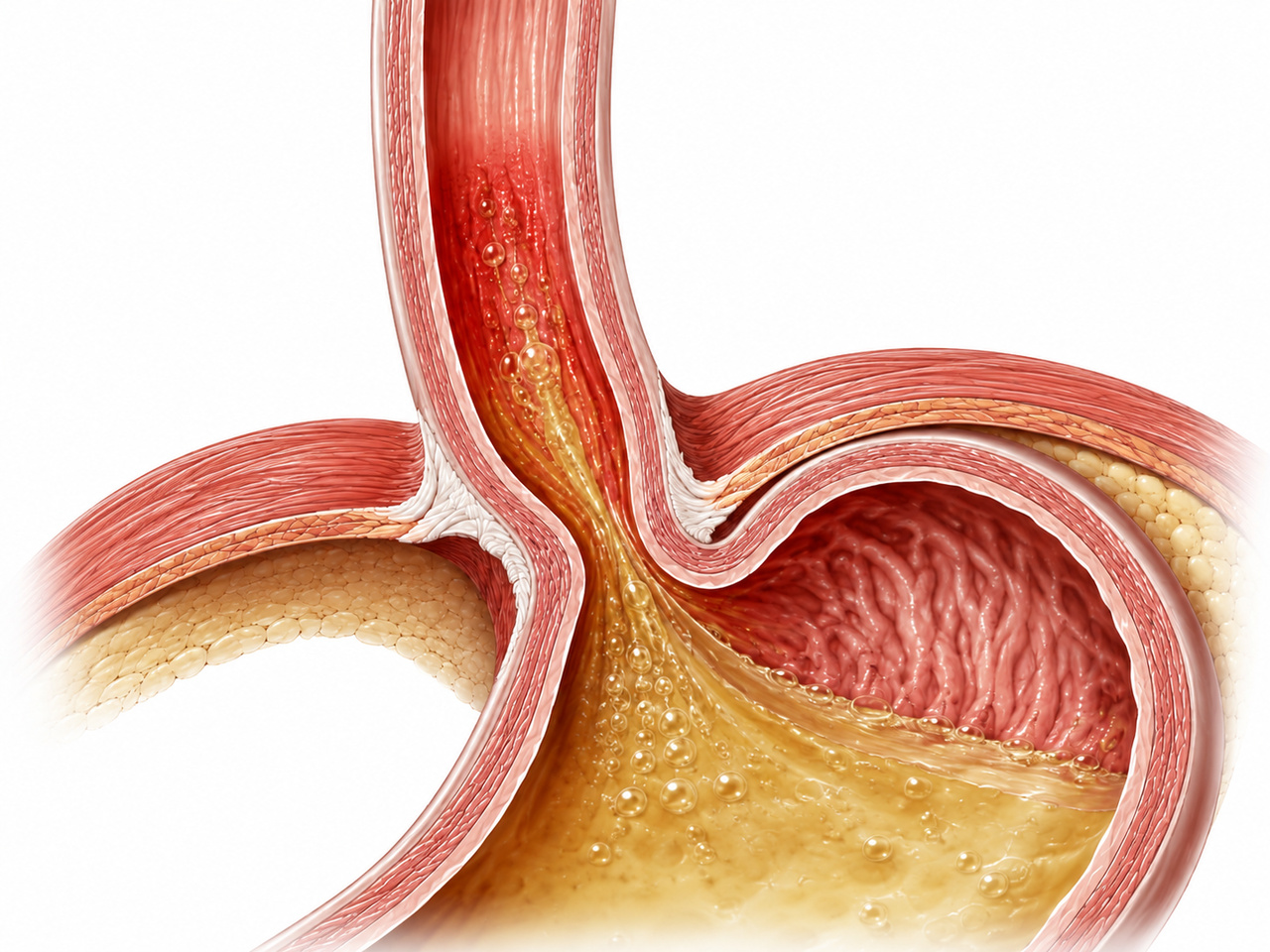

It is normal for a small amount of stomach contents to occasionally come up into the esophagus and also occurs in people who do not have GERD. It is only when the reflux causes troublesome symptoms and/or complications that it may be gastroesophageal reflux disease. GERD can occur both with and without visible damage to the esophageal mucosa.
The most common symptoms are heartburn and acid reflux, but GERD can also cause chest pain, difficulty swallowing and sometimes symptoms from both the throat and respiratory tract. Some people have inflammation and mucosal damage in the esophagus, while others may have pronounced reflux symptoms without visible changes during gastroscopy.
So what is the difference between reflux, heartburn and GERD?
The terms reflux, heartburn and GERD are sometimes used interchangeably, but there are important medical differences:
- Gastroesophageal reflux means that stomach contents move back from the stomach up into the esophagus. A certain amount of reflux is also normal.
- Heartburn is a symptom that is usually felt as a burning sensation behind the breastbone.
- GERD is a reflux disease where the reflux causes troublesome symptoms or complications to varying degrees
It is therefore possible to have occasional episodes of reflux or heartburn without being diagnosed with gastroesophageal reflux disease.
Common symptoms of GERD
GERD can therefore cause several different symptoms and the degree of discomfort varies from person to person. The two most typical symptoms are heartburn and acid regurgitation.
- Heartburn - A burning or stinging sensation behind the breastbone that often occurs after eating.
- Acid regurgitation - Sour or bitter stomach contents come up towards the throat or mouth.
- Chest pain - Reflux can cause pain or discomfort behind the breastbone.
- Difficult swallowing - It may feel difficult to swallow or as if food is getting stuck on the way down.
- Upper abdominal pain: Some people experience discomfort or pain in the upper abdomen at the same time.
The symptoms can vary and become more pronounced after specific meals, when bending forward or when lying down. Therefore, nocturnal reflux can be particularly troublesome for some people.
Can GERD cause coughing, hoarseness and throat discomfort?
Reflux disease can sometimes occur together with symptoms such as chronic coughing, hoarseness, clearing of throat or throat irritation. However, such symptoms are non-specific and can have many other causes.
Therefore, a cough or hoarseness does not automatically mean that GERD is the cause. In case of long-term symptoms, a medical assessment may be needed to distinguish reflux from, for example, asthma, allergies, infection or other diseases of the respiratory tract and throat.
What causes GERD?
Between the esophagus and the stomach is the lower esophageal sphincter, often called the lower gastric orifice. Together with the diaphragm, this area acts as a barrier to limit the reflux of stomach contents. GERD develops when this protective mechanism does not work effectively enough or when other factors expose the esophagus to reflux to such an extent that symptoms or damage occur.
Several factors can contribute to reflux problems:
- Overweight or obesity: Increased pressure in the abdomen can contribute to reflux.
- Diaphragmatic hernia: In a hiatal hernia, part of the stomach has been displaced up through the diaphragm, which can weaken the barrier between the stomach and esophagus.
- Pregnancy: Hormonal changes and increased abdominal pressure can increase the risk of reflux.
- Smoking: Can contribute to reflux and is also a risk factor for certain complications.
- Large or late meals: Reflux can be more pronounced if the stomach is full, especially just before going to bed.
- Certain medications: Some medications can affect the function of the lower esophageal sphincter and contribute to reflux in some people.
Different people also react differently to, for example, fatty foods, spicy foods, alcohol, coffee or other foods. It is therefore often more relevant to identify which factors actually trigger symptoms in the individual than to avoid a long list of foods in general.
Erosive and non-erosive reflux disease
GERD can occur in several different forms.
- Erosive reflux disease: The reflux has caused visible damage or inflammation in the esophageal mucosa, known as erosive esophagitis.
- Non-erosive reflux disease: The person has reflux-related symptoms but gastroscopy does not show typical erosive mucosal lesions.
Det finns också personer som har känslig matstrupe och får tydliga symtom trots att syraexponeringen ligger inom ett normalt intervall. Därför behöver symtomens intensitet inte alltid motsvara graden av synlig inflammation i matstrupen.
There are also people who have a sensitive esophagus and experience clear symptoms even though the acid exposure is within a normal range. Therefore, the intensity of the symptoms does not always correspond to the degree of visible inflammation in the esophagus.
How is GERD diagnosed?
In the case of typical reflux symptoms, the doctor can often make an initial assessment based on the medical history and symptom picture. What further investigation is needed depends on age, symptoms, risk factors, response to treatment and whether there are alarm symptoms.
The investigation may include:
- Gastroscopy: A thin camera is passed through the mouth into the esophagus and stomach. The examination can detect, among other things, esophagitis, strictures and Barrett's esophagus and help to rule out other diseases.
- Ambulatory reflux measurement: Measures reflux in the esophagus over a longer period. pH measurement, sometimes in combination with impedance measurement, can be used to investigate the relationship between reflux episodes and symptoms.
- Esophageal manometry: Examines the movements and pressure conditions of the esophagus. Manometry is used in special situations and may be relevant, for example, before antireflux surgery or to rule out other motor disorders.
Blood tests can sometimes be taken to detect anemia or signs of another underlying disease. Examples of tests are blood status, including hemoglobin (Hb), as well as iron status and ferritin in cases of suspected iron deficiency or prolonged bleeding. Which tests are needed is determined based on symptoms and other findings. However, blood tests cannot in themselves confirm the diagnosis of GERD.
When is gastroscopy needed for reflux?
Not all people with heartburn or reflux need to undergo gastroscopy. The examination is particularly important when there are symptoms or risk factors that mean that other diseases or complications need to be ruled out.
Gastroscopy may be necessary in the event of new-onset swallowing difficulties, pain when swallowing, involuntary weight loss, signs of bleeding from the gastrointestinal tract or suspected anemia. The examination may also be needed in the event of persistent or difficult-to-treat reflux symptoms, suspicion of complications, risk factors for Barrett's esophagus or in the event of new-onset reflux symptoms in older people.
Treatment of GERD
The treatment of gastroesophageal reflux disease is adjusted according to how pronounced the symptoms are, whether there is esophagitis or other complications and how often the symptoms recur. The goal is to reduce symptoms, heal any inflammation in the esophagus and prevent complications.
Lifestyle changes for GERD
For some people, changing habits can reduce reflux symptoms. Measures that may be relevant are:
- weight loss if overweight or obese.
- avoiding large meals late at night.
- avoiding eating in the last few hours before bedtime.
- raising the head of the bed if there are pronounced nocturnal symptoms.
- reducing food or drink that clearly triggers your own reflux symptoms.
- quitting smoking
There is no specific food that causes GERD in everyone. Dietary advice should therefore be adapted to which products actually cause problems for the individual.
Medications for GERD
In GERD, proton pump inhibitors (PPIs) are primarily used, which reduce stomach acid production and are the most important drug treatment for more pronounced problems or esophagitis. For milder or temporary symptoms, alginic acid, antacids or H2 receptor blockers can be used to reduce reflux or relieve symptoms. The length of treatment varies depending on symptoms and any inflammation in the esophagus, and with long-term PPI treatment, the need should be monitored regularly.
GERD that does not improve with treatment
If symptoms persist despite treatment with proton pump inhibitors, this does not always mean that more acid-suppressing medication is needed.
The doctor may need to check that the medication is being taken correctly and then assess whether the symptoms are truly due to reflux. Other causes may include reflux hypersensitivity, functional disorders, eosinophilic esophagitis or disorders of esophageal motility.
In cases of prolonged symptoms despite correct treatment, gastroscopy, reflux measurement or other examinations may therefore be appropriate.
Surgery for gastroesophageal reflux disease
Surgical treatment can be considered in carefully selected people with objectively confirmed reflux disease, especially when the symptoms are pronounced or when long-term drug treatment is not appropriate.
An established surgical method is fundoplication. The surgery strengthens the barrier between the stomach and esophagus by using the upper part of the stomach to create a support around the lower part of the esophagus.
Surgery is not suitable for everyone with reflux symptoms. Therefore, before surgery, a careful investigation is usually required to ensure that the symptoms are truly caused by GERD.
Most people with reflux disease do not develop serious complications. However, long-term or severe GERD can in some cases cause changes in the esophagus.
Esofagit
Om refluxen skadar matstrupens slemhinna kan en inflammation uppstå. Detta kallas refluxesofagit eller erosiv esofagit.
Esophagitis
If reflux damages the lining of the esophagus, inflammation can occur. This is called reflux esophagitis or erosive esophagitis.
Narrowing of the esophagus
Long-term inflammation can in some cases lead to scarring and narrowing, called peptic stricture. This can cause difficulty swallowing and a feeling that food is stuck.
Barrett's esophagus
Barrett's esophagus means that the lining of the lower part of the esophagus has changed. The condition is more common in people with long-term GERD and is associated with an increased risk of esophageal cancer, although the individual risk of cancer is still low. People with Barrett's esophagus may therefore need special medical follow-up.
When to seek care for GERD and reflux
Contact healthcare if you have recurring or long-term reflux problems, if over-the-counter medications do not help, or if the symptoms affect sleep and everyday life.
You should especially seek care if you:
- have difficulty swallowing.
- experience food getting stuck in the esophagus.
- have pain when swallowing.
- lose weight without explanation.
- vomit repeatedly.
- vomit blood or something that looks like coffee grounds.
- have black or tarry stools.
- have signs of anemia.
Chest pain should not automatically be interpreted as reflux. New or severe chest pain may be from the heart and needs to be assessed based on the symptoms. Seek emergency care for severe or pressing chest pain, especially if the pain is combined with, for example, shortness of breath, cold sweats, nausea or radiation to the arm, back, neck or jaw.
Can GERD go away?
The course varies. Some people have reflux problems for limited periods while others have a more long-term disease where symptoms come and go over time.
With the right treatment, it is often possible to get good control of the symptoms and heal any inflammation in the esophagus. If the problems recur frequently or require long-term treatment, the treatment should be followed up and adapted to the individual's needs.
Frequently asked questions about GERD
Is GERD the same as heartburn?
No. Heartburn is a symptom, while GERD is a disease in which reflux causes troublesome symptoms or complications. However, heartburn is one of the most common symptoms of GERD.
What does GERD mean?
GERD is an abbreviation for the English term gastroesophageal reflux disease. In Swedish, the term gastroesophageal reflux disease is used.
What does GERD feel like?
Typical symptoms are a burning sensation behind the breastbone and acid reflux. The symptoms often occur after meals or when lying down. Some people also experience chest pain or difficulty swallowing.
Is reflux dangerous?
Temporary reflux is common and usually harmless. Long-term and pronounced GERD, however, can cause esophagitis, narrowing of the esophagus or Barrett's esophagus, among other things.
What treatment is best for GERD?
Treatment depends on the extent of the symptoms and whether the esophagus is inflamed. Proton pump inhibitors are the most important drug treatment for clear GERD and especially for reflux esophagitis. Lifestyle measures can also reduce symptoms in some people.
How do you know if you have GERD?
Typical symptoms can strongly suggest GERD. In some cases, gastroscopy or reflux measurement is needed to confirm the diagnosis or rule out other diseases.