
Quick version
A DEXA Scan provides a detailed picture of your fat mass, muscle mass and visceral fat. The method is a safe and accurate tool for those who want to monitor your training effect, understand your metabolic risk or see the health progress that the usual bathroom scale misses. You will get the greatest benefit by following your values over time under similar conditions.
Weight can remain the same even though the body is clearly changing. Someone starts strength training, gets a better waist size and feels stronger, but the scale shows almost the same number as before. In such situations, a DEXA Scan can provide answers that regular measurements miss.
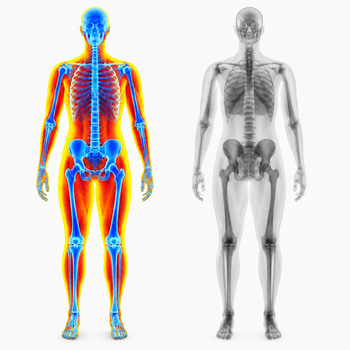
A DEXA Scan, or DXA, is not only used for the skeleton. The method can also measure body composition and estimate how much of the body is made up of fat mass, muscle mass and bone mass. In some systems, it can also provide a measure of visceral fat, i.e. fat that lies deep in the abdomen around the organs. This is valuable information when you want to understand health, training effect or metabolic risk.
What does a DEXA Scan actually measure?
DEXA stands for dual-energy X-ray absorptiometry. The technique uses two levels of X-ray energy to distinguish between bone, fat tissue and fat-free soft tissue, what is often described in reports as lean mass or lean soft tissue. This allows the examination to provide a more detailed picture than BMI, which only relates weight to height.
A body composition measurement usually provides information on total fat mass, fat percentage, total lean mass and sometimes regional distribution between arms, legs and torso. Many people especially want to know if they have “too much fat”, but the medically more interesting question is often where the fat is located and how much muscle mass is left. For example, a person with a normal BMI can still have a high percentage of abdominal fat and low muscle mass.
Visceral fat is different from subcutaneous fat. Subcutaneous fat lies directly under the skin, while visceral fat lies deeper in the abdomen and is more strongly linked to insulin resistance, type 2 diabetes, fatty liver and cardiovascular disease. Therefore, the distribution of fat is often more clinically relevant than the total weight itself.
When is DEXA Scan more useful than scales, BMI and measuring tape?
BMI works well at a group level but less so for the individual who wants to understand their body more precisely. Two people can have the same BMI but completely different body composition. One may have high muscle mass and low fat percentage, the other low muscle mass and high fat mass.
DEXA Scan is particularly useful in situations where body weight is at risk of being misinterpreted. This applies, for example, to weight loss, strength training, menopause, long-term stress, sedentary work or after illness when muscle mass can decrease without the weight changing much.
A common patient question is: “Can I see if I have built muscle even though I have not lost weight?” This is where DEXA has a practical strength. If fat mass decreases at the same time as lean mass increases, the weight may remain unchanged, but body composition clearly improves. It is often more relevant to health than a single number on the scale.
How reliable is a DEXA Scan?
DEXA is considered one of the most precise methods available for estimating body composition. However, it is important to understand that the measurement provides an estimate – not a result at the gram level.
The precision for total fat and muscle mass is usually around 2–3%. Since measurement values can be affected by external factors, the method is best when you take follow-up measurements to see trends over time.
Three things that affect your result:
- Standardization: Fluid balance, food in the stomach and the last workout can affect the numbers. It is best to measure at the same time of day and under similar conditions.
- Equipment: Different devices and software can give slightly different values. Therefore, it is best to compare measurements made on the same machine.
- Visceral fat and muscle health: Measuring visceral fat (abdominal fat) should be seen as a strong indicator of metabolic risk, rather than an accurate diagnosis. Similarly, it takes more than just a muscle measurement to assess your functional strength.
In short: A single measurement gives you a good snapshot, but the greatest value is obtained when you follow your development with the same method over time.
How is a DEXA Scan done and are there any risks?
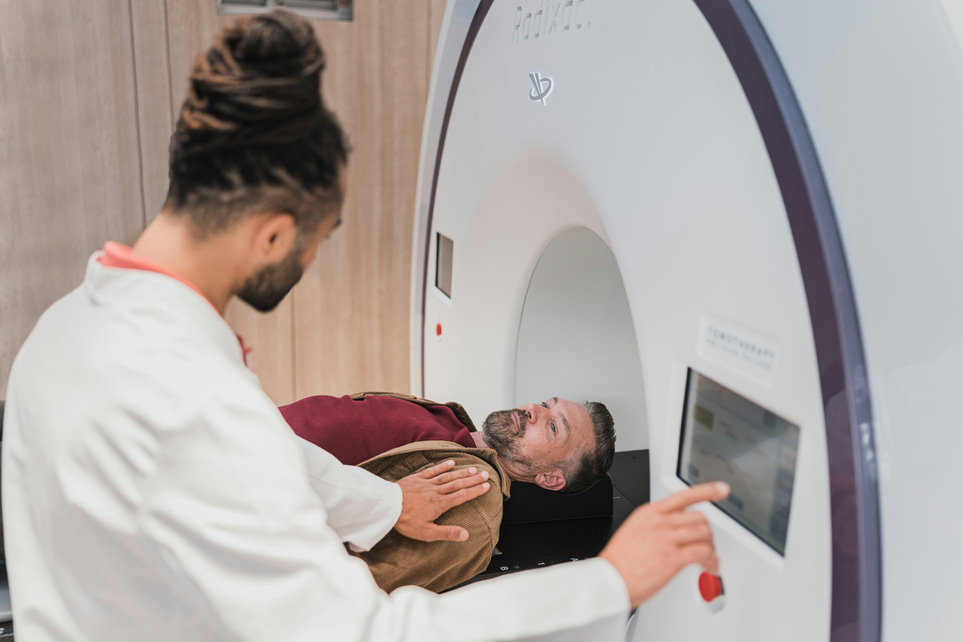
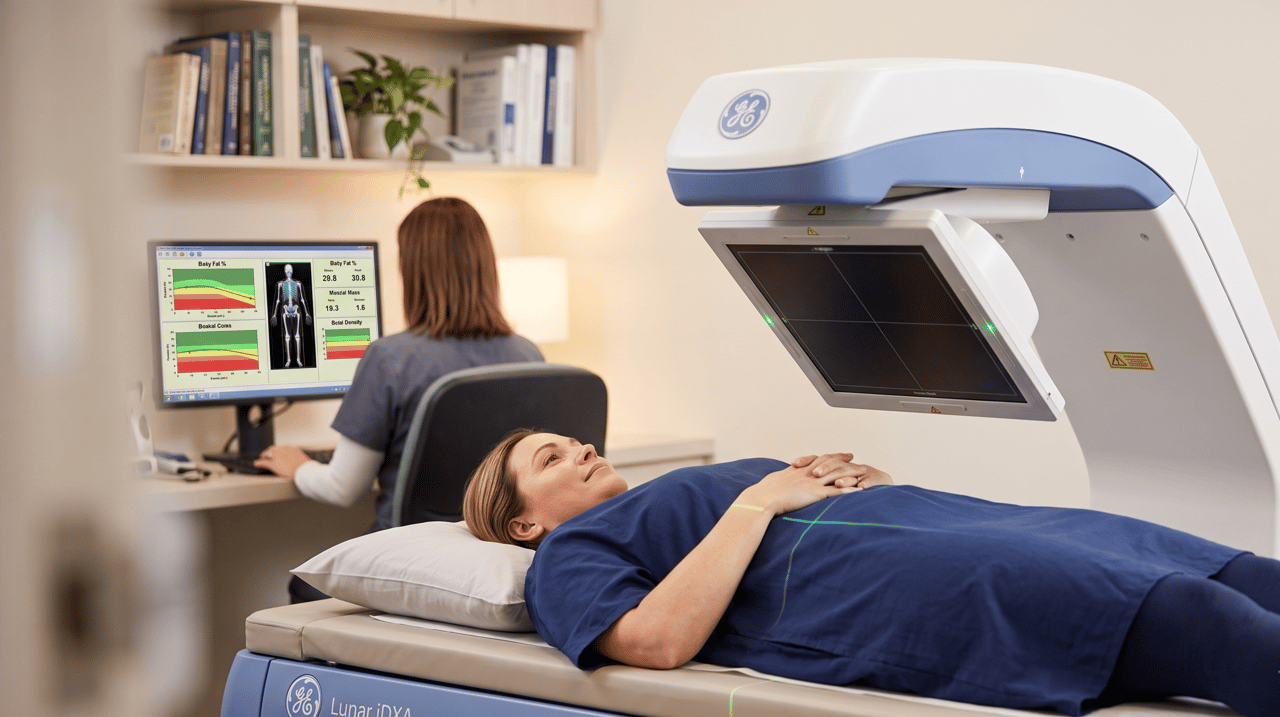
The examination is quick, painless and usually requires very little preparation. You lie still on a table while a scanner arm moves over your body. A standard DXA examination usually takes between 10 and 30 minutes, depending on what is to be measured.
The radiation dose is low compared to many other X-ray examinations. Authorities and healthcare providers describe the exposure as low, but it is still ionizing radiation. Therefore, the examination should be used when it is expected to provide meaningful information, and pregnancy always needs to be considered before performing a DXA examination.
Many people ask if fasting is necessary. It depends on the practice's routines, but for body composition, the most important thing is usually that follow-up measurements are made under as similar conditions as possible. If you compare two measurements, the interpretation will be better if the time of day, fluid intake, exercise and equipment are approximately the same. That part is based on practical measurement logic and the method's sensitivity to standardization.
Who benefits from measuring body composition with DEXA Scan?
DEXA Scan can be relevant for several different groups. For private individuals, it is often about understanding why shape, strength or waist circumference changes even though weight is unchanged. For athletes or people who exercise, the measurement can help distinguish between desired muscle growth and unwanted fat gain.
For people in mid-life or after menopause, DEXA can provide a clearer picture of changes in fat distribution and muscle mass. For older adults or people after longer periods of illness, it can help assess low muscle mass, especially if strength and function are also monitored. Here, the measurement can sometimes be supplemented with other health checkups, such as blood lipids, glucose, HbA1c or liver tests, if the question concerns metabolic health rather than just weight.
However, a DEXA Scan is not suitable for all questions. If the goal is to make a diagnosis in cases of suspected diabetes, thyroid disease, inflammatory disease or pronounced fatigue, other tests are required. Body composition is a puzzle piece test, not a definitive answer to the whole health.
When the numbers are used correctly, they can be more than a status picture. They can help you determine whether your current strategy is actually working: whether weight loss is costing you muscle mass, whether your training is having the right effect, or whether your belly fat is decreasing despite small changes on the scale. That's why follow-up is often more valuable than a single measurement.