
Quick version
What is a herniated disc?
A herniated disc is an injury to one of the spinal discs, where the disc bulges out and presses on nearby nerves. This can cause sudden back pain that may also radiate down the leg.
How a herniated disc develops
The spinal discs weaken with age but can also be damaged by heavy lifting or repetitive movements. Sometimes a herniated disc occurs immediately after lifting something heavy or twisting the back abruptly.
How a herniated disc feels
- Sudden back pain
- Radiating pain down the leg
- Tingling or numbness
- Pain that often worsens with coughing, sneezing, or bending
What is spinal stenosis?
Spinal stenosis is a narrowing of the spinal canal or nerve roots, which can cause severe pain, numbness, and weakness in the legs.
How stenosis develops
Spinal stenosis is often caused by changes in joints, discs, and ligaments that gradually intrude into the spinal canal and reduce the space for the nerves. It develops slowly over time and is more common in people over the age of 50.
How spinal stenosis feels
- Pain in one or both legs that worsens when walking
- Relief when bending forward or sitting down
- Numbness, heaviness, or weakness in the legs
- Gradual symptoms that worsen over time
Important differences between herniated disc and spinal stenosis
Onset
A herniated disc often occurs suddenly, while spinal stenosis develops over a long period of time.
Pain pattern
With a herniated disc, the pain often radiates from the back down one leg. With spinal stenosis, symptoms appear while walking and improve when you bend forward or sit down.
Age
A herniated disc can affect anyone in adulthood, while stenosis is more common in older individuals.
Treatment
A herniated disc is initially treated with pain relief and exercises to strengthen the core muscles. For stenosis, exercise can also be helpful—especially those that increase the space for the nerves and include adapted walking training. In severe cases, surgery may be necessary.
Why is the correct diagnosis so important?
Because the cause of the symptoms differs, it is important to determine where the pain is coming from. An incorrect diagnosis can lead to the wrong type of treatment, such as an ineffective exercise program. This may unnecessarily worsen or prolong the symptoms.
Risks of “guessing” the diagnosis yourself
- Pain lasting unnecessarily long
- Incorrect training that worsens symptoms
- Delayed treatment of more serious conditions
When is an MRI needed?
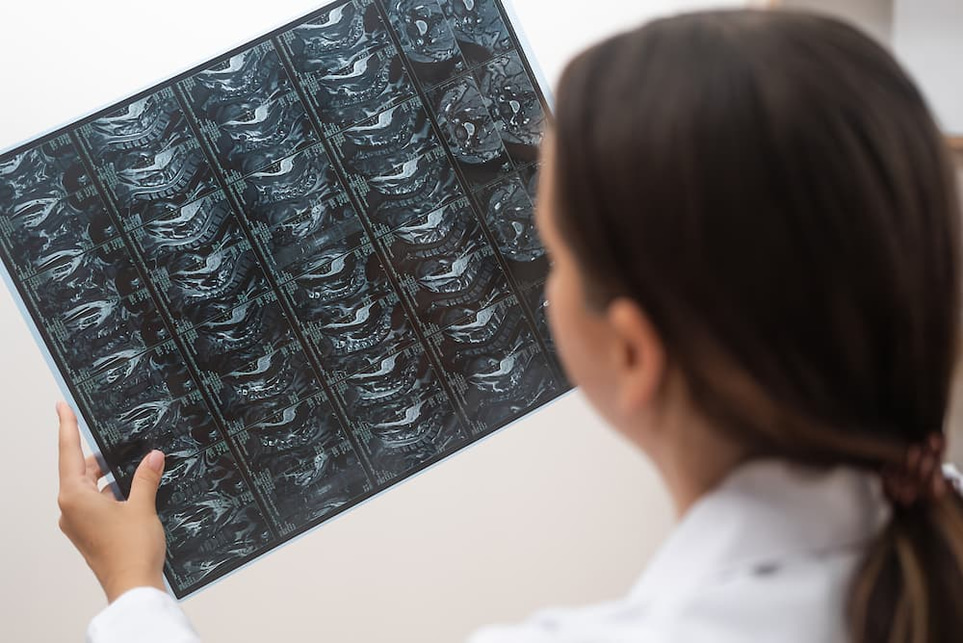
An MRI of the spine is the most effective way to determine whether it is a herniated disc or spinal stenosis. The examination shows the discs, nerve roots, and the space in the spinal canal. Consider getting an MRI if symptoms do not resolve or improve within a couple of weeks, or if you have severe radiating pain, numbness, or increasing leg weakness.
Can I prevent herniated discs and spinal stenosis?
Yes, both conditions can largely be prevented through lifestyle choices, exercise, and ergonomics. Genetic factors and age also play a major role, but you can significantly reduce the risk by:
- Doing regular mobility exercises and strengthening the core muscles
- Varying your training forms and using proper lifting technique
- Avoiding prolonged sitting