
Quick version
Eye strain after work is most often caused by intense screen work, which reduces blink rate and overloads the eye's focusing muscles. It is often exacerbated by dry office air, blocked oil glands in the eyelids, or ill-fitting glasses. Contact lenses and allergies can also cause similar problems. Micro-breaks and lubricating eye drops usually help, but if you experience sudden changes in vision, severe pain, or extreme sensitivity to light, you should seek medical attention.
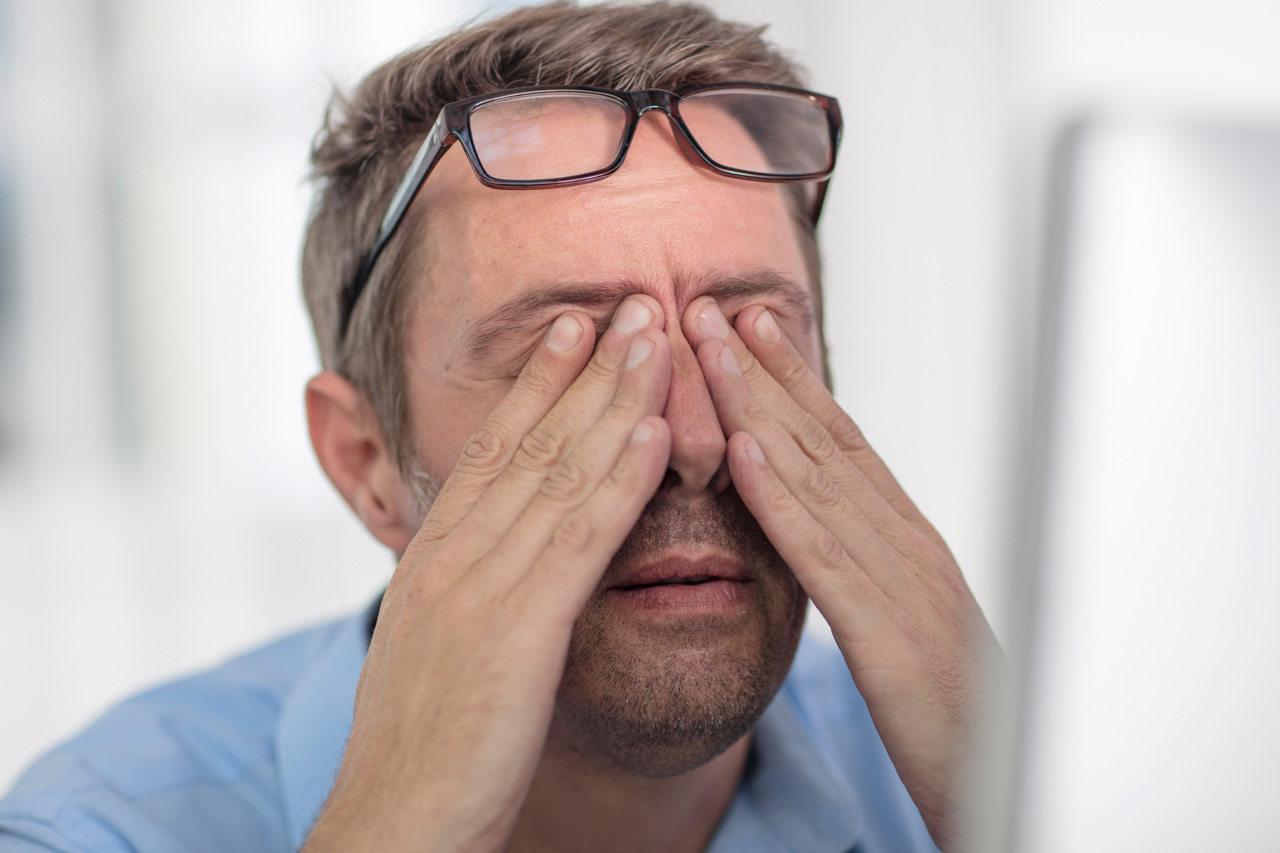
Do your eyes feel tired, stinging or sore at the end of the workday? You are far from alone. Eye strain after work is often not a single illness, but rather a number of everyday stresses that affect the tear film, eye muscles and eyelids – especially if you work at a screen, in dry air or with contact lenses. Digital eye strain is common in people who use a computer, mobile phone or tablet for large parts of the day, and typical complaints are pain, blurred vision, stinging, tearing and headaches.
Eye strain after work – 5 common causes
1. Digital eye strain when staring at the screen
The most common explanation for eye strain after work is prolonged close-up work in front of a screen. When you focus intensely on text, spreadsheets or video meetings, the eye's focusing system and the interaction between the eyes work more than you notice. At the same time, the blink rate decreases, which makes the eyes feel dry and irritated more easily.
The problem often comes on insidiously. You may feel that your eyes are "pulling", that your vision becomes blurry towards the afternoon or that there is tension behind the eyes. Some also get neck pain or headaches, which is common with digital eye strain.
This often helps:
- take regular micro breaks
- look into the distance at regular intervals
- adjust the screen, light and sitting distance
- consciously blink more often when you notice that your eyes are stinging
If you get blurred vision that quickly improves when you blink or rest your eyes, it indicates more of overexertion and tear film disorder than of an acute eye disease.
2. Dry eyes – often worse in the office than you think
Dry eyes are a very common cause of eye pain after work. The tear film is the thin liquid film that covers the surface of the eye and keeps it smooth, protected and optically clear. When it evaporates too quickly or is produced in too small a quantity, the eyes can start to sting, rub, run and feel tired.
Many are surprised that dry eyes can also cause tearing. This is because the eye reacts to irritation by reflexively producing more tears, but these tears do not always stabilize the surface well enough. Dry air, ventilation, long screen sessions and increasing age increase the risk. Certain medications, such as antihistamines and some antidepressants, can also contribute.
A concrete example is the person who works in an open office environment with strong ventilation and notices that their eyes start to sting after lunch. Then the problem is often not “too much screen time” per se, but rather that screen time and the environment together deteriorate the tear film. Lubricating eye drops without preservatives can provide relief, especially if the discomfort recurs. For those who wear lenses, the drops need to be intended for contact lens use if they are to be used while the lenses are in.
3. Irritated eyelids and meibomian gland dysfunction
If your eyes hurt, burn or feel gritty even though you sleep well and take breaks, the cause may be in your eyelids. Along the edges of your eyelids are small sebaceous glands, called meibomian glands, which produce fat for the outermost layer of the tear film. When their secretions become viscous or the drainage ducts become blocked, the tears evaporate more quickly, and you can get a form of dry eyes called evaporative dryness.
This condition is common and often overlaps with blepharitis, i.e. inflammation of the eyelid margin. Typical signs include burning, irritation, sensitivity to light, lids that feel “dirty,” and vision that varies throughout the day. The problems often become more apparent during prolonged computer work because blinking decreases and the fat layer in the tear film functions less well.
Self-care can make a big difference. Warm compresses over closed eyelids for a few minutes and gentle cleaning of the eyelid edges can help the glands drain better. If the problems recur frequently, especially with redness or crusting at the roots of the eyelashes, it is wise to have your eyes evaluated.
4. Vision problems or the wrong strength of glasses make your eyes overworked
Sometimes eye pain after work is not due to eye disease, but to the eye having to work too hard to compensate for a vision problem. This can be due to farsightedness, astigmatism, presbyopia, or glasses that no longer fit your working distances. Then the eye's focusing and cooperation have to work extra hard, especially when working close up.
Common clues are that you squint, move the screen closer or further away, or get a headache over the forehead and temples after a day at the computer. Some notice that the text blends together late in the day, even though it works fine in the morning. This is typical of accommodation overload, i.e. the eye's ability to focus at close range.
If you haven't had your vision checked in a long time, an eye exam may be more accurate than changing your screen glasses on a whim. This is especially true if the problems come on quickly when reading but ease when you stop working.
5. Allergy, contact lenses or irritation that is misinterpreted as "tired eyes"
Not all eye problems after work are due to the screen. Allergic conjunctivitis can cause red, itchy, watery and burning eyes, and the symptoms can become more pronounced in the workplace if you are exposed to dust, pollen, animal allergens or dry air. Itching is a particularly important clue symptom in allergies.
Contact lenses can also play a role. Lenses that are worn for too long, are not cleaned properly or are used in dry environments can cause a feeling of dryness, chafing, blurred vision and soreness towards the end of the day. In this case, it can be difficult to determine whether the problem is in the lens, the tear film or the surface of the eye - often several factors interact.
If the eyes itch more than they hurt, it speaks more of an allergy than of pure screen strain. If instead they become dry and uncomfortable on the days you wear lenses for a long time, you should suspect that the lenses are contributing. In the case of unilateral problems, clear redness or purulent secretion, a different assessment is needed, as it could also be an infection or other eye disease.
When should sore eyes after work be assessed by healthcare?
Most cases are harmless and linked to strain, dryness or eyelid problems. But some symptoms do not fit with normal eye strain and should be taken more seriously. Seek medical attention quickly if you experience sudden vision loss, severe light sensitivity, severe redness in one eye, severe or increasing pain, nausea along with eye pain, or if the eye hurts after an injury.
Acute intense eye pain is uncommon with simple digital eye strain. Therefore, the strength of the pain is important information. If you think “this doesn’t feel like normal tired eyes,” especially if your vision is affected, that gut feeling is worth listening to.
The eyes are also affected by the rest of the body. Fatigue, dehydration, allergies, hormonal changes, and certain medications can lower the margins so that normal workdays begin to feel in the eyes. Therefore, when the discomfort recurs, it is wise to think broader than just the screen.