
Quick version
Yes, dull back pain can be caused by disc problems even without sciatica or radiating leg pain, as a worn or irritated disc can cause local pain in the lower back. At the same time, most cases of back pain are due to non-specific lower back pain from muscles, ligaments or joints. Exercise and self-care are the best treatment, while imaging and surgery are only needed in cases of pronounced nerve damage, failure to improve or acute alarming symptoms.
A dull ache in the back often comes on insidiously. It can start as stiffness when you get up from a chair, a dull ache after driving, or discomfort that is felt most in the morning and then moves throughout the day. Many people immediately think of disc problems, especially if the pain is located far down the back, but the question often becomes especially difficult when it does not radiate down the leg.
A dull ache in the back - could it be a disc problem even if it does not radiate down the leg?
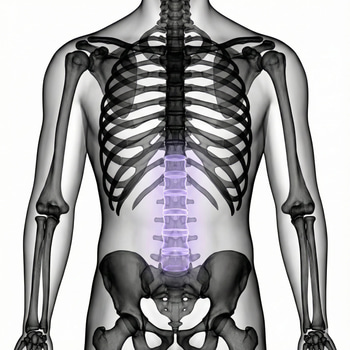
Yes, a dull ache in the back can be caused by disc problems even without radiation to the leg. Discs are the shock-absorbing cushions between the vertebrae, and when a disc becomes worn, irritated, or bulges, it can cause local pain in the lower back without any nerve root being pinched. At the same time, it is important to know that far from all back pain is due to a herniated disc or other disc injury.
When a herniated disc really presses on a nerve, sciatica-like symptoms often occur: pain that radiates from the buttock down the leg, sometimes with numbness, tingling or weakness. If this type of nerve involvement is absent, it is less clear that a classic herniated disc with nerve root irritation is present, but does not rule out that the disc is still part of the problem.
What does disc-related back pain feel like without sciatica?
Disc-related pain is often described as dull, deep or pressing. It is usually located in the lower back and can worsen when you sit for a long time, bend forward, lift heavy objects or get up after being still. Some also feel that their back “locks up” temporarily.
A typical example is the person who can walk quite well but gets more pain after a day at the computer or after carrying grocery bags. The pain does not have to be sharp. On the contrary, it is common for it to be dull and tiring, which makes many people walk for a long time and wonder if it is “just muscular”.
Disks also change naturally with age. They lose fluid, become less elastic and more sensitive to stress. This does not automatically mean disease, but it means that a disc can sometimes cause local pain without any nerves being pinched.
If the pain does not radiate – what else could it be?
The most common cause of back pain is non-specific low back pain. This means that you have problems from the structures of the back, but without clear signs of nerve damage or other serious underlying disease. The pain can come from muscles, ligaments, small joints between the vertebrae or from the disc itself.
This is why two people can describe almost the same dull ache but have different mechanisms behind the discomfort. One has overworked back muscles after unusual lifting, the other has age-related disc changes, and a third has pain from the facet joints in the back.
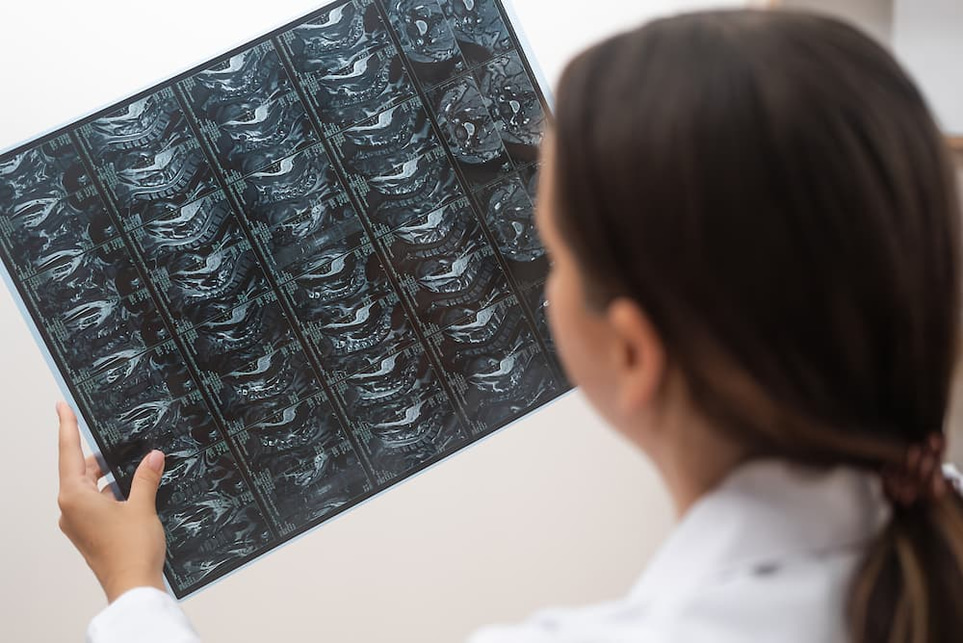
This is also the explanation why MRI does not always give a simple answer. Many adults have disc changes on imaging diagnostics without having pain, and therefore routine imaging is not recommended for ordinary low back pain unless serious illness or pronounced nerve damage is suspected.
When are the symptoms more indicative of disc problems?
The suspicion of disc problems is strengthened if the back pain began after a twisting motion, a heavy lift or a period of sitting a lot and if the pain is clearly provoked by bending forward or coughing and sneezing. This is especially true if you also feel that your back is sensitive to strain but improves with short walks and varied movement.
If the pain later begins to radiate from the lower back or buttocks and further down the leg, nerve damage is more likely. Pain that goes below the knee is particularly typical of sciatica in the case of a herniated disc. Numbness, tingling or decreased strength in the leg also makes a herniated disc more relevant as an explanation.
But even here there are nuances. Some herniated discs cause mostly back pain at the beginning and only later leg symptoms. Others never cause any clear sciatica at all, even though the disc is irritated.
When should you seek care and when is an examination needed?
You should seek care if the back pain does not begin to ease within a few weeks, if it recurs frequently or if it prevents you from sleeping, working or moving normally. Care should also be sought earlier if you experience clear neurological symptoms, such as weakness in the foot or loss of sensation in the leg.
There are also warning signs where assessment is needed on the same day or urgently. These include difficulty holding urine or stool, numbness in the lower abdomen or inner thighs, rapidly increasing weakness in the legs, fever together with back pain or back pain after major trauma. In rare cases, this may be an effect on the nerve roots or another serious cause.
Magnetic resonance imaging or computed tomography is mainly relevant when symptoms do not improve after about four to six weeks, when nerve damage is suspected, or when treatment needs to be guided more precisely. Imaging is therefore used selectively, not as the first step in every episode of nagging back pain.
What helps if you have nagging back pain?
In most cases, the first treatment is not surgery but self-care and a gradual return to movement. Prolonged bed rest is not recommended. Short periods of rest can help with severe pain, but after that, calm activity is usually better than becoming completely sedentary.
Many people are helped by dividing their day differently: getting up more often, taking short walks, avoiding long sitting sessions and adjusting lifting and twisting for a few weeks. Painkillers and anti-inflammatory drugs can sometimes be used for a limited period, if they suit your overall health. Physiotherapy can be valuable when the symptoms return or when you have started to avoid movement for fear of worsening the pain.
If a confirmed herniated disc does not go back and causes clear nerve damage, other treatments may be considered, such as injection or surgery. This is especially true when leg pain dominates or when neurological deficits are added. In the case of purely local back pain without sciatica, the benefit of surgery is significantly more limited.
Nagging back pain often raises concerns that something has “broken”, but the body rarely works that simply. Back pain is often an interaction between strain, recovery, tissue sensitivity and everyday habits. Therefore, the most helpful question is often not only “is it a disc problem?” but also “what in my everyday life keeps the pain alive?”