Quick version
Several different conditions can cause the feeling of a knee that feels unreliable. This can be due to everything from overload to damage to the meniscus or ligaments. The feeling that the knee is giving way, hooking up or becoming unstable can provide important clues as to what is causing the discomfort. By understanding common symptoms and why they occur, it becomes easier to determine when self-care may be enough and when care should be sought.
An Unreliable Knee – 4 Common Causes
When a knee feels unstable, it usually feels like it “gives way,” feels wobbly, or doesn’t respond as it should when put under load. Sometimes it’s a damaged support structure in the joint. In other cases, the feeling is due to pain, swelling, or muscle weakness that causes the brain to no longer have the same control over the knee. Here are some common conditions that can cause the feeling.
1. Cruciate ligament injury – when the knee suddenly gives way
A common cause of the feeling of an unreliable knee is damage to the anterior cruciate ligament, often abbreviated ACL. It is a strong ligament in the middle of the knee that helps keep the lower leg stable when you brake, land after a jump, or change direction quickly. With this type of injury, many describe the sensation as a sharp pain, the knee swelling within a few hours and the leg then feeling unstable when twisting or moving sideways.
It is common for this to occur after, for example, football, padel, skiing or a slip where the foot gets stuck while the body continues to rotate. Some can walk straight ahead quite well but feel that the knee cannot be trusted when they have to turn quickly or go down a flight of stairs.
Other ligament injuries can cause similar symptoms. If the knee has been overextended or hit from the side, the lateral ligaments or several structures can also be affected at the same time, which increases the risk of significant instability.
2. Meniscus injury – when the knee buckles or gives way
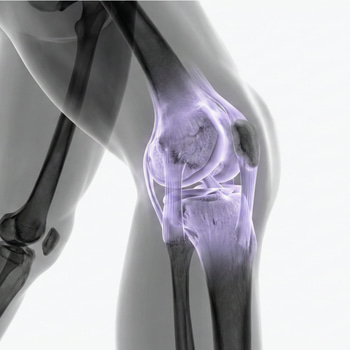
The meniscus acts as a shock absorber and is a cartilage disc between the femur and tibia. A meniscus injury often occurs when twisting in a slightly bent knee, but in middle-aged and elderly people it can also occur more gradually as part of age-related changes. Typical symptoms that occur with a meniscus injury are pain along the joint line, swelling, a clicking sensation, difficulty bending or extending the leg fully and sometimes the knee gives way when standing up or twisting.
A meniscus injury can make the knee feel unstable as it can destroy the movement of the joint, partly as a consequence of pain and swelling impairing the muscles' ability to stabilize the knee. If a piece of meniscus is pinched in the joint, the knee can even lock temporarily.
3. Unstable kneecap – when something feels like it's slipping sideways
If the feeling is at the front of the knee and you feel that something is "jumping to the side", the problem may instead be patellar instability (also called patellar dislocation), which means that the kneecap is not running stably in its groove. This can be a clear dislocation, but also minor slippages that cause discomfort, a feeling of failure or fear when squatting, running and climbing stairs. If you have had a patellar dislocation, recurring instability is not uncommon, especially in younger people or if the anatomy makes the kneecap more easily pulled out of position.
Many describe the feeling as the knee feeling uncertain when squatting, walking down stairs or getting up from a sitting position. Sometimes there is also clear swelling after the kneecap has been dislocated. Structures that normally hold the kneecap in place, including the medial patellofemoral ligament, may then have been damaged.
4. Osteoarthritis and muscle weakness – a common explanation in middle-aged and elderly people
The feeling of instability in the knee does not always have to be due to an acute injury. In knee osteoarthritis the joint can feel stiff, sore and wobbly, and many describe the knee as "giving way" rather than making a sudden misstep. This is partly because the cartilage in the joint changes and partly because pain and reduced use cause the muscles around the knee to become increasingly weak. Instability or a "buckling" knee is therefore a well-known symptom even in arthrosis.
The feeling often occurs when walking downhill, taking longer walks or when standing up after sitting still for a long time. It is common for many to interpret this as having "poor balance", but in reality it is often the interaction between joints, pain and muscle function that is the deficient factor. Being overweight or having a previous knee injury also increases the risk of developing osteoarthritis earlier.
When should you seek care - and when might an MRI be appropriate?
You should seek care immediately if your knee has become unstable after an accident or twist, swells quickly, locks up or cannot be put under weight. You should also seek medical attention quickly if your kneecap appears to have dislocated, if you heard a distinct "pop" at the time of the injury, or if you are in severe pain.
If the symptoms are less acute but your knee continues to give way, buckle, or feel unreliable, you should make an appointment with a doctor or physiotherapist. By examining the mobility, stability, and strength of your knee, your healthcare provider can assess whether the symptoms may be caused by, for example, the meniscus, ligaments, kneecap, or osteoarthritis.
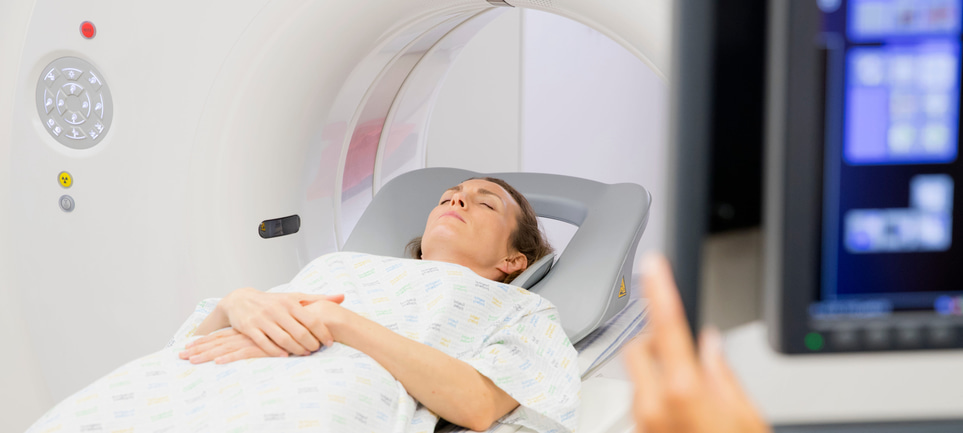
In some cases, imaging tests may be needed. X-rays are primarily used to examine the skeleton and signs of osteoarthritis, while magnetic resonance imaging, also known as MRI, can provide more detailed images of, for example, the meniscus, cruciate ligaments, cartilage, and other soft tissues. However, MRI of the knee or knee joint is not needed for all types of knee problems and should always be evaluated together with symptoms and clinical findings.
If you have long-term or recurring problems, it is possible to carry out a private MRI examination of the knee without a referral from your doctor or health center. This may be an option for those who want to investigate possible structural changes or obtain additional information before continuing contact with healthcare. With a private MRI examination, you will have access to the radiologist's (specialist doctor) assessment of the results and recommendations from a licensed physician based on the findings in the radiologist's report. Then, depending on what emerges, you should discuss the results with a doctor or physiotherapist, since findings on MRI do not always explain the symptoms or mean that treatment is needed.
While waiting for an assessment, you can reduce activities that trigger instability, especially rapid twisting and changes in direction. At the same time, try to keep moving with controlled movement within the pain threshold. The earlier the cause of the problem is assessed, the easier it will be to choose the right treatment and reduce the risk of you starting to overload your hip, back or other leg.