Quick version
Choose a clinically validated upper arm blood pressure monitor with the correct cuff size. Measure at rest, with the arm at heart level, and assess multiple measurements over several days rather than a single value. Contact your healthcare provider if you have repeatedly high values or very high blood pressure along with clear symptoms.
Many people buy a blood pressure monitor on impulse: the one that is cheapest, best reviewed or easiest to get home quickly. The problem is that a nice display and many functions do not say much about what actually matters – whether the monitor shows the correct value on your particular arm, in your particular everyday life. For those who monitor their blood pressure at home, the wrong device can cause unnecessary worry, miss high blood pressure that requires treatment or make well-treated blood pressure look worse than it is.
What to consider when buying a blood pressure monitor
Choosing the right blood pressure monitor is less about interest in technology and more about medical reliability. American and European recommendations point in the same direction: for home use, you should primarily choose an automatic upper arm monitor that is clinically validated and has the right cuff size. Home measurement is particularly valuable in monitoring hypertension, i.e. high blood pressure, because repeated measurements in a quiet environment often provide a better picture than single values at the clinic.
1. Choose a validated blood pressure monitor – not just a popular model
The most common mistake many people make is buying a blood pressure monitor that sells well but has never been properly tested against established validation protocols. The fact that a product is approved for sale or marketed as “medical” does not automatically mean that it has been carefully reviewed enough to provide reliable blood pressure values in the home environment. Independent lists of validated devices are therefore used as support for both healthcare professionals and patients.
In practice, validated means that the device has been tested in studies according to standardized methods, such as the AAMI/ESH/ISO standard. This reduces the risk of basing decisions about lifestyle, follow-up or drug treatment on incorrect numbers. For a person with borderline values, for example 135–140 systolic at home, a margin of error of a few millimeters can make a big difference in the assessment.
A practical piece of advice is therefore to start at the right end:
- choose a model based on validation first, price and app features second.
- then prioritize practical features such as memory, support for multiple users and clear readings.
2. The size of the cuff determines whether the value can be trusted
Many people think about the device itself but forget about the cuff. It is a medical problem, not a matter of detail. If the cuff is too small, the blood pressure can be falsely too high, and if it is too large, the value can be falsely too low. Recent studies show that the wrong cuff size can give clearly misleading results, in some cases so much so that a person risks being incorrectly classified as having or not having hypertension. It is therefore important to check which arm circumference the cuff is intended for before making your purchase.
Check this before you order:
- Measure the circumference in the middle of the upper arm, between the shoulder and elbow.
- Compare the measurement with the manufacturer's specified range for the cuff.
- Better choose a model where a larger or smaller cuff is available as an accessory if the standard size does not fit.
- If you are close to the border between two sizes, check the manufacturer's instructions or ask healthcare professionals or pharmacy staff for advice.
A typical example is the person who gets 148/92 at home with a cuff that is too small and thinks that their blood pressure has worsened, even though the correct size might have shown significantly lower values. The opposite also occurs: a cuff that is too large can provide false security. That is why the cuff size is often more important than which screen or app the meter has.
3. Upper arm is the first choice
For most people, upper arm monitors are the best choice. Recommendations from heart and hypertension organizations state that automatic upper arm monitors provide the most reliable measurements at home. Wrist monitors can work in some situations, but they are more sensitive to incorrect position and are therefore mainly used when an upper arm cuff is not suitable or cannot be used.
What makes wrist monitors more unreliable is that the wrist must be kept exactly at heart level throughout the measurement. Even small deviations in the position of the wrist can affect the result. For an elderly person with stiffness in the shoulders or neck, or someone who measures quickly while standing in the kitchen, the risk of misleading values increases.
Wrist monitors can be an alternative when the upper arm cannot be used, for example in cases of large arm circumference, pain or lymphedema. In this case, choose a validated model and compare the results with a measurement in healthcare.
4. The right technique is as important as the right blood pressure monitor
If a good blood pressure monitor is used incorrectly, it can still give wrong numbers. Blood pressure varies from minute to minute and is affected by everything from movement, conversation, caffeine, nicotine, stress, cold to a full bladder.
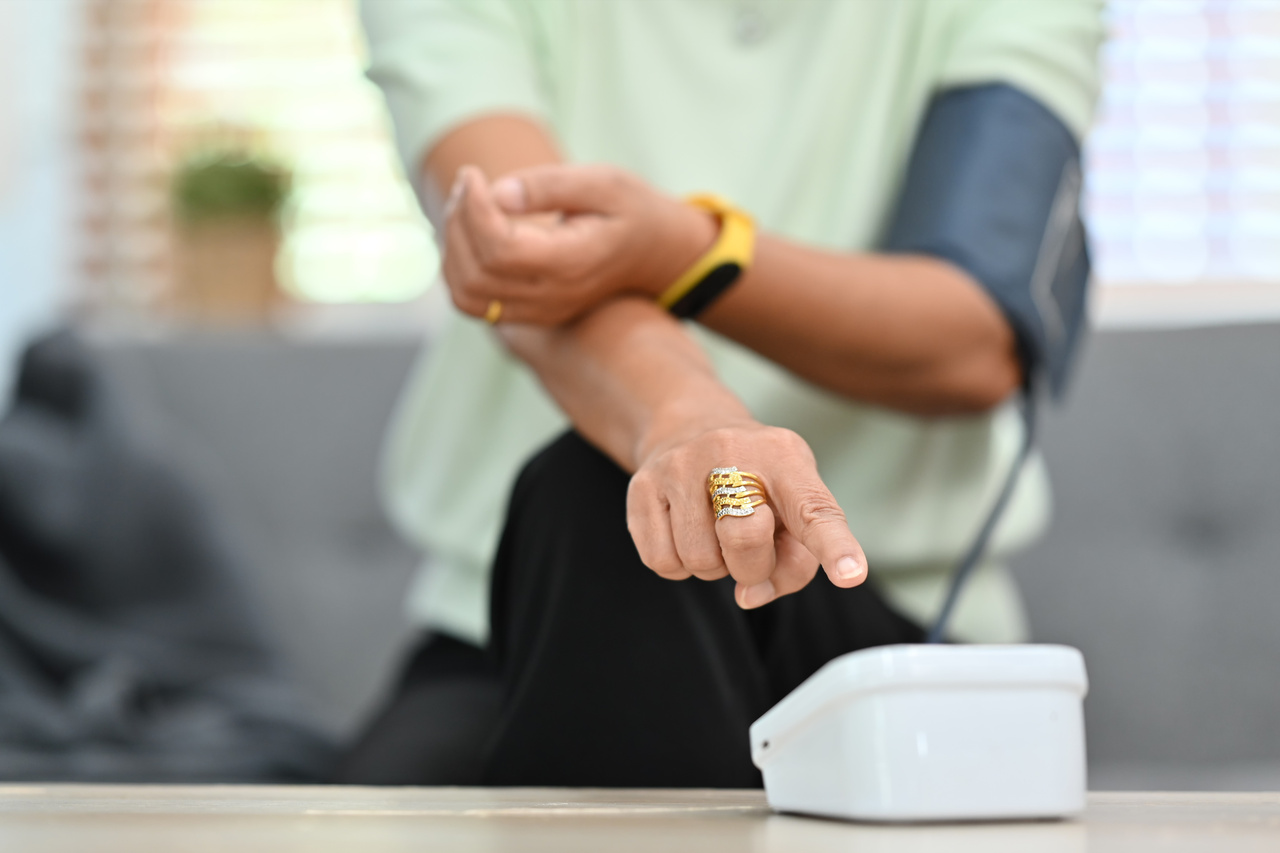
When measuring, you should sit with your back supported, your feet on the floor and your arm resting at heart level. The cuff should sit directly against bare skin, not on top of a sweater or shirt sleeve. Rest for at least five minutes before you start the measurement and avoid coffee, exercise and smoking or nicotine just before you start.
For follow-up, repeated measurements are usually recommended rather than interpreting a single value. This usually involves two measurements, one in the morning and one in the evening, over several days, where you look at the pattern rather than the highest number. It is particularly useful if you suspect white coat hypertension, i.e. that blood pressure rises in a healthcare environment, or masked hypertension, where the pressure may be normal in the clinic but elevated at home.
When home blood pressure should be reported to healthcare
Many people who buy blood pressure monitors do so because they have headaches, palpitations, stress or high values during a single healthcare visit. This is understandable, but symptoms and blood pressure are not always followed up. High blood pressure often does not cause any clear symptoms at all, while headaches and anxiety can occur even when blood pressure is normal. Therefore, home measurement should be used to obtain better decision-making information, not to make your own diagnosis based on feeling.
When you should contact healthcare
Contact healthcare if you repeatedly get high values at home, if your blood pressure seems to rise over time or if you have other risk factors such as diabetes, kidney disease, pregnancy or previous cardiovascular disease. Seek emergency care if very high blood pressure values occur simultaneously with symptoms such as chest pain, shortness of breath, neurological symptoms, severe headache or visual impairment. In this case, it is the symptom picture that is decisive, not just the number on the screen.
A good blood pressure monitor should not only be easy to use. It should fit the body, be tested to measure correctly and be used in a way that makes the numbers meaningful. Only then will home measurement become a tool for early detection instead of a source of noise.
Do you want to know what your values actually look like in a larger medical context? Order a health check up and add blood pressure measurement at the Test Clinic and get a secure basis for assessing blood pressure, cardiovascular risk and other important health markers.