


Free T3 is a blood test that measures the unbound and biologically active part of the thyroid hormone triiodothyronine. The hormone affects the body's metabolism and is important for, among other things, energy level, body temperature, pulse, muscle function and the nervous system.
The thyroid gland primarily produces the hormone T4, which is then largely converted to the more active hormone T3 in the body's tissues. Analysis of free T3 can provide additional information about the thyroid's hormone production, especially if hyperthyroidism is suspected.
What does a T3 test show?
The test measures the concentration of free T3 in the blood. An elevated value can be seen when the thyroid gland produces too much hormone, for example in hyperthyroidism. In some cases, free T3 can be elevated even though free T4 is still within the reference range. This is usually referred to as T3 toxicosis.
However, a low value does not necessarily mean that the thyroid gland has impaired function. Free T3 can also decrease in cases such as acute or long-term illness, severe calorie restriction or the influence of certain medications. The test is therefore of limited importance as an individual analysis in the investigation of hypothyroidism.
When may it be relevant to measure free T3?
A T3 test may be relevant as part of a broader assessment of symptoms or previous test results that raise suspicion of a thyroid disorder. This may be the case, for example, in the case of:
- palpitations or unusually high pulse.
- sweating and increased sensitivity to heat.
- unintentional weight loss.
- tremors, anxiety or difficulty sleeping.
- muscle weakness or pronounced fatigue.
- low TSH with normal or difficult-to-interpret free T4.
- suspected or follow-up of hyperthyroidism.
- follow-up of treatment with drugs containing T3.
How is free T3 interpreted?
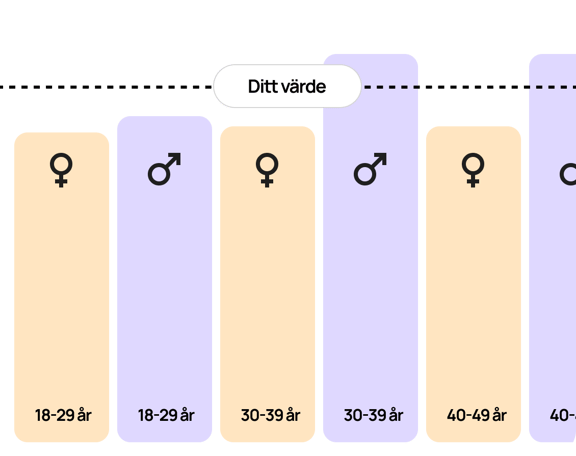
The result needs to be assessed in relation to the laboratory's reference interval and together with symptoms, medical history and other thyroid tests. Free T3 should primarily be interpreted together with TSH and free T4.
An elevated free T3 in combination with a low TSH may indicate hyperthyroidism. A normal value, however, does not exclude a thyroid disorder. A low free T3 is also not sufficient to diagnose hypothyroidism, as the level can be affected by other diseases and conditions.
Free T3 together with TSH and free T4
TSH is usually the first test to be tested when a thyroid disorder is suspected. Free T4 shows the level of available thyroxine, while free T3 measures the more active form of thyroid hormone.
To get a more comprehensive picture of thyroid function, it is therefore often recommended that free T3 be tested together with TSH and free T4, rather than as a stand-alone test.
Are additional tests needed?
If an autoimmune thyroid disease is suspected, the investigation may need to be supplemented with antibody tests. For example, TRAK can be tested if Graves' disease is suspected, while TPO antibodies may be relevant if autoimmune hypothyroidism is suspected.
The result of a T3 test can provide important additional information, but cannot alone establish a diagnosis. Abnormal values may need to be followed up with further testing and medical evaluation.