








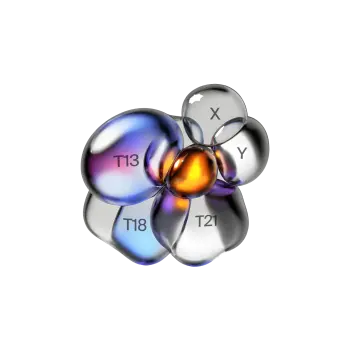
Common symptoms of Turner syndrome
Symptoms of Turner syndrome can be present from birth, but they can also first appear in connection with puberty. Some have clear physical signs, but it also happens that it is discovered for some women only during fertility tests in adulthood. Common signs are:
- Short stature (often below 150 cm without treatment)
- Puberty may be delayed or absent altogether
- Infertility (inability to get pregnant)
- Hands and feet may be swollen at birth
- Wide nipples and short neck with a broad nape
- Heart problems, especially with the the aorta
- Learning difficulties, especially with spatial perception and mathematics
- Increased risk of certain diseases, e.g. diabetes, thyroid disorders and osteoporosis
When should you get tested?
If a child has signs of delayed growth or puberty, or if you as an adult woman have missed your period or have difficulty getting pregnant, it may be appropriate to investigate Turner syndrome. The diagnosis is made through a blood test where the chromosomes are analyzed, the blood test is called karyotyping and involves studying the chromosomes of the cells under a microscope.
How is Turner syndrome detected?
The most common way to detect Turner syndrome is through karyotyping, as described above. In some cases, the condition is detected during pregnancy through NIPT (Non-Invasive Prenatal Testing), a blood test that analyzes the fetal DNA via the pregnant woman's blood. NIPT can provide early indications of sex chromosome abnormalities, including Turner syndrome.
For women who have not been diagnosed at an early age, Turner syndrome may also be discovered in connection with the investigation of short stature, failure to thrive or infertility in adulthood.
Causes of Turner syndrome
The underlying factor for Turner syndrome is due to the fact that all or part of an X chromosome is missing from the body's cells. This is a random genetic change that occurs at the time of conception, and the condition is not hereditary in the traditional sense.
Treatment and follow-up
Turner syndrome cannot be cured, but with the right medical treatment and follow-up, many people can live a good and active life. Common treatments include:
- Growth hormone in childhood to increase final height
- Hormone treatment to trigger puberty
- Fertility evaluation and possibly assisted reproduction
- Regular monitoring of the heart, kidneys, blood pressure and metabolism