
Quick version
Claustrophobia before an MRI scan is a predictable and very common reaction to a cramped and unfamiliar environment. The most important thing you can do is inform the healthcare staff well in advance so that they can plan the right support – everything from practical adaptations such as entering feet first or using music/hearing protection, to in some cases planned treatment with sedatives. By focusing on short interim goals, having continuous contact via an alarm button and knowing that the examination can always be paused if necessary, it is usually possible to carry out the examination safely and without pushing yourself beyond your capabilities.
The feeling can come already in the waiting room. You know that you have to lie still in an MRI scanner, that it will be loud and that the bed will be moved into a tunnel. For many people, it goes well, but for those who have claustrophobia during MRI, the very thought of the examination can be enough to make the heart start beating faster.
This does not mean that the examination must be interrupted. Claustrophobia during MRI is common, well-known to healthcare professionals and often possible to manage with the right preparation, clear information and sometimes medication. The goal is not to “bite together”, but to create the conditions for the examination to be feasible and safe.
Why can an MRI cause claustrophobia?
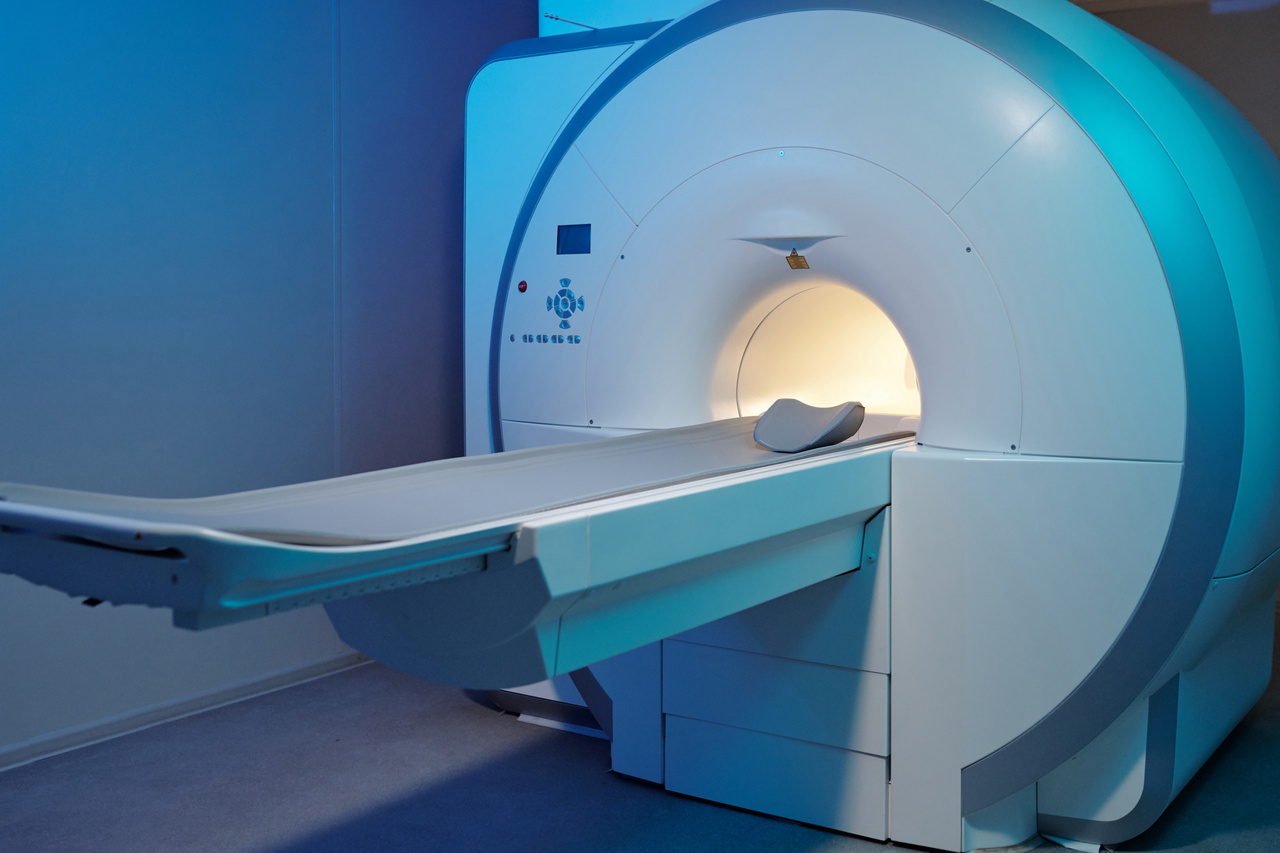
MRI, or magnetic resonance imaging, is an imaging diagnostic examination that uses strong magnets and radio waves to create detailed images of the body. The examination itself is not painful, but it often involves you lying on a narrow couch in a relatively narrow tunnel for 15 to 60 minutes, sometimes longer depending on what is to be examined. It is a situation that easily triggers claustrophobia or strong anxiety.
Claustrophobia is an anxiety reaction to cramped or confined environments. The reaction is real and physical: sweating, palpitations, shaking, chest pressure, dizziness or the feeling of not being able to breathe are typical symptoms. The discomfort can resemble or develop into a panic attack, which can feel very uncomfortable but is not dangerous in itself.
With an MRI, there are several factors that can increase the discomfort at the same time: limited space, loud knocking noises, the requirement to lie still and uncertainty about how long it will last. For some, it is not the tunnel itself that is the worst, but the feeling of not being able to interrupt when you want. That is why it often helps to go through how the examination works in practice before it begins.
What can you do before the examination?
The most important advice is to tell them in advance that you have claustrophobia during MRI or strong anxiety about the MRI scanner. Hospitals and radiology departments encourage patients to contact the unit before the visit if they are afraid of confined spaces or have previously interrupted an examination. This will allow the staff to plan better support from the start.
Ask for specific information, not just general reassuring assurances. Many patients are helped by knowing how long their particular examination is expected to take, whether they can enter feet first, whether they will be given hearing protection or music, and how the contact with the staff works during the scan. These types of details reduce uncertainty, which is often a greater anxiety factor than the machine itself.
It may also be wise to think through previous experiences. For example, if you know that you get very anxious in elevators, airplanes or tunnels, or if you have previously failed an MRI, you should say this clearly when booking the appointment. This can then be used to decide earlier whether the examination should be adjusted or if a different strategy is needed.
Practical preparation also makes a difference. For some, it helps to avoid a stressful time margin, arrive well in advance and have a simple plan for breathing or relaxation before lying down on the couch. If the hospital allows it, a loved one can sometimes accompany you as support.
Tips that often help in the MRI scanner
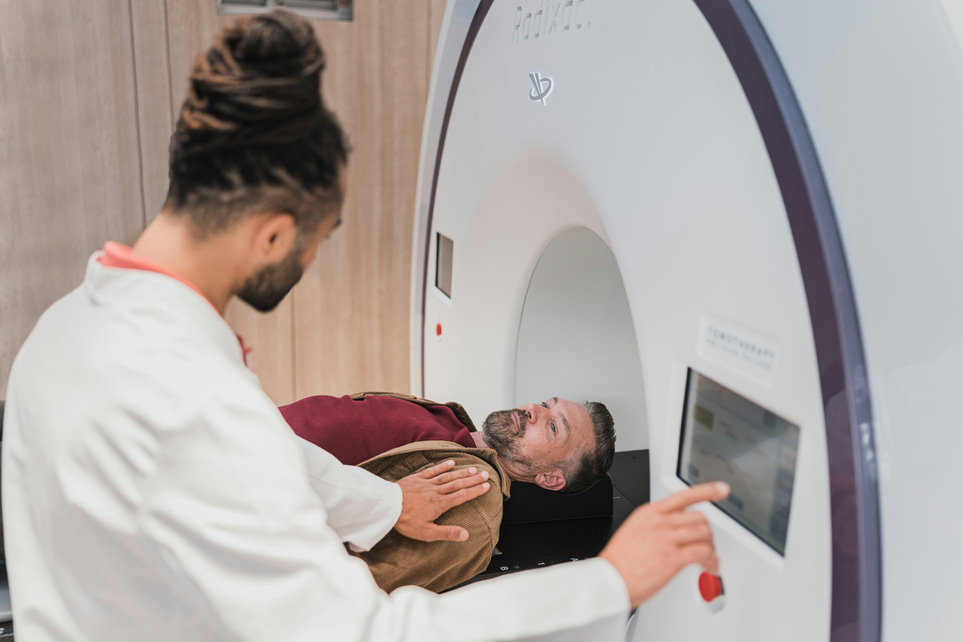
Once the examination begins, the experience is easier to handle if you know that you have contact with the staff at all times. You are normally given the opportunity to communicate with the X-ray nurse or radiographer during the examination, and many units use an alarm button or other signal if you need to interrupt. Just knowing that you are not “stuck” can significantly reduce your stress level.
Many are helped by directing their attention to something concrete and rhythmic. A common piece of advice is to close your eyes even before the bed is rolled in, focus on calm exhalations and think in short interim goals, for example “I will lie still until this series of sounds is finished”. This often works better than trying to force the anxiety away completely.
If it is technically possible, some examinations can be performed feet first into the MRI scanner. For a person with claustrophobia, it can make a big difference whether the head ends up closer to the opening or completely outside the tunnel, although it depends on which part of the body is being examined. Some units also have wider tunnels, so-called wide-bore MRIs, which are perceived as less cramped than older models.
The sound level also plays a role. MRI machines are loud, but you normally get hearing protection, and sometimes music or headphones. For some, the sound reduces discomfort; for others, on the contrary, the sound makes time feel more structured, since each sequence has a beginning and an end.
When is sedative medication or another solution needed?
If preparation and support are not enough, sedative medication may be an alternative. Official patient information states that anyone with claustrophobia or severe anxiety about an MRI should discuss this with the healthcare provider well in advance, as a mild sedative medication can sometimes be used. However, sedation should be planned safely, not improvised on the spot at the last minute.
There are several reasons why this needs to be planned. Sedatives can affect reaction time, breathing and the need for monitoring. Guidelines for care and safety therefore emphasize that sedatives should be given according to clear procedures, preceded by an assessment and that there is a plan for how you will get home safely afterwards, for example with company.
In more severe cases, an open or upright MRI may be an alternative. This type of scanner may be easier to tolerate for people with pronounced claustrophobia, but the image quality is not always as good for all issues and availability varies. Therefore, the choice is determined by both medical need and the resources available.
Sometimes the best solution is not sedation or open MRI, but another examination. In some cases, computed tomography or ultrasound can provide sufficient information, although MRI is often superior when assessing soft tissues, the nervous system, joints or certain internal organs. The decision is made based on the medical issue, not just comfort.
Common patient questions about claustrophobia during MRI
A common question is: “What happens if I panic in the middle of the examination?” In that case, the examination can be paused or interrupted. The staff is used to this, and an interrupted attempt does not mean that you have failed. It often provides important information about what adaptation is needed next time.
Another question is whether it is dangerous to experience anxiety in the MRI scanner. The anxiety reaction itself can be intense and unpleasant, but is not in itself the same as the body being damaged by the MRI. What can, however, affect the examination is that strong anxiety makes it difficult to lie still, which can impair image quality and mean that the images have to be retaken.
Many people also wonder if they should “train themselves out” of the fear beforehand. For some, gradual exposure or talk therapy, especially CBT for more general claustrophobia, helps. But if you already have a scheduled examination, it is usually more realistic to combine practical adjustments with clear planning than to try to solve the entire phobia in a short time.
Anxiety in the MRI scanner is therefore not a sign of weakness, but a predictable reaction in a particular situation. When the healthcare provider knows how you react, the examination can usually be adapted so that it can be carried out without compromising safety.