Quick version
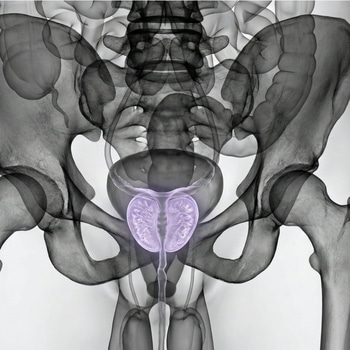
PSA stands for prostate-specific antigen, a protein produced in the prostate gland. A small amount of PSA normally leaks into the blood, but the level can rise when the prostate becomes larger, inflamed or affected by cancer. A single elevated value therefore does not automatically mean prostate cancer, and the same person can also have natural variations between different tests.
With increasing age, it becomes more common for PSA to increase slowly over time. The most common cause is benign prostatic hyperplasia, which means that the prostate is growing without it being cancerous. Such a pattern can result in a gradually rising PSA over several years, sometimes accompanied by a weak stream, frequent urges or nocturnal visits to the toilet.
Want to get answers to your PSA value? Here you can read more about blood test for PSA.
The most common reasons why PSA rises
There are several common and less dangerous explanations for PSA increasing over time. For many men, it is a matter of the prostate gradually getting larger over the years, but inflammation and infection can also drive the value up significantly. Prostate cancer can also result in rising PSA, but PSA is not cancer-specific and must always be interpreted together with symptoms, age, clinical examination and sometimes additional tests.
Common causes are:
- benign prostatic hyperplasia
- prostatitis, i.e. inflammation of the prostate
- urinary tract infection
- prostate cancer
- urinary retention, i.e. the bladder is not emptied properly
- recent impact on the prostate, such as ejaculation, intensive cycling or certain procedures/sampling.
How PSA rises can provide some guidance. In the case of benign enlargement, a slow increase is often seen over time, while infection or inflammation can cause a more rapid and sometimes sharp increase. A fever-induced urinary tract infection can in some cases give very high PSA values, and normalization can take a long time afterwards.
When PSA increases over time without it necessarily meaning cancer
PSA is affected by more than just illness. Therefore, a test can be higher than expected even though there is no serious underlying cause. Both European guidelines and clinical patient information recommend that a moderately elevated PSA should often be checked again under standardized conditions before proceeding with a more extensive investigation.
Before a new PSA test, you should avoid things that can affect the result. Examples are ejaculation and strenuous physical activity, especially cycling, in the last 48 hours before the test. If you have recently had a urinary tract infection, the test should usually be postponed for 4 to 6 weeks after the infection has passed.
Medications also play a role. 5-alpha-reductase inhibitors, which are used for prostate enlargement, can lower PSA by about 50 percent and must be taken into account when the doctor interprets the result. Therefore, it is wise to always state both ongoing treatment and the circumstances surrounding the sample collection when following a PSA over time.
A practical example is the man who submits a sample the day after a long bike ride and receives an unexpectedly high PSA. Another is the person who is tested in the middle of or shortly after a urinary tract infection. In both situations, the value can be misleadingly high without reflecting a long-term pathological change.
Symptoms that should be taken seriously with rising PSA
A rising PSA without symptoms is common and does not necessarily mean acute danger. However, when the increase is combined with urinary tract problems or general symptoms, the overall picture becomes more important. Then the assessment is not just about the number in the blood test, but about what the body is signaling at the same time.
If you have any of the following, you should seek medical attention for an assessment:
- weak urine stream, difficulty starting or a feeling that the bladder is not emptying
- frequent urges or frequent nocturnal visits to the toilet
- burning when urinating or fever
- blood in the urine
- new bone pain, unexplained weight loss or pronounced fatigue.
Some symptoms are more likely to indicate benign enlargement or infection, but it is not possible to determine for sure without a medical assessment. For example, frequent urges may be due to an enlarged prostate, while fever and burning raise suspicion of infection. Blood in the urine, rapidly worsening urinary problems or general symptoms should not be dismissed as “just age”.
When to seek care for rising PSA
You should contact healthcare if your PSA rises repeatedly, especially if the increase occurs over several tests or if you have symptoms at the same time. The same applies if you have a family history of prostate cancer, for example a close relative who developed the disease early, or if you belong to a group with a higher risk.
There is no single PSA value that can alone answer whether you have cancer or not. Instead, several factors are weighed together: age, symptoms, how quickly or slowly the value has changed, medications, possible infection and sometimes additional examinations such as palpation, MRI of the prostate or additional blood and urine markers. A moderate PSA increase in an asymptomatic person therefore often leads to a repeat test first, not directly to a biopsy.
According to European guidelines, asymptomatic men with an initial PSA between 3 and 10 ng/mL should often take a repeat test after about four weeks before further investigation is planned, provided that there are no suspicious findings during the examination. The guidelines also emphasize that the repeat test should be taken in the same laboratory and under as similar conditions as possible. This reduces the risk that temporary variations will unnecessarily guide the next step.
However, if you have pronounced symptoms from the urinary tract, fever, urinary retention or blood in the urine, you should not wait on your own. In this case, medical assessment is needed more quickly, as the cause may be infection, obstruction of the outflow or another disease requiring treatment.
What a PSA test can give you in practice
For many, PSA testing is a way to follow a development rather than getting a yes-or-no answer on a single occasion. One value says something, but a series of values taken in the right way often says more. It is especially useful when you want to distinguish a temporary impact from a real trend.
If you want to follow your values in a more structured way, it may also be relevant to simultaneously review other tests linked to general health, inflammation or kidney function, depending on symptoms and age. In a broader health perspective, PSA then becomes part of the overall picture, not a standalone message about the future.
When PSA increases over time, the next step is rarely about drawing quick conclusions, but about interpreting the change in the right context. The most valuable thing is often not the highest number, but understanding the pattern and what actually affects it.