
Quick version
An ectopic pregnancy means that a fertilized egg attaches outside the uterus, usually in a fallopian tube. Since the pregnancy cannot develop normally, there is a high risk of serious internal bleeding. Common symptoms are one-sided abdominal pain and unusual bleeding, while acute pain, shoulder pain or dizziness require immediate emergency care. The cause is often due to damage or scarring in the fallopian tubes, but can also occur without any risk factors. The diagnosis is made with a blood test (hCG) and vaginal ultrasound, and is treated with observation, medication or keyhole surgery. Most people can get pregnant again afterwards.
A missed period, a faintly positive pregnancy test and a nagging pain deep in the abdomen can mean many different things. Sometimes it's an early normal pregnancy, sometimes a miscarriage. But when the pain is on one side, the bleeding feels different than a normal period or you suddenly become dizzy, an ectopic pregnancy needs to be considered.
What is an ectopic pregnancy?
An ectopic pregnancy means that a fertilized egg has attached itself outside the uterus. In most cases, the pregnancy is in a fallopian tube, but more rarely it can also be found in, for example, an ovary, cervix or abdominal cavity. The condition is also called an ectopic pregnancy.
A pregnancy that grows outside the uterus cannot develop normally. The problem is not only that the pregnancy is not viable, but also that the surrounding tissue can be damaged as the pregnancy grows. If a fallopian tube ruptures, it can cause serious internal bleeding that requires emergency care.
Most ectopic pregnancies are detected early, often between weeks 4 and 12 of pregnancy. With prompt assessment and proper treatment, the risk of serious complications can usually be reduced.
What are the symptoms of an ectopic pregnancy?
Early symptoms can be similar to a normal pregnancy. You may have a missed period, tender breasts, nausea, or a positive pregnancy test. Therefore, it is not always easy to understand what is going on.
The most common warning signs are pain in the lower abdomen and vaginal bleeding. The pain is often on one side and can come on gradually over a few days, but it can also start suddenly. The bleeding is often different from a normal period, for example darker, lighter, or more irregular.
Some also experience pain when going to the bathroom, a feeling of pressure in the rectum, or pelvic discomfort. This is because blood or irritation in the abdomen can affect nearby structures.
When the condition becomes acute, symptoms can change quickly. Seek immediate medical attention if you are or may be pregnant and experience:
- sudden, severe pain in the abdomen or pelvis
- pain in the tip of the shoulder
- dizziness, weakness or fainting
- heavy bleeding or clear deterioration in a short time
Pain in the tip of the shoulder is a classic alarm symptom. It can occur when blood in the abdominal cavity irritates the diaphragm, which the brain interprets as pain in the shoulder area. It sounds strange, but is medically well-known and should be taken seriously.
Why does it occur and who is at increased risk?
Most commonly, the fertilized egg gets stuck in a fallopian tube instead of being transported further to the uterus. It is often a matter of the fallopian tube not functioning normally, for example after a previous inflammation, surgery or injury.
Risk factors that increase the likelihood include:
- previous ectopic pregnancy
- previous infection in the lower abdomen or pelvic inflammation
- previous surgery in the fallopian tubes, abdomen or pelvis
- endometriosis
- fertility treatment, such as IVF
- smoking
- older age, especially over 35 years
At the same time, it is common for the person affected to have no clear risk factor at all. An ectopic pregnancy can therefore also occur in people who have previously been healthy, have become pregnant without problems and have not had any known gynecological problems.
For those who have previously had chlamydia or another sexually transmitted infection, the question may be raised whether the fallopian tubes have been damaged. Not all infections lead to complications, but untreated or repeated infections can increase the risk of scarring in the fallopian tubes. Therefore, testing and treatment of sexually transmitted diseases is also part of protecting future fertility.
How is an ectopic pregnancy detected?
The diagnosis is not made based on symptoms alone. The healthcare provider needs to combine your story with an examination, blood tests and ultrasound.
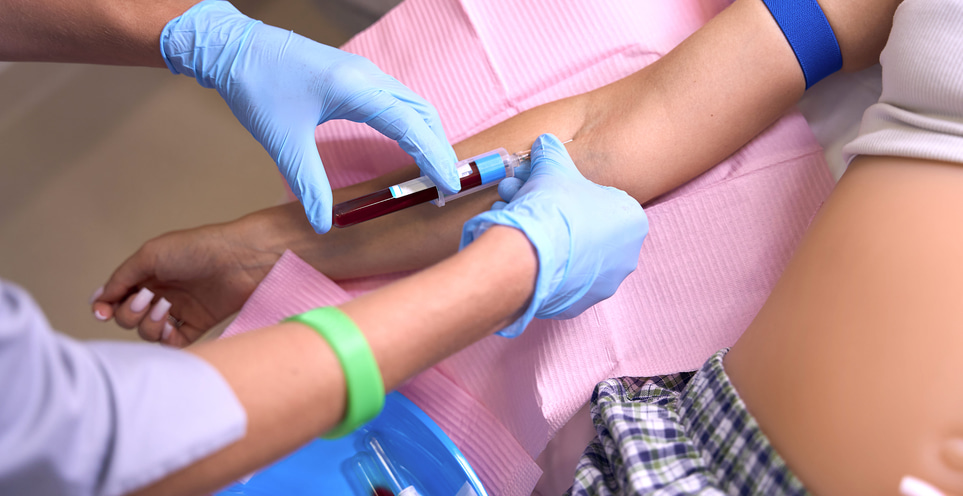
The most important blood test is hCG, the pregnancy hormone. In a normal early pregnancy, the level usually rises in an expected way. In an ectopic pregnancy, development can be slower or more difficult to interpret, which means that the sample often needs to be taken several times a few days apart.
Ultrasound, usually vaginal ultrasound, is used to see where the pregnancy is located. Sometimes a pregnancy can be clearly seen in the uterus. In other cases, it may not be visible anywhere on the first examination, especially if the pregnancy is very early. In that case, you may have to come back for another ultrasound and new hCG tests.
This stage can be mentally stressful. Many describe it as being “in between” without clear answers. Medically, this caution is important, since the treatment differs between normal early pregnancy, miscarriage and ectopic pregnancy.
In some cases, keyhole surgery, known as laparoscopy, is used both to confirm the diagnosis and treat it at the same time. This is mainly relevant if you have clear symptoms, if the ultrasound strongly suggests an ectopic pregnancy or if there is suspicion of bleeding in the abdomen.
How is an ectopic pregnancy treated?
The treatment depends on how you feel, how large the ectopic pregnancy is, what the ultrasound shows and how the hCG level develops. The goal is to terminate the pregnancy safely and reduce the risk of bleeding.
In some carefully selected cases, close monitoring is sufficient. This may be relevant if hCG is already falling, the symptoms are mild and the doctor assesses that the body is likely to resolve the situation on its own. In this case, you will be monitored with repeated blood tests until hCG has dropped to a negative level.
More common is treatment with the drug methotrexate. It is usually given as a syringe and stops the cells in the pregnancy from continuing to grow. After treatment, hCG is monitored with blood tests, often first on days 4 and 7 and then every week until the value has become negative. During this time, monitoring is key, as the risk is not completely over until hCG has dropped as it should.
Methotrexate is not suitable for everyone. It is not used if you are circulatoryally unstable, if there are signs of a ruptured fallopian tube or in certain other medical situations. Some need more than one dose.
Surgery is needed if the condition is acute or if drug treatment is not appropriate. The procedure is usually done with keyhole surgery. Sometimes the surgeon can remove the pregnancy itself from the fallopian tube, and sometimes the entire fallopian tube needs to be removed if it is damaged or bleeding.
After treatment, it is common to have fatigue, bleeding and stomach pain for a period. Menstruation may take a few weeks or cycles before it returns to normal. Many also need emotional recovery, as the situation often involves both physical pain and loss.
What happens afterwards – fertility, future pregnancy and when to seek care
Most people can get pregnant again after an ectopic pregnancy. How fertility is affected depends, among other things, on whether the other fallopian tube is healthy, whether there is underlying damage and what treatment was needed. However, a previous ectopic pregnancy increases the risk of it happening again.
Therefore, healthcare usually recommends early contact with the next pregnancy. An early ultrasound is often planned to confirm that the pregnancy is in the uterus. This can provide quicker answers and less anxiety.
It is also wise to follow the advice you receive about when your body should be allowed to recover before a new pregnancy. After methotrexate, you usually need to wait a while before trying to get pregnant again, as the drug affects cell growth and is related to the body's folate levels.
Seek urgent care if you suspect pregnancy and at the same time experience unilateral abdominal pain, unusual bleeding, shoulder pain, a feeling of fainting or rapidly worsening symptoms. If you have previously had pelvic infections, fertility problems or an ectopic pregnancy, it may be especially valuable to seek care early, even if you have new symptoms or a positive pregnancy test.
An ectopic pregnancy reminds you of how much information is contained in early body signals. Small deviations in bleeding, pain or pregnancy symptoms are not always dangerous, but sometimes they are precisely what allows care to be initiated before the situation becomes urgent.