
Quick version
FSGS (focal segmental glomerulosclerosis) is a rare kidney disease where scarring in the kidney filters causes protein to leak into the urine. The disease often develops silently without pain and is mainly noticed through foamy urine, swelling in the legs or face, weight gain, and high blood pressure. Because FSGS can be either primary or secondary—caused by other conditions such as infections or obesity—a thorough evaluation with a kidney biopsy is crucial to ensure the right treatment.
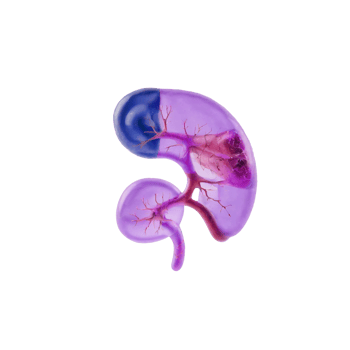
When urine suddenly becomes foamy or legs feel unusually swollen, many people first think about diet, fluid or stress. But sometimes it is the smallest filters in the kidneys that signal that something is wrong. FSGS, or focal segmental glomerulosclerosis, is a rare kidney disease in which scars form in parts of the glomeruli – the small blood vessels that purify the blood and retain important proteins.
What is FSGS and why does the disease cause symptoms?
FSGS stands for focal segmental glomerulosclerosis. “Focal” means that only some glomeruli are affected, “segmental” that only part of each affected glomerulus is damaged, and “glomerulosclerosis” means scarring in the kidney’s filters. The diagnosis cannot be made based on symptoms or blood tests alone, but needs to be confirmed with a kidney biopsy.
When the filters are damaged, protein begins to leak into the urine. This causes the amount of albumin in the blood to decrease, which makes it easier for fluid to leave the blood vessels and collect in the tissues. This is why FSGS is often first noticed through swelling, weight gain, or foamy urine rather than through pain from the kidneys.
FSGS is not a single disease mechanism but a pattern of damage. It can be primary, genetic, or secondary to other conditions such as infections, certain medications, severe obesity, or increased pressure in the glomeruli. The distinction is important, because treatment and prognosis are affected by the underlying cause.
Common symptoms of FSGS
The most common symptom of FSGS is the development of nephrotic syndrome, a combination of severe protein loss in the urine, low albumin levels in the blood, swelling, and often elevated blood fats. In adults, this is the most common clinical picture, and more than 70 percent of patients develop such a pattern.
The symptoms can come on insidiously. You may notice that your socks leave deep marks, that your eyelids are puffy in the morning or that you gain weight even though you are not eating more than usual. Foamy urine is also typical and is due to the urine containing an unusually high amount of protein.
Many people also develop high blood pressure. Fatigue, decreased appetite and decreased energy are also common, especially when protein loss is significant or kidney function begins to be affected. Some have few symptoms at first and are only discovered when a urine test shows albumin or when a routine test shows rising creatinine.
Typical symptoms and findings may include:
- foamy urine due to proteinuria
- swelling around the eyes, ankles, lower legs or throughout the body
- rapid weight gain from fluid
- high blood pressure
- fatigue and decreased appetite
- gradually deteriorating kidney function
Causes of FSGS and who is at greater risk
Primary FSGS occurs without a definite underlying triggering disease being found. It is believed that the damage is often in the podocytes, the specialized cells that are a central part of the kidney's filtration barrier. When the podocytes are damaged, the leakage of protein increases and scarring can follow.
Secondary FSGS develops as a result of something else. This can be due to infections such as HIV or hepatitis, drugs and toxins, or conditions where each individual kidney filter is put under more strain than normal. Severe obesity, reflux nephropathy, congenital anomalies, reduced kidney mass and other situations with glomerular hyperfiltration are established examples.
There are also genetic forms. Genetic testing may be particularly relevant in cases of steroid-resistant disease, family history or early onset. Certain gene variants, including APOL1 in people of African descent, are linked to a higher risk of FSGS and a worse prognosis.
For those seeking answers to why the urine test is abnormal, this division is crucial. Primary FSGS can sometimes be treated with immunosuppressive drugs, while secondary FSGS is mainly treated by attacking the root cause and reducing the strain on the kidneys.
How is FSGS investigated when symptoms raise suspicion?
The investigation often begins with urine and blood tests. Urinalysis shows if there is a lot of protein in the urine, and blood tests can show low albumin and how the kidneys are functioning through, for example, creatinine and eGFR. In nephrotic syndrome, albumin/creatinine ratio or daily measurement of protein loss is often used to assess how pronounced the leakage is.
The doctor also needs to assess whether there may be a secondary cause. Therefore, the investigation is often supplemented with tests for autoimmune diseases, hepatitis, HIV and sometimes other conditions depending on symptoms and risk factors. Ultrasound can be used to assess the size and structure of the kidneys, but it is not enough to confirm FSGS.
The definitive diagnosis is made with a kidney biopsy, where a small piece of tissue is examined under a microscope. Biopsy shows whether there is focal and segmental scarring, and electron microscopy can help distinguish primary from secondary disease by assessing the damage to the podocyte projections.
If you have persistent foamy urine, new swelling, or high blood pressure along with protein in the urine, you should seek medical attention.
Treatment, prognosis, and when to test your values
Treatment for FSGS is guided by the cause and how much protein is leaking. In both FSGS and other nephrotic syndromes, ACE inhibitors or ARBs are often used to lower blood pressure and reduce protein loss. Diuretics may be needed for swelling, and sometimes lipid-lowering treatment or blood-thinning drugs are given if complications occur.
In primary FSGS, immunosuppressive treatment may be appropriate, while secondary FSGS primarily requires treatment of the triggering factor. This may, for example, involve weight management in obesity-related disease, adjustment of medications, or treatment of infection. Distinguishing between these forms is therefore not just a theoretical question, but absolutely crucial for you to receive the right treatment.
The prognosis varies. Some people experience remission, meaning that the protein leakage decreases clearly, while others experience slow deterioration over years and in some cases develop chronic kidney disease or kidney failure. In general, the risk of deterioration is closely related to the degree of proteinuria and how well blood pressure can be controlled.
What makes FSGS challenging is that the disease can be silent for a long time. A simple urine test, creatinine and eGFR can provide early clues before edema and a clear picture of the disease have had time to develop. If you notice symptoms such as foamy urine, new swelling or have a known heredity for kidney disease, you should contact your health center for testing. Detecting an impact early provides significantly better conditions for protecting the kidneys.
Kidney disease is not always noticed where you expect it. Sometimes it first shows itself as swollen eyes in the morning, fatigue after a day at work, or a urine test that is abnormal without causing any pain. This is why early detection is so important – not only to find the disease, but to create more room for action while kidney function can still be protected.