
Quick version
Hip osteoarthritis is a common joint disease, it develops gradually and can cause pain, stiffness and reduced mobility in the hip. It is common to have pain in the groin, stiffness after rest, difficulty putting on shoes or getting out of the car and pain after walking or climbing stairs in an early stage of the disease.
The diagnosis is made primarily through a conversation and examination of the hip. X-rays are not always needed in the early stages because symptoms may appear before changes are visible on images.
The most important treatment that can help get rid of pain and discomfort is to have knowledge about the disease to begin with, as well as adapted training and physical activity. Prolonged rest is not recommended because it can worsen both stiffness and muscle weakness. In more severe problems that do not improve with training and physiotherapy, surgery for a hip prosthesis may be necessary.
If you have pain and stiffness that affects your everyday life, you start to limp or if you can no longer be active as usual, you should seek medical attention. Rapidly increasing pain, night pain, fever, or difficulty putting weight on the leg should be assessed urgently.
Hip osteoarthritis is a condition that often develops gradually. It may begin as a sharp pain in the groin when getting out of a car, stiffness when putting on socks, or aching after a long walk. Many people assume these symptoms are simply due to ageing or overexertion, but they can be early signs of hip osteoarthritis.
What is hip osteoarthritis and why does it occur?
Hip osteoarthritis is a joint condition in which the cartilage, bone, and other structures within the joint gradually change over time. These changes can lead to pain, stiffness, and reduced mobility.
Several factors may contribute to the development of hip osteoarthritis, including genetics, ageing, previous joint injuries, obesity, and abnormal stress on the joint.
Early signs of hip osteoarthritis - common symptoms that many people miss
Early symptoms are often subtle and may develop slowly over time. Pain in the groin is one of the most common symptoms, but discomfort can also be felt in the thigh, buttock, or knee.
Common early symptoms are:
pain in the groin when walking or carrying weight
stiffness after rest or in the morning
difficulty putting on shoes and socks or getting out of the car
reduced mobility in the hip
limping or shorter steps
pain after walking or climbing stairs.
Stiffness without significant pain can be an early sign of hip osteoarthritis. Pain originating from the hip may also radiate to the knee, which can make it difficult to identify the true source of the problem.
How is the diagnosis made and is an X-ray needed immediately?
Hip osteoarthritis is usually diagnosed based on a medical history and physical examination. X-rays are not always necessary in the early stages, as joint changes may not yet be visible despite the presence of symptoms.
The examination assesses, among other things:
where the pain is located
whether the hip is stiff
how you walk
and whether your mobility is impaired.
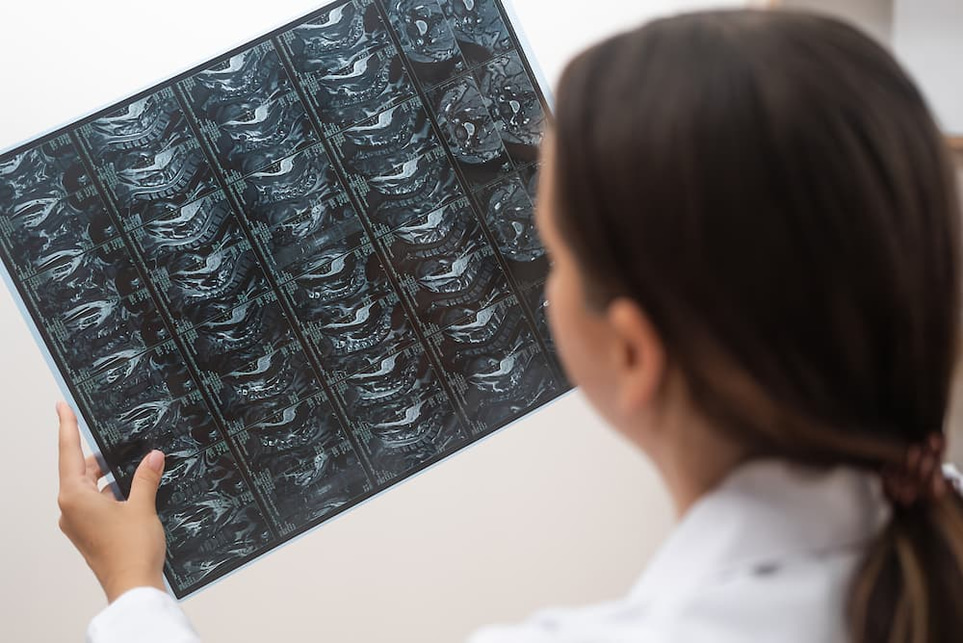
Imaging examinations, such as an MRI of the pelvis and hip joint, are more often relevant if the symptoms are pronounced, the diagnosis is uncertain or surgery is being considered.
What treatment helps with hip osteoarthritis
Education about the condition and regular exercise form the foundation of treatment for hip osteoarthritis.
The treatment may include:
information about the disease
adapted exercise
advice on physical activity
weight loss if there is pronounced obesity
if necessary – pain relief.
Long periods of rest are generally not recommended, as they can worsen stiffness and muscle weakness. Instead, physical activity should be adapted to help improve both strength and mobility.
For people with severe symptoms that do not improve with exercise and physiotherapy, hip replacement surgery may be considered.
When should you seek care for hip osteoarthritis?
If you have problems that affect your everyday life or if you have problems that have existed for several weeks without showing any improvement, you should seek care. In some cases, you can contact a physiotherapist directly, check with your health center.
It is wise to make an appointment if you:
have recurring pain in your hip, groin or thigh
become stiff after rest
limp or walk differently
have difficulty putting on shoes or getting out of the car
can no longer exercise or work as usual.
If you have pain that is rapidly worsening or if you experience nighttime pain, fever, significant swelling or difficulty putting weight on your leg, you should seek medical attention immediately.