Quick version
What is cervical spinal cord injury?
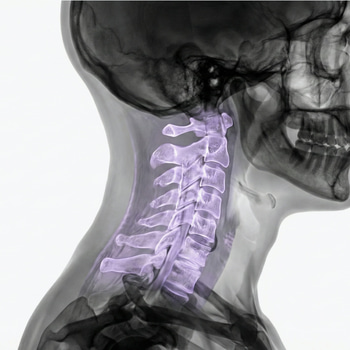
Cervical spinal cord injury means that the spinal cord in the neck becomes pinched or irritated. It can start insidiously with clumsiness in the hands, a stiff neck or a gait that feels unusually uncertain. For many, the problems are first noticed in everyday life by buttons becoming harder to press, dropping the mobile phone more often or legs feeling numb on stairs.
The condition is also often called cervical myelopathy where the degenerative type is the most common and the cause is age-related changes in the cervical spine. It is the most common cause of spinal cord injury in adults in the cervical spine and an important explanation for neurological symptoms from both arms and legs. If left untreated, the impact can worsen over time.
What happens in the body with cervical spinal cord injury?
The spinal cord functions as the body's signal cable between the brain and the rest of the body. When the space in the cervical spine becomes too narrow, the spinal cord is compressed, and then the nerve signals that control sensation, muscle strength, balance and fine motor skills are disrupted. Therefore, an injury to the neck can also cause symptoms down to the legs.
The most common mechanism is that discs, joints and ligaments change over the years. Disc bulges, bone deposits and thickened ligaments can together reduce the space for the spinal cord. In some cases, a herniated disc, congenitally narrow spinal canal, inflammation, tumor or injury after an accident also contribute.
Common causes of cervical spinal cord injury
In most adults, cervical spinal cord injury is a slow wear and tear in the cervical spine, sometimes called cervical spondylosis. This doesn't just mean "wear and tear" in a general sense, but concrete anatomical changes that can actually put pressure on the spinal cord. The risk of being affected increases with age, but the severity of the symptoms varies greatly between different people.
Common causes of cervical spinal cord involvement are:
- bone deposits that narrow the spinal canal
- herniated disc or bulging disc in the cervical spine
- thickening of ligaments that reduce the space around the spinal cord
- congenital narrow spinal canal
- trauma, such as a fall or whiplash in a person who already has cervical spinal stenosis
- more rarely, tumor, infection or inflammatory disease
Symptoms of cervical spinal cord involvement
The symptoms often come on gradually and can initially be misinterpreted as normal neck pain, carpal tunnel syndrome or general stiffness. A typical pattern is that several functions are affected at the same time, with the hands becoming clumsy, the legs feeling stiff and the balance deteriorating. The problems are usually permanent rather than temporary.
Common symptoms are that you experience:
- neck pain or neck stiffness
- numbness or tingling in the hands and arms
- weakness in the hands, for example difficulty writing, opening cans or pressing buttons
- unsteady gait or a feeling that the legs do not quite obey
- impaired fine motor skills
- sometimes urges to urinate or difficulty controlling the bladder in more pronounced cases
During the examination, the doctor looks for signs of impact from the spinal cord itself, not just a single nerve root. Examples include increased reflexes, spasticity, difficulty with rapid hand movement and gait impact. This distinguishes cervical myelopathy from nerve root compression alone, which more often causes radiating pain and impaired reflexes in a more limited dermatome, i.e. the area of distribution of the nerve root.
If you experience rapidly increasing weakness, difficulty walking, new-onset clumsiness in both hands, or problems with your bladder or bowel, you should seek medical attention urgently. Such symptoms may indicate more pronounced spinal cord involvement that requires rapid assessment.
How is cervical spinal cord involvement diagnosed and when is treatment needed?
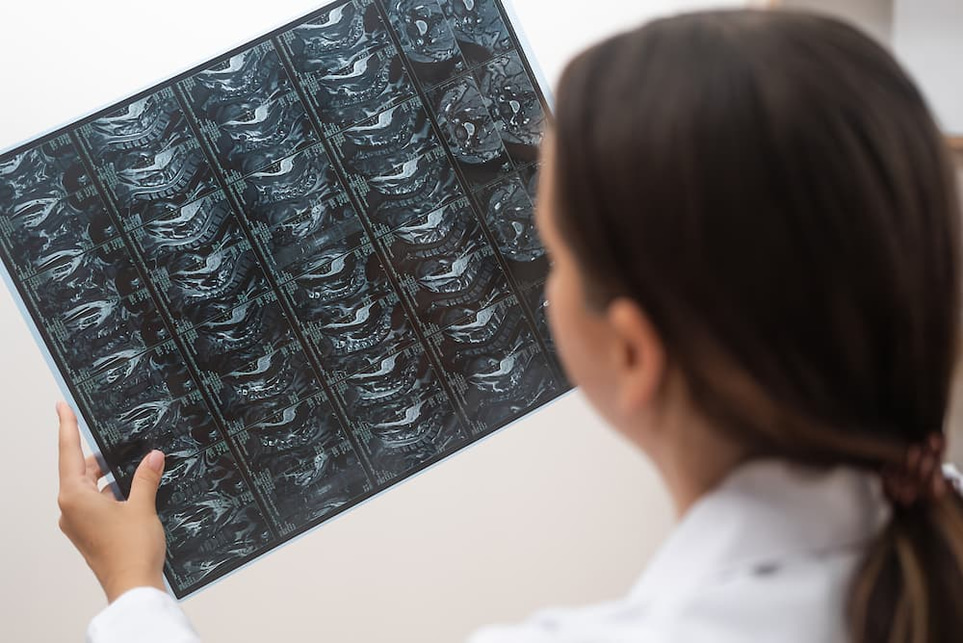
The diagnosis is based on a combination of medical history, neurological examination, and imaging. MRI examination of the cervical spine is the most important method because it shows both the spinal cord and what is causing the pressure, such as a herniated disc or narrowing of the spinal canal. Sometimes computed tomography is also used as a complement.
Miller cases can sometimes be followed or treated with structured rehabilitation and adapted activity, especially if the symptoms are minor and stable. Painkillers can relieve pain, but they do not remove the pressure on the spinal cord itself. Treatment with manipulation or traction of the neck requires great caution, as there is a described risk of worsening myelopathy.
Surgery is often considered for moderate or severe symptoms, or if the symptoms worsen. The aim is to relieve the spinal cord and slow down further nerve damage. The choice of surgery depends on where the narrowing is located, how many levels are affected and what the cervical spine looks like in general.
Prognosis and what you should pay attention to
The prognosis for cervical spinal cord involvement is affected, among other things, by how long the symptoms have been present and how pronounced they are when treatment starts. Earlier assessment generally gives a better chance of preserving function. The goal of treatment is often to stop deterioration, but many people also experience improved gait, hand function and less pain after the right intervention.
It is wise to react to small but clear changes in function. If you notice that you stumble more often, drop things, write worse than before or avoid certain movements because your body feels insecure, this is more indicative than how much pain you have in your neck. Especially in the case of cervical spinal cord damage, loss of function often says more than the strength of the pain.
Cervical spinal cord damage is not visible in a blood test, but health checks can still provide a valuable overall picture when symptoms are to be assessed in their context. Fatigue, muscle weakness and numbness can sometimes be exacerbated by other conditions such as anemia, vitamin B12 deficiency, diabetes or thyroid disorders. Therefore, neurological symptoms may need to be assessed both with an examination of the neck and with relevant laboratory tests.
Would you like to get a better overview of your health? Order a health check
at the Testmottagningen and see how your values are before further medical assessment.