Quick version
It is possible to have a normal BMI but still have a high fat percentage and low muscle mass, especially with a lot of fat around the stomach, which increases the risk of, among other things, type 2 diabetes and cardiovascular disease. Since BMI measurements do not distinguish between fat and muscle, the assessment should be supplemented with, for example, waist circumference, blood tests and body composition analysis such as DEXA. To improve health, the focus is primarily on reducing fat mass and building or maintaining muscle through strength training, fitness, sufficient protein and good sleep and recovery.
Being of normal weight but at the same time having a high fat percentage is more common than many people think. You can have a BMI within the normal range, exercise occasionally and still have a body composition that increases the risk of high blood sugar, blood lipid disorders and cardiovascular disease. This is one of the reasons why more and more people want to understand more than just the number on the scale.
Normal weight but high fat percentage – why BMI can be misleading
BMI is often used as the first measure of weight status because it is simple, cheap and works quite well at a group level. The problem is that BMI does not measure body fat directly and does not show where the fat is located. It does not distinguish between fat mass and fat-free mass such as muscle and bone.
This means that two people can have exactly the same BMI but completely different health profiles. One may have good muscle mass and a low percentage of fat, while the other has low muscle mass and a relatively high percentage of fat. This may explain why test results or waist measurements do not match the image of someone “looking normal weight”.
What does normal weight but high body fat percentage mean?
The term describes people who have a BMI within the normal range, i.e. 18.5–24.9, but who still have a high percentage of body fat. It is not only the amount of fat that matters, but also its distribution. Fat around the abdomen, so-called abdominal fat or visceral fat, is more linked to metabolic risk than fat that is located more peripherally.
In practice, this may be a person who weighs “just right” according to tables but has lost muscle mass over time. This is something that is often seen in people who sit a lot, are stressed, sleep poorly, recover poorly after illness or do fitness training without stimulating the muscles sufficiently. This becomes even more common with age, as body composition changes even if weight remains the same.
Why is BMI not enough to assess health risk?
BMI is a screening tool but not a definitive answer. It works to sort out risk at the population level, but at the individual level it can miss both people with a high fat percentage and people with a lot of muscle mass. BMI cannot distinguish fat from muscle nor show where the fat is located.
A common example is a person who is well-trained but has a high BMI due to a lot of muscle mass. The reverse is at least as important medically: a person with a normal BMI may have low muscle mass, increased fat mass and an increased risk of insulin resistance, blood lipid disorders and high blood pressure. Research shows that such body composition is linked to more cardiometabolic risk factors than normal weight without excess body fat.
Waist circumference therefore also provides important information. It captures abdominal obesity better than BMI and is used clinically as a complement when assessing risk for type 2 diabetes, cardiovascular disease and stroke.
A good health assessment often combines several parts such as:
- BMI
- waist circumference
- blood pressure
- blood tests for blood sugar and blood fats
- body composition analysis
Together, these provide a fairer picture than a single number.
What signs may indicate a high body fat percentage despite normal weight?
There are rarely clear symptoms at the beginning, and many people feel completely healthy. A high body fat percentage is often only discovered when measuring body composition or seeing abnormalities in blood tests.
Certain patterns can still raise suspicion. For example, you may have thinner arms and legs but more fat over your stomach or feel weaker despite your weight remaining the same. Some also describe that clothes fit tighter around the waist even though the scale has barely moved.
The risk picture becomes more relevant if you also have any of the following:
- increased waist circumference
- heredity for type 2 diabetes or cardiovascular disease
- sedentary work
- low levels of strength training
- elevated blood fats, blood sugar or blood pressure
In older adults, the combination of high fat mass and low muscle mass can develop into sarcopenic obesity, a condition that is linked to poorer physical function and a higher risk of disease.
How can a DEXA examination provide better answers?
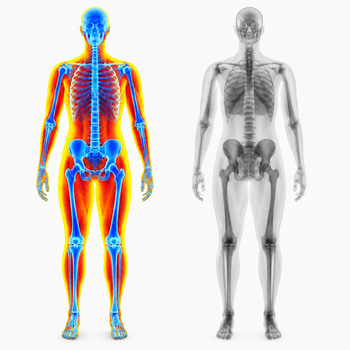
A DEXA examination measures body composition in more detail than BMI. It can show the percentage of fat mass, fat-free mass and how the tissue is distributed in the body. This makes the examination particularly useful when the question is not just “am I overweight?” but “what does my body composition actually look like?” For a person with a normal BMI, DEXA can show whether the fat percentage is higher than expected, whether abdominal obesity is pronounced or whether muscle mass is relatively low. It can also be valuable in follow-up when lifestyle changes are not clearly visible on the scale.
A concrete example is the person who starts strength training and eating more protein. The weight may remain the same, but DEXA can show reduced fat mass and improved muscle mass. DEXA is therefore a better tool than BMI for describing body composition, but the result should always be interpreted together with waist circumference, blood tests, blood pressure, lifestyle habits and the clinical picture.
What can be done if the fat percentage is too high?
Treatment is rarely about rapid weight loss. The goal is more often to improve the ratio between fat mass and muscle mass and to reduce metabolic risk. This may mean that the weight decreases slightly, remains stable or even increases slightly if muscle mass is built up at the same time as fat mass is reduced.
The measures need to be adapted to body composition:
- regular strength training to maintain or increase muscle mass
- cardiovascular training for cardiovascular health and energy expenditure
- sufficient protein intake to support muscle building
- sleep and stress recovery, as prolonged stress can affect appetite, activity and fat storage
If blood tests also show elevated fasting glucose, HbA1c, triglycerides or low HDL, the measures become even more important. Then there are signs that body composition is already affecting metabolism. Here it may be wise to combine a body composition analysis with other health tests, such as blood lipids, blood sugar and markers linked to metabolic health.