
Quick version
A stagnant result on the bathroom scale does not have to mean that training is in vain. Since muscle mass weighs more than fat, weight can remain at the same level while body composition improves. A DEXA measurement provides a detailed picture of the distribution between muscle mass, fat mass and the dangerous visceral abdominal fat. If the DEXA result still does not show any change, it is often due to lifestyle factors such as sleep, energy intake and recovery, or underlying medical causes that should be followed up with blood tests.
A common frustration looks like this: you exercise regularly, have more energy during your workouts and follow the plan better than before - but in the mirror surprisingly little is happening, and the scale is almost still. Then it's easy to think that the training is not working. Often the problem is that you are measuring the wrong thing.
Can a DEXA give the answer when you exercise but see no results?
When you say you "don't see results", you rarely mean exactly the same thing. For one person, it's about the weight not going down. For another, it's about the waist not decreasing, despite more workouts and better fitness. For a third, it's about the body feeling stronger, but the shape still doesn't change as expected.
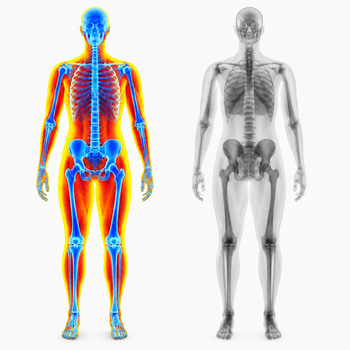
Here, a DEXA can be a more accurate way to understand what is actually happening in the body. DEXA, or DXA, is an X-ray-based method that can measure body composition - that is, how much of the body consists of fat mass, fat-free mass and also how the fat is distributed. The method has long been used in healthcare for bone density measurements, but is also used for body composition analysis. The examination itself is quick, non-invasive and involves a very low radiation dose.
This makes DEXA particularly relevant for those of you who exercise without getting clear answers from the scale. Body weight does not say anything about how much fat you have lost or how much muscle mass you may have built up. Two people can weigh exactly the same but have completely different body composition and thus different metabolic risk and different training responses.
When the scale is misleading even though training is working
It is entirely possible to make progress without your weight changing much. If you simultaneously reduce fat mass and increase muscle mass, your total weight may remain static or change slowly, even though your body is actually improving. This is a common explanation for people who start strength training or combine fitness with resistance training.
The opposite can also happen. You can lose weight but lose some muscle mass along the way, especially with low energy intake or one-sided training. Then the scale looks better, but the result is not always what you really want. Less muscle mass can also contribute to lower energy expenditure at rest, which is part of the explanation why weight loss sometimes levels off over time.
That is precisely why body composition is often more useful than kilograms. For those who exercise for health, performance or sustainable weight loss, the question is rarely just “what do I weigh?” but rather “what does the weight consist of?”.
What a DEXA can actually show
A DEXA measurement can provide more detailed information than both BMI and bathroom scales. It can estimate total fat mass, fat-free mass and regional distribution – for example, the difference between fat on the trunk and extremities. It can also estimate visceral fat, i.e. fat around the abdominal organs, which has a stronger connection to insulin resistance, blood fats, blood pressure and cardiovascular risk than subcutaneous fat.
This is often valuable when someone says: “I exercise a lot but my stomach doesn't change.” Waist circumference can provide an important indication, but a DEXA can provide a more detailed picture of whether fat mass is actually decreasing, whether the change mainly occurs in certain regions or whether muscle mass is increasing without abdominal fat moving as quickly.
When DEXA is helpful – and when it is not enough alone
DEXA is most useful when the question is whether the exercise is producing the right kind of change. It can be especially helpful if you:
- do strength training and suspect that muscle gain is hiding fat loss on the scale
- have been stable in weight for a long time but notice a difference in energy, workout results or clothing size
- want to track abdominal obesity or visceral fat more systematically
- need a baseline value for a lifestyle change
But DEXA doesn't answer everything. If you train hard and still don't get results, the cause may also lie in energy intake, sleep, recovery, protein intake, alcohol habits, stress or medical conditions. Examples are hypothyroidism, iron deficiency, low energy availability syndrome, insulin resistance or sleep apnea. Then the body composition needs to be put into a larger context with symptoms, blood tests and lifestyle habits.
In practice, it is often the combination that gives the best answer: DEXA to see what is happening in the body, and laboratory tests to see if there is another explanation for why the development is slow. For those who have fatigue, coldness, hair loss, lack of recovery or unusually weak exercise response, thyroid tests, blood suger, blood status, ferritin and blood fats can be relevant complements.
Limitations you should be aware of before interpreting the results
A DEXA is good, but not perfect. The result is affected by the precision of the method, biological variation and how the examination is carried out. Fluid status, stomach contents, time of day and differences between devices or software can affect small changes. Therefore, one should be careful not to overinterpret marginal differences between two measurements. When following up, it is best to measure under similar conditions and preferably on the same device.
This is especially true if you want to follow your progress closely. A change must be large enough to be reliably distinguished from normal measurement variation. If you take a new measurement after just a few weeks, the result may therefore be more difficult to interpret than after a longer period.
What other answers should you look for if the results fail to materialize?
If you are training consistently but not getting the effect you expected, you should ask some more specific questions. Are you getting enough sleep to recover? Are you getting enough protein to build or maintain muscle mass? Is the training program progressive enough, or are you doing the same load week after week? Do you have an energy intake that suits the goal, or do you compensate for increased training with increased snacking without noticing it?
If you also have pronounced fatigue, reduced energy, palpitation, menstrual disorders, long-term muscle soreness, constipation, feeling cold or difficulty concentrating, this may indicate that training is not the whole explanation. In that case, it is reasonable to supplement with a broader checkup or targeted tests.
Sometimes the most motivating thing is not to have confirmation that everything is wrong, but to discover that the body is actually responding - just not in the way the scale showed. This can change both the training plan and your patience.