
Quick version
Many structural spinal changes are symptomless, and pain only occurs when a nerve becomes inflamed or stressed. Because local inflammation and pressure on the nerve varies from day to day – influenced by everything from prolonged sitting to stress and sleep – the pain also changes. The process is often self-healing, and during investigation, the MRI findings are always weighed against your actual symptoms. However, emergency help is required if there are warning signs such as severe muscle weakness or numbness in the lower abdomen.
An MRI scan may feel like a definitive answer: it shows a herniated disc. Yet many people notice that the pain comes and goes. One day your back or legs hurt when you get up from the couch, the next day you can walk almost normally. It may seem contradictory, but it is actually common with herniated discs.
MRI shows herniated discs – but why doesn't it hurt all the time?
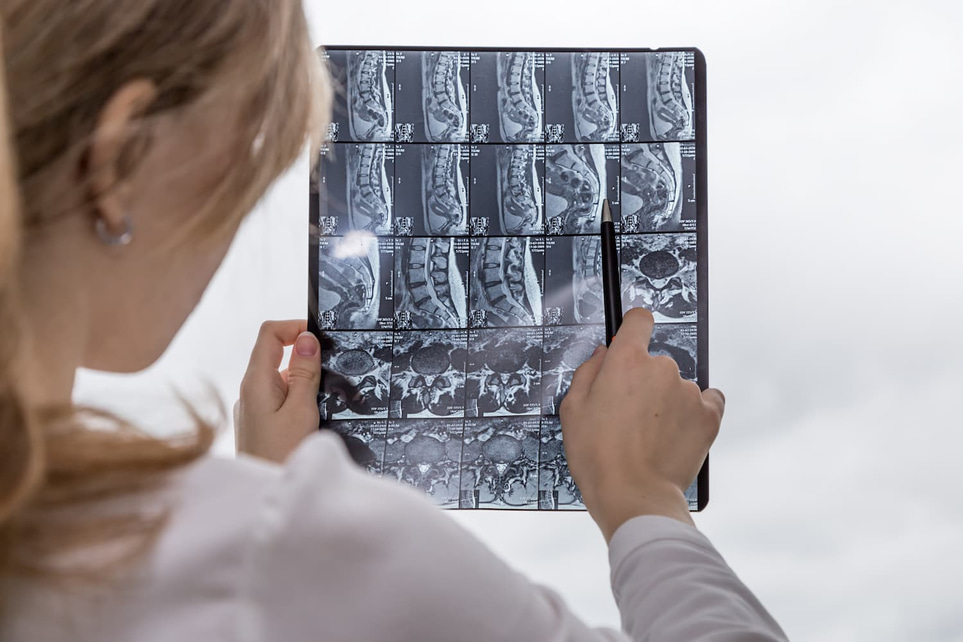
When an MRI shows a herniated disc, it means that part of the intervertebral disc is bulging or has pushed through the outer connective tissue ring. But an image shows structure, not the entire pain experience. Disc changes and disc herniation can be seen on MRI in people who have no pain at all, while the degree of pain does not always match how clearly the finding looks on the image.
This is because pain from a herniated disc is not just about "something being wrong". Often it is the interaction between nerve damage, inflammation, strain and how sensitive the nervous system is that particular day that determines whether it hurts or not.
MRI findings and pain are not the same thing
It often turns out that a visible herniated disc on an MRI does not necessarily mean an ongoing pain signal. An MRI finding in itself is not synonymous with symptoms, as many structural changes in the back are a natural part of aging and are often completely symptom-free.
This is why doctors do not assess the MRI image in isolation. The imaging findings are weighed against where the pain is located, whether it radiates down the leg, whether you have numbness, muscle weakness or an impact on reflexes.
A concrete example is the person who has a clear herniated disc on the left side on the MRI, but mostly pain in the middle of the lower back without leg pain. In this case, it is not certain that the herniated disc is the main cause of the problem. Conversely, someone with fairly moderate MRI findings may have severe sciatica pain because that particular nerve root is sensitive or inflamed.
Therefore, a herniated disc can flare up on certain days
The pain from a herniated disc often varies because the pressure and irritation around the nerve varies. Sitting for a long time, heavy lifting, coughing, sneezing or twisting can increase the load in the area and temporarily trigger more leg pain or stabbing pain in the back. Such problems are typical of lumbar-related nerve root involvement, also called radiculopathy.
Inflammation also plays a role. Disc material that comes into contact with the nerve root can trigger a local inflammatory reaction. The nerve can then become more easily irritated, much like skin that is sunburned and reacts more strongly to touch. When the inflammation subsides, the pain can decrease, even though the herniated disc is still visible on an MRI.
In addition, everyday life affects the symptoms more than many people think. Lack of sleep, stress, poor recovery and fear of movement can amplify the pain experience via the nervous system. This does not mean that the pain is "in your head", but that pain is always shaped both by tissue involvement and by how sensitive the alarm system in the body is at the moment.
Why leg pain often means more than pain in the back itself
In the case of a herniated disc, it is often the radiation that provides the most guidance. If the pain goes from the lower back down to the buttock, thigh, lower leg or foot, it often follows the spread of a nerve root. This is more likely to indicate that the herniated disc is actually affecting a nerve than if you just have diffuse pain in the lower back.
This is also why a person can feel quite well in their back but still experience sudden stabbing or burning pain in their leg when they bend forward. The nerve reacts to stress, not just the disc. Sometimes numbness or tingling predominates, sometimes pain, sometimes a feeling of weakness in the foot. The symptom picture can change from week to week.
For many, it is reassuring to know that fluctuating symptoms do not automatically mean that their back is “breaking down more”. In uncomplicated herniated discs, the course is often self-healing, and conservative treatment with movement, pain relief and a gradual return to activity is the first choice in most cases.
When should you react – and when can you wait?
The pain coming and going is not unusual in itself. However, there are symptoms that should be taken more seriously. Seek medical attention quickly if you experience newly pronounced muscle weakness, difficulty walking on your heels or toes, numbness in your lower abdomen or problems holding urine or stool. Such signs may indicate more significant nerve damage and require prompt medical assessment.
If you have sciatica-like leg pain that does not improve after several weeks, or if the pain is so severe that everyday life is not possible, a new assessment may be needed. MRI is used primarily when symptoms and neurological findings mean that the results may affect continued treatment, for example if surgery or injection therapy is being considered.
For more typical and stable problems, treatment is often less about new images and more about function. Can you sleep? Walk? Work partially? Bend a little better than last week? That type of improvement often says more about the prognosis than whether the herniated disc is still visible on MRI.
What can you do yourself when the pain varies?
The goal is rarely to be completely still until everything feels perfect. On the contrary, it is recommended that in most cases you continue to be as active as your symptoms allow and avoid prolonged bed rest. Pain is allowed to control the dose, but not your whole life.
It usually helps to think in levels instead of all or nothing. A short walk can work better than a long one. Getting up from your chair often can be gentler than sitting for a long time and then trying to "work out" the stiffness all at once. Many people feel better by finding movements that calm the symptoms, such as walking, light core activation or exercises from a physiotherapist, and then gradually increasing them.
If the pain fluctuates a lot between good and bad days, it may be wise to follow the pattern. Does the pain come after long car trips, heavy gardening or several nights of poor sleep? In this case, it is often possible to reduce the peaks by adjusting the load, recovery and ergonomics. In the event of simultaneous fatigue, low energy or slow recovery, it may also be relevant to review other health markers, such as inflammation, blood status, blood sugar or vitamin deficiency.
The most helpful perspective is often to see the MRI as part of the puzzle, not the answer. A herniated disc may remain on the image while the nerve becomes less irritated and function returns. Therefore, it is entirely possible to have a “visible” herniated disc without having constant pain.