Quick version
Strength training during menopause is important for maintaining muscle, bone and balance when your estrogen levels drop. Many women notice that their bodies are changing through reduced strength, increased abdominal fat, poorer recovery and an increased risk of osteoporosis. By maintaining regular strength training, you can help slow down these changes and improve both function, metabolism and quality of life.
You don't have to train hard to get results. Results come from as little as 2–3 strength sessions a week, including simple exercises for the whole body. Walking is good for your health, but it does not replace strength training when the goal is to maintain muscle and bone.
In the event of pronounced fatigue, palpitations, dizziness, unexplained weight gain or low energy despite exercise, it may be wise to follow up on, for example, iron status, vitamin D, blood sugar, blood lipids and thyroid values.
Are you going through menopause and experiencing a sudden change in your body? Then you are not alone. Many people describe that they exercise “as usual” but still lose strength, experience more aches and pains, gain fat around the abdomen or feel less stable in everyday life. This is precisely why strength training during menopause has more benefits than just staying in shape – it is also a very important part of protecting muscles, bones, metabolism and long-term health. Research shows that muscle-strengthening training can improve strength, balance, function and quality of life in women after menopause, and in the right way also contribute to better bone health.
This is what strength training does during menopause
Menopause means that estrogen levels change and eventually become permanently lower. This is something that affects several systems in the body at the same time. Estrogen is important for, among other things, bones, muscles, fat distribution and blood vessels. After menopause, the risk of both reduced muscle mass, weaker bones and a more unfavorable cardiometabolic profile increases, i.e. factors related to blood lipids, blood sugar, blood pressure and abdominal obesity.
Just because there is an increased risk does not mean that the problems are “something you just have to accept”. Strength training is one of the most concrete and effective lifestyle measures to slow down several of the changes that otherwise often gradually develop during the years around menopause.
What happens in the body during menopause?
Perimenopause is the transition period leading up to menopause, which is defined as the point when menstruation has been absent for 12 consecutive months. But for many, the changes also begin several years earlier. Common symptoms are hot flashes, sleep problems, mood swings, dry mucous membranes and fatigue. But it is also common to have things that are not always directly linked to hormones, such as the following:
decreased muscle strength
slower recovery
increased fat storage around the stomach
stiffness or joint problems
poorer balance
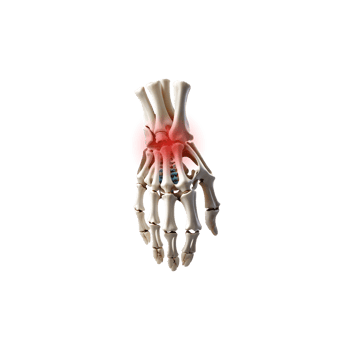
increased risk of osteoporosis in the long term
An important explanation for these symptoms is that estrogen deficiency affects the body's ability to preserve muscle and bone tissue. After menopause, bone loss can occur relatively quickly; some women lose up to 25 percent of their bone mass during the first 10 years after menopause.
The muscles are also affected. Muscle mass naturally decreases with age, but menopause can accelerate this process. This increases the risk of what is called sarcopenia, which is age-related loss of muscle mass and muscle strength. Sarcopenia is not just about performance in the gym, but about function in everyday life: it can affect everything from the ability to get up from a chair, carry grocery bags, walk up stairs to reducing the risk of falls.
5 reasons to strength train during menopause
By strength training during menopause, you help your body retain and build what would otherwise be lost. What happens in the body during strength training is that the muscles are loaded and send signals that stimulate muscle growth, improve nerve-muscle control and strengthen tendons and supporting tissue. The effect is noticeable both in the gym and in everyday life. The research shows particularly clear benefits in the following areas:
Muscular strength: Strength training improves both upper and lower body strength in postmenopausal women (once you have passed the menopause).
Balance and fall prevention: Strength training can improve balance and walking ability while reducing fear of falling. This is important because falls are a common cause of fractures later in life.
Bone health: Resistance training, especially when strength training is combined with weight-bearing or light impact-bearing activity, can help preserve bone density better than sedentary activities. The effect on bone density is often modest, but the functional effect is clear and clinically important.
Body composition and metabolism: Strength training can also contribute to better body composition, less abdominal fat and improved metabolic risk markers.
Quality of life: Many people experience better energy, greater physical security and increased independence when they do strength training. This is also supported by studies where physical function and quality of life have improved.
A common question is: “Do I have to train hard to get an effect?” The answer is: No, not necessarily. Even relatively simple and structured strength training can provide clear improvements in strength and balance. The important thing is regularity and gradual progression – that the load slowly increases as the body gets stronger.
How often and how should you train?
General recommendations for adults are at least 150 minutes of moderate cardiovascular exercise per week and muscle-strengthening activity at least 2 days per week. For women in menopause, a practical approach is often:
Strength training 2–3 times per week
Exercises for the whole body
Focus on large muscle groups: legs, buttocks, back, chest, shoulders, arms and torso
8–12 repetitions per exercise, 1–3 sets to start with
Gradually heavier load when the technique is right
Complement with walking, stairs, brisk walking or other weight-bearing activity
Examples of good exercises to perform during menopause can be:
squats to a chair
lunges or step-ups
hip lifts
rowing with resistance bands
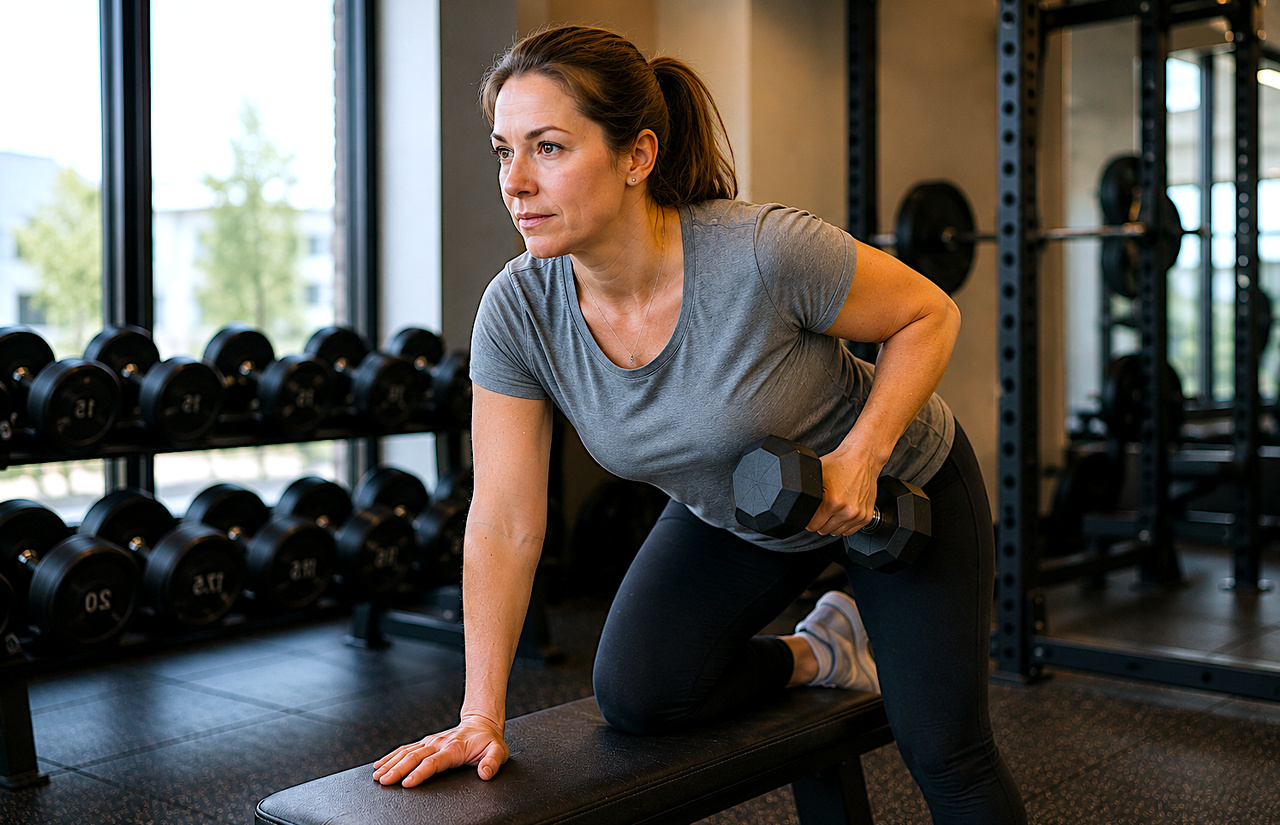
pressing exercises with dumbbells
deadlifts with light weights
calf raises
core stability
In osteopenia (a precursor to osteoporosis) or osteoporosis, strength training can still be very valuable, but the training plan may need to be adapted. In these conditions, it is especially important to have the right technique, posture and load level. Evidence-based guidelines for osteoporosis highlight resistance training 2–3 times a week as a central part of treatment and fall prevention.
Another common question is: “Is walking enough?” The answer is: Walking is excellent for the heart, mood and general health, but it does not replace strength training. To build or maintain muscle, the body needs a more pronounced resistance than regular everyday movement.
Not started with strength training yet? Here's how to get started
Most people know that exercise is good, but many women describe that menopause makes it harder to do it. Lack of sleep, joint pain, stress, hot flashes and lack of time can lower motivation. Then it's important to think realistically, not perfectly. It's better to do a little instead of nothing at all. Here are some tips that can be helpful when you want to get started.
Start where you are. Two short sessions a week are enough to get started instead of waiting for the "right time" and do a full session.
Prioritize basic exercises. A simple full-body workout can go a long way, a first step can be to start from the examples of exercises above.
Think function, not body shape. The goal can be to feel stronger in everyday life.
Increase slowly. If you get very tired or hurt, reduce the load temporarily and build up again.
Combine with a protein-rich diet and sufficient intake of calcium and vitamin D. It is important for muscles and bones. The NHS, the public health service in the UK, also promotes vitamin D supplements during parts of the year in the UK; in Sweden, the need is often relevant in winter depending on diet, skin type and sun exposure.
For those of you who have a lot of pain and discomfort
If you have a lot of joint pain, a previous fracture, pronounced osteoporosis, cardiovascular disease or have not exercised for a long time, it may be wise to start with the support of a physiotherapist, doctor or experienced trainer with medical knowledge.
When might it be wise to check your health markers?
As we have emphasized in this article, strength training is an important part of self-care, but sometimes you also need to get a clearer picture of what is happening in your body. This is especially true if you also experience:
pronounced fatigue
unexplained weight gain
decreased energy despite exercise
palpitations
recurrent dizziness
long-term sleep problems
suspected of iron deficiency, thyroid problems or metabolic abnormalities
Then a health check can be a good next step for you to provide insight into blood sugar, blood lipids, thyroid tests, iron status and vitamin D.
If osteoporosis is suspected, bone density is not assessed with a blood test but with bone density measurement, but blood tests can still be important for the overall picture.