Quick version
The hormone testosterone is also important for women, but it does not work as a miracle cure for diffuse ailments. Although it is often claimed on social media that testosterone solves problems with fatigue, brain fog and weight gain, this lacks support in research. The only clear indication for treatment is HSDD – a persistent, low sexual desire after menopause that causes personal suffering.
It is not possible to diagnose testosterone deficiency in women solely through a blood test. Laboratory values are difficult to interpret and do not provide simple answers. Instead, a doctor must make a broad overall assessment of symptoms, life situation and medications. Often, fatigue and mood swings are due to completely different and more common causes, such as stress, iron deficiency, thyroid problems or falling estrogen levels.
If treatment with gel or cream is considered, the goal is to achieve normal female hormone levels. This requires careful follow-up with blood tests to avoid overdose. Otherwise, too high testosterone levels can lead to androgenic side effects such as acne, voice changes and unwanted hair growth.
Women also have testosterone – the hormone is mainly produced in the ovaries and adrenal glands – and it affects, among other things, sexual desire, energy, well-being and muscle mass. Although women can have low testosterone levels, testosterone deficiency is not as well-defined a diagnosis as in men. Low blood levels of testosterone is not sufficient in itself to explain diffuse symptoms such as fatigue, depression or brain fog. Current evidence shows that testosterone treatment may be particularly relevant for some women with pronounced reduced sexual desire that causes suffering, especially after menopause.
Can women have testosterone deficiency?
Yes – women can have low testosterone levels, but the question is not as simple as saying that a “low” test automatically means that you have a disease. In women, testosterone naturally varies with age, menopausal status, ovarian surgery, medications and other hormonal conditions. Several expert organizations therefore emphasize that a diagnosis of testosterone deficiency should not be made based solely on a blood test. Instead, symptoms, life situation, other illnesses and other hormonal causes need to be factored into the final assessment.
Testosterone has a clear medical function for women, but it is not a solution for broad or non-specific problems. It is common for the discussion on social media to be about testosterone being the solution to everything from low energy to weight gain and poor focus. There, the research is considerably more restrained. The best-supported indication for testosterone treatment in women today is HSDD – hypoactive sexual desire disorder – especially in postmenopausal women after careful clinical assessment.
What does testosterone do in the female body?
Despite testosterone often being called a “male” hormone, it is also part of a woman’s normal hormonal balance. The levels in women are much lower than in men, but the hormone is still important for several functions in the body. It interacts with, among other things, estrogen and affects:
sexual desire and sexual response
feeling of energy and vitality
muscle mass and physical strength
bone tissue
general well-being
However, this does not mean that all of these functions are improved simply by receiving testosterone treatment. There is an important difference. The fact that a hormone is biologically important does not automatically mean that more hormone helps with every symptom. The international consensus recommendations state that the evidence is currently insufficient to recommend testosterone to women for, for example, cognition, general energy, depression, muscle growth or disease prevention.
In healthcare and in discussions on social media, one often encounters questions such as;
“I'm tired, have lost energy and don't recognize myself - could it be low testosterone?”
The answer is: yes, maybe, but often there are other and more common explanations. Fatigue and low libido can just as easily be due to lack of sleep, stress, iron deficiency, thyroid disease, depression, perimenopause, medication side effects or relationship factors. Therefore, the assessment needs to be broad and medically well-thought-out.
What symptoms can raise suspicion of low testosterone levels in women?
The symptom of low testosterone in women that has the strongest connection in research is reduced sexual desire - especially when it is clear, lasting and perceived as a problem by the woman herself. It is not about libido varying over life, which is normal, but about a more pronounced change where desire has become lower than before and where it creates stress, sadness, frustration or affects the relationship.
Other symptoms that are sometimes mentioned are:
reduced sexual imagination and initiative
poorer arousal
fatigue or reduced drive
reduced muscle strength
lowered well-being
But caution is required here. The more non-specific symptoms above are not sufficient to speak of testosterone deficiency, since they are also common in many other conditions. Therefore, blood tests are not used as the only answer, nor are the symptoms alone. A comprehensive assessment is needed.
A common example is women aged 45–55 who seek help and care for low libido, poor sleep, brain fog and irritability. In such a situation, the cause may be perimenopause or menopause with fluctuating or falling estrogen levels rather than an isolated testosterone deficiency. If dry mucous membranes, pain during intercourse, hot flashes or night sweats are also present, it needs to be taken seriously, as sexual desire is often secondarily affected by these problems.
What can cause low testosterone in women?
There are several possible reasons why testosterone levels become lower or the androgen balance changes:
increasing age
menopause, especially surgical menopause after removal of the ovaries
impaired function of the ovaries or adrenal glands
certain medications, such as certain birth control pills or hormone treatments that affect SHBG
chronic illness, malnutrition or low energy levels
hormonal diseases that affect pituitary, thyroid or prolactin
It is particularly important to understand that low testosterone does not always mean low biological effect. In women, hormone system is complex, and the measurements are more difficult to interpret than in men. Expert recommendations therefore emphasize that laboratory values in women have limitations, and that there is no clear blood level that alone defines androgen deficiency in women.
This also means that a “normal” response does not always rule out problems, and a “low” response does not automatically mean that testosterone should be treated. Instead, the blood test becomes one piece of the puzzle among several.
How is suspected testosterone deficiency in women investigated?
A good investigation does not start with medication – it starts with the right questions. If hormonal influences are suspected, it is necessary to map out:
what symptoms are present
how long they have been present
whether they concern sexual desire, pain, energy or mood
whether the woman is of childbearing age, perimenopause or postmenopausal
what medications she is using
whether there are sleep problems, stress, depression or relationship effects
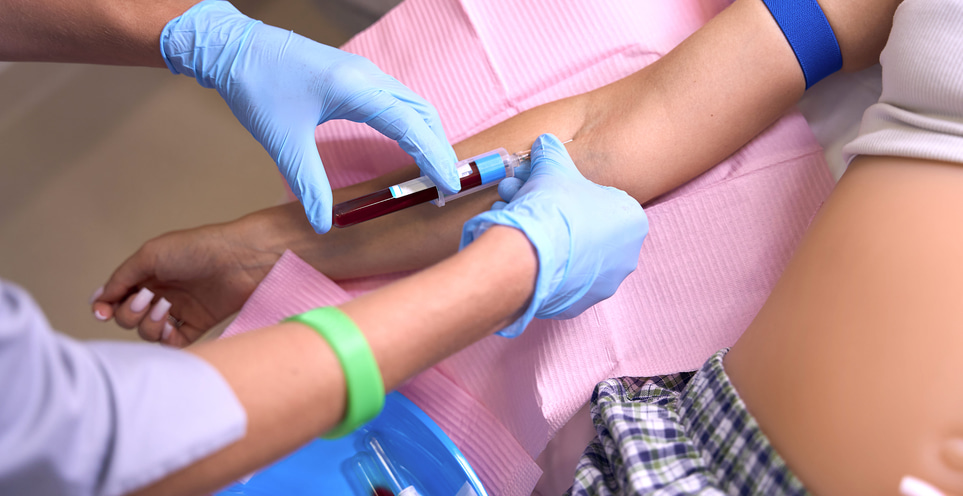
Blood tests can then be a support. Often, not only testosterone is considered, but also other tests depending on the symptom picture, such as thyroid tests, iron status or other sex hormones. The ISSWSH guideline highlights that in HSDD, it is often necessary to assess, for example, SHBG, prolactin, thyroid samples and sometimes other sex hormones to find treatable causes.
It is also important to be aware that analyzing testosterone in women can be technically challenging because the levels are low. Therefore, test results should always be interpreted in the correct clinical context. You are not treating a laboratory value, but a person with symptoms and needs.
When can testosterone treatment be relevant - and when should you be cautious?
The area where the research is clearest is postmenopausal women with hypoactive sexual desire disorder (HSDD). This does not mean that it is enough to just have “a little less desire”, but rather that symptoms of persistent decrease in sexual desire that cause personal suffering and are not better explained by other medical, psychological or relational factors are required. For this group, international guidelines show that transdermal testosterone can provide a moderate improvement in sexual desire and sexual function. At the same time, there are several important limitations: treatment should be preceded by a medical assessment other causes of low desire must first be investigated and treated the dose should be kept within the female physiological range follow-up with symptom assessment and blood tests is needed the treatment is not intended for bodybuilding, energy boosting or “anti-aging” common side effects at too high levels or the wrong dosage can be:
acne
increased hair growth
oilier skin
male hair loss pattern
voice effects
clitoral hypertrophy in more pronounced overdose
Guidelines also emphasize that testosterone levels should be checked before treatment and followed up after initiation to avoid supranormal levels.