Quick version
Stroke is one of Sweden's most common diseases and means that you have either suffered a blood clot or a hemorrhage in the brain. Stroke affects just over 24,000 people annually. Since the symptoms come on suddenly, it is vital to know the AKUT test – to check if the face is drooping, if a body part is weak or if the speech is slurred – and in that case call 112 immediately as Time is of the essence.
You can prevent stroke yourself by primarily keeping track of your blood pressure, quitting smoking, exercising regularly, eating a heart-healthy diet and checking your blood sugar and cholesterol levels, as early detection of these risk factors drastically reduces the risk of future damage.
How common is stroke in Sweden?
According to the latest statistics from the National Board of Health and Welfare, approximately 24,400 people in Sweden were affected by stroke in 2024. This corresponds to approximately 67 people every day. In 2024, approximately 5,200 people died as a result of stroke.
Three out of four people affected are over 70 years old, but stroke also affects younger people, with almost 4 percent of reported cases occurring in people younger than 50 years old.
“Many people think that stroke mainly affects the elderly, but we also see younger patients where lifestyle factors and undetected risk factors play a major role.”
— Hannah Krantz, licensed physician at Testmottagningen.se
Common symptoms of stroke
The symptoms often come on very suddenly. Some common signs of stroke are:
- Sudden weakness or numbness in the face, arm or leg
- Difficulty speaking or understanding speech
- Vision changes
- Dizziness and balance problems
- Severe headache without a clear cause
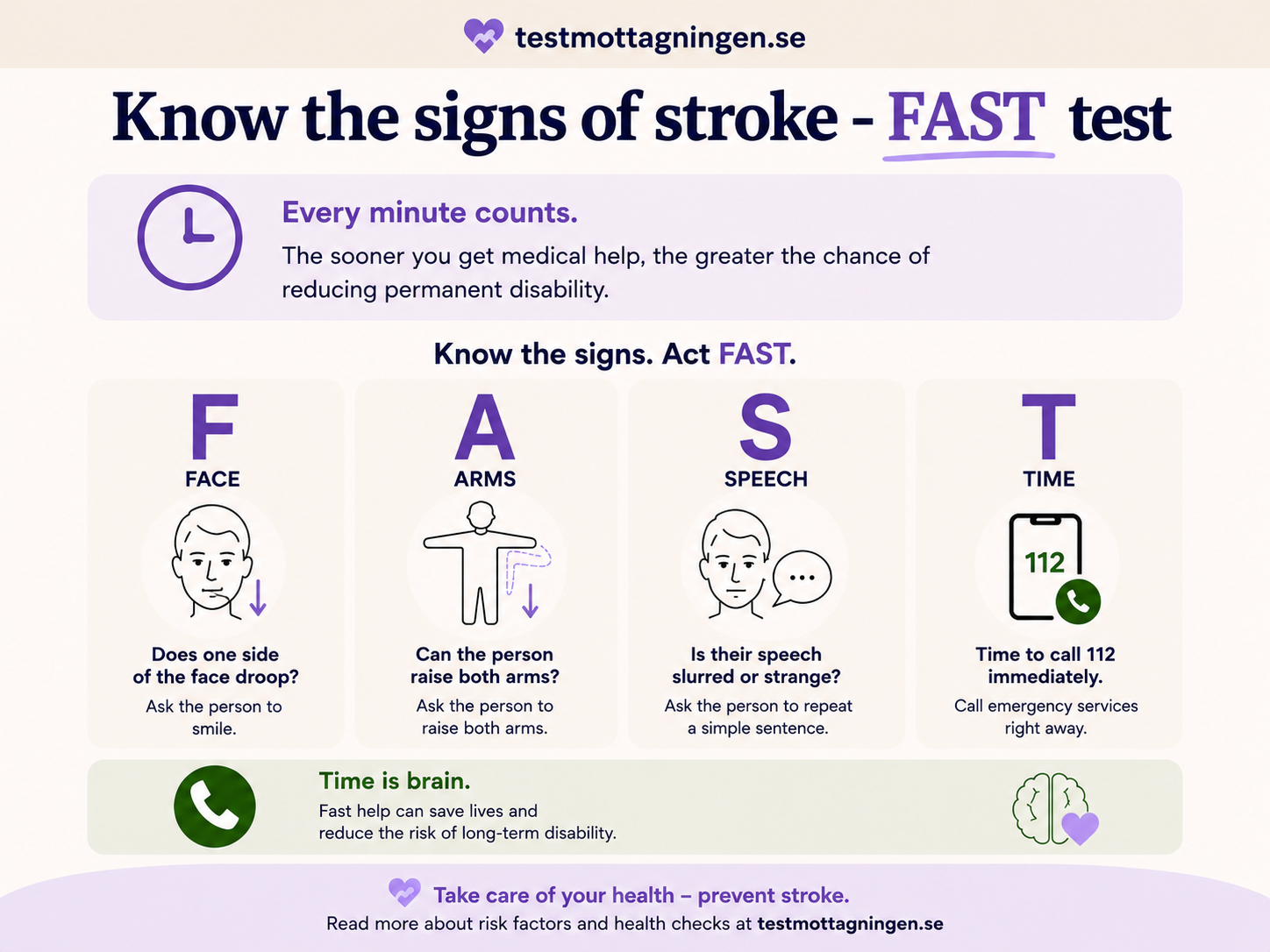
An easy way to recognize a stroke is the AKUT test:
- Face – does the corner of the mouth droop?
- Body part – can the person lift both arms?
- Pronunciation – is the speech slurred?
- Time – call 112 immediately in all three conditions above
Here you can read more about symptoms of stroke.
“In a stroke, every minute counts. The faster the person receives care, the greater the chance of reducing permanent damage.”
— Hannah Krantz, licensed physician at Testmottagningen.se
Stroke – a collective term for cerebral infarction and cerebral hemorrhage
Both conditions are acute and require immediate care.
What is cerebral infarction (blood clot in the brain)?
A cerebral infarction is caused by a blood clot in the brain that blocks blood flow to parts of the brain. This is the most common form of stroke. When the brain does not receive enough oxygen, brain cells can be quickly damaged. The symptoms of a cerebral infarction often come on suddenly and can include paralysis on one side of the body, drooping of the corner of the mouth, difficulty speaking or vision problems. It is crucial to have prompt treatment to reduce the risk of permanent damage.
What is cerebral hemorrhage in stroke?
A cerebral hemorrhage occurs when a blood vessel in the brain ruptures and causes bleeding that damages brain tissue. The condition is very serious and requires the person affected to receive emergency care. Common symptoms include sudden and severe headache, nausea, dizziness, impaired consciousness, and difficulty speaking or moving normally. One of the most common causes of cerebral hemorrhage is high blood pressure.
5 important things you can do to reduce the risk of stroke
There is a lot of research on stroke and overall it shows that a large proportion of all strokes can be prevented. Here are five of the most important factors:
1. Keep your blood pressure under control
High blood pressure is the biggest risk factor for stroke. Many people have elevated values without noticing it.
You can reduce the risk of high blood pressure by:
- keep moving and exercising regularly
- reduce your salt intake
- maintain a healthy weight
- avoid smoking
- check your blood pressure regularly
2. Stop smoking
Smoking damages blood vessels and greatly increases the risk of both blood clots and stroke. After just a few months of not smoking, the body begins to recover.
3. Exercise regularly
Maintaining physical activity strengthens the heart and blood vessels, lowers blood pressure and improves the body's ability to manage blood sugar.
With regular exercise, you should aim to exercise moderately, at least 150 minutes per week. Moderate exercise means, for example, walking, cycling or swimming.
4. Eat a heart-healthy diet
A heart-healthy diet is rich in:
- vegetables
- whole grains
- fish
- legumes
- healthy fats
At the same time, try to reduce your intake of processed foods, sugar, alcohol and large amounts of red meat, which are foods that have a negative impact on both blood sugar and blood fats.
5. Check your blood sugar and cholesterol
Health Check - DiabetesDiabetes and high blood lipids increase the strain on your blood vessels and can eventually lead to stroke. Regular health checks can help detect risk factors in time.
That's why preventive work is so important
Many people who suffer from strokes have long-term consequences that affect their ability to work, memory, speech and, not least, their quality of life.
“Stroke often comes on suddenly, but the risk factors usually build up over a long period of time. Therefore, preventive health checks, blood pressure checks and early detection of risk factors are crucial to reducing the risk of being affected.”
— Hannah Krantz, licensed physician at Testmottagningen.se