
Quick version
Golf or tennis elbow? How to recognize the problem and get rid of the pain
It often starts quite mundanely. You lift a grocery bag, screw together a piece of furniture or sit with a mouse at work for a long time — and suddenly your elbow hurts. Golf and tennis elbow sound like sports injuries, but in practice they just as often affect people who have never held a racket or a golf club.
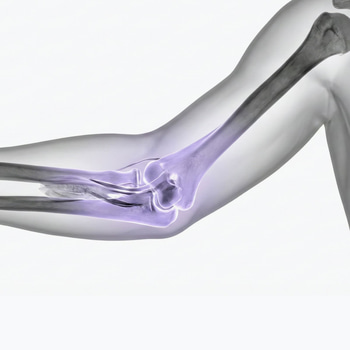
The pain rarely comes from the joint itself. Instead, it is usually an overload where the tendons of the forearm attach to the bony protrusion of the elbow. This means that everyday movements such as pouring coffee, carrying a computer bag or turning a key can become unexpectedly difficult.
What is the difference between tennis elbow and golf elbow?
The difference lies primarily in where the pain is felt. Tennis elbow is also called lateral epicondylalgia or lateral epicondylitis and causes pain on the outside of the elbow, where tendons from the extensor muscles of the wrist and fingers attach. Golfer's elbow, or medial epicondylalgia, instead causes pain on the inside of the elbow where the flexor muscles of the wrist and fingers attach.
Tennis elbow is more common than golfer's elbow. Typical symptoms of tennis elbow include pain when lifting with a straight arm, gripping tightly, shaking hands, or turning a screwdriver. In golfer's elbow, the pain is more often provoked by bending the wrist, clenching the hand, or carrying something with the palm facing up.
Despite the names, the cause does not have to be tennis or golf. Many people experience the discomfort after repeated movements at work or leisure, such as assembly, painting, gardening, strength training, climbing or prolonged computer work with static load.
What causes golf and tennis elbow?
The most common cause is repetitive strain, where the tendon is exposed to greater or more frequent loads than the tissue has time to recover from. This can lead to tendinopathy, which means a painful tendon injury with structural changes and irritation in the tendon tissue. Although the name epicondylitis suggests inflammation, current research shows that long-term discomfort is more often due to degenerative and reparative changes in the tendon than to an ongoing inflammatory process.
That is why it is sometimes surprising that the discomfort does not go away with just anti-inflammatory tablets. The problem often lies in how the tendon is loaded over time, not just in a temporary inflammatory reaction. A rapid increase in training, new equipment, a change in work technique or many monotonous lifts over a few weeks can be enough to trigger symptoms.
Certain factors increase the risk. Middle age is a common period where the problems increase, and both manual work and racket sports are known risk environments. Impaired recovery, smoking, previous tendon pain and poor ergonomics can also contribute, although the cause is rarely a single thing.
What symptoms are typical and when should you seek care?
The typical symptom is a local tenderness at the bone tubercle on the outside or inside of the elbow, often together with pain from strain. Many describe that grip strength feels worse, even though the hand itself is functioning. The pain can radiate down the forearm, but usually does not cause clear numbness.
With tennis elbow, it often hurts when you lift a frying pan, hold a coffee cup with your arm outstretched or use a computer mouse for a long time. Golfer's elbow is more noticeable when you carry a bag, do chin-ups, throw or turn your wrist sharply inwards. The symptoms often come on gradually, but can sometimes start after an unusually heavy workout or repetitive work.
You should seek medical attention if the pain does not improve within a few weeks with rest, if you experience nightly pain at rest, significant swelling, locking in the joint, widespread numbness or if you have difficulty using your arm in work and everyday life. In this case, other causes need to be ruled out, such as nerve damage, osteoarthritis, ligament damage or pain that actually comes from the neck or wrist. Sometimes a clinical examination is sufficient, but if the image is unclear, ultrasound, MRI or X-ray is needed.
How is golf and tennis elbow treated?
The most important treatment is to reduce the load that provokes the pain, without becoming completely still. Complete rest rarely helps in the long term. Better is so-called relative relief, where you continue to use the arm but adjust the grip, weight, pace and number of repetitions so that the tendon has a chance to recover.
Exercise is central to the treatment. Stretching and gradually increased strength training for the muscles of the forearm are used to improve the tendon's endurance, and exercise programs have long been a main part of non-surgical treatment. You often start with calm, controlled exercises and gradually increase as the pain becomes more manageable.
Pain relief can be a support in the beginning. Ice, short-term use of over-the-counter painkillers or anti-inflammatory medications may provide relief, if they are appropriate for your medical situation. An elbow brace or wrist support can sometimes temporarily reduce the load, but does not replace exercise and adjusted loading.
Cortisone injections can provide quick relief in the short term, but are used more sparingly today. Several reviews show that cortisone often does not provide better long-term results and may be linked to recurring problems compared to more active rehabilitation or a wait-and-see approach. Therefore, it is rarely the first choice for long-term problems.
Other treatments, such as PRP or shockwave therapy, are often discussed when symptoms become long-lasting. Here, the evidence is more uncertain and the results vary between studies and patients. For shockwave therapy for difficult-to-treat tennis elbow, the safety is considered good, but the benefit is still uncertain enough that patients need clear information before considering such treatment.
Surgery is rarely needed. It may only become relevant after several months of targeted, non-surgical treatment without sufficient effect, especially if the pain continues to limit work, sleep or function.
How long does it take to get better and what can you do yourself?
The course is often slower than many people think. Golf and tennis elbow is usually not dangerous, but can be persistent. Many improve gradually with self-care and rehabilitation, but it can take months before the tendon can withstand normal load again.
What usually helps best in everyday life is to identify the movements that trigger the pain and change them. Some common examples are carrying with both hands instead of one, alternating grips, taking micro breaks when working on the computer, reducing racket tension or grip size and avoiding training through clear pain for several days in a row. Pain during training does not necessarily mean injury, but increasing pain afterwards is a sign that the load has been too high.
If the problem recurs again and again, it may also be wise to take a broader look at your health. Sleep, recovery, muscle strength, work environment and sometimes underlying factors such as low energy levels or other strain problems affect how well the body repairs tissue.
When an elbow hurts, the question is rarely just what is in the tendon attachment, but also what the body has the capacity to heal. Anyone who experiences recurring pain, slow recovery or several different strain problems at the same time can therefore benefit from not only treating the pain locally, but also reviewing their general health.