
Quick version
Knee pain when climbing stairs is often due to increased pressure behind the kneecap (patellofemoral pain), osteoarthritis or meniscus damage. Going downhill requires more braking muscle work and therefore often hurts more than going uphill. The discomfort can usually be alleviated and prevented by adjusting the load and targeted training of the thigh and hip muscles.
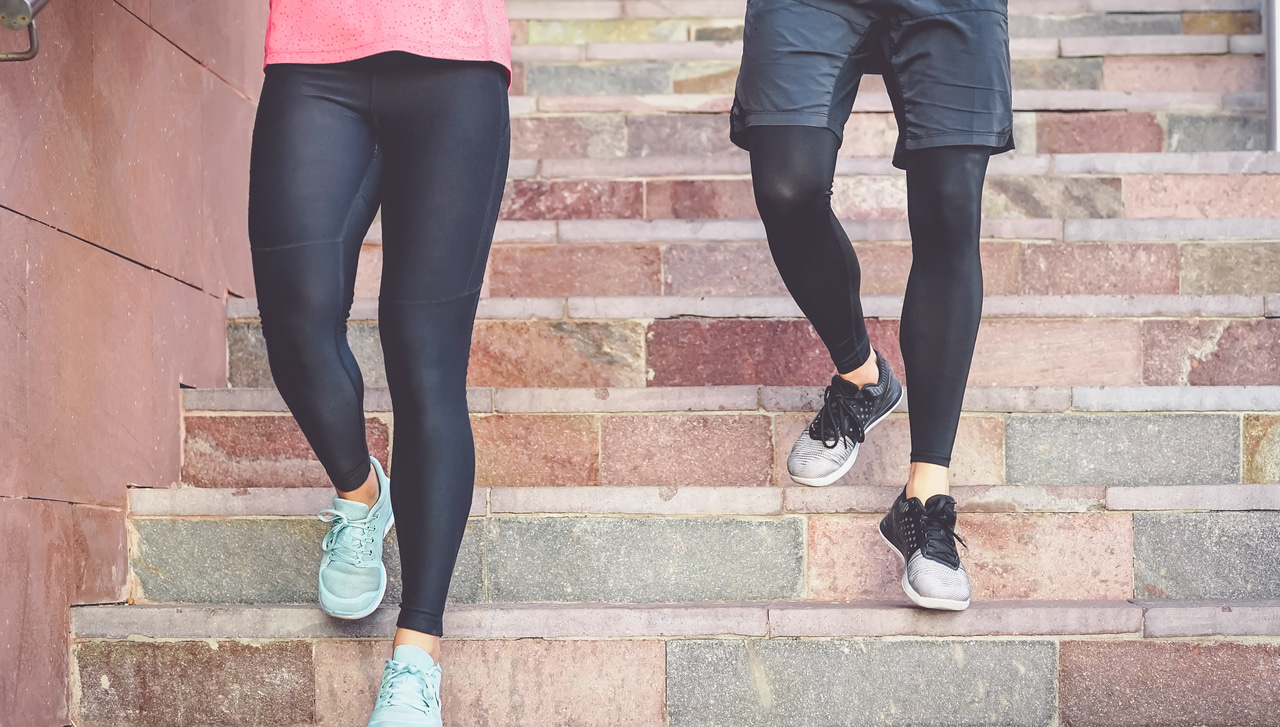
Knee pain when walking up stairs is a common problem. Many people notice that their knees work well on level ground but immediately protest on the way down stairs, especially on the way down. This often says something about where in the knee the load ends up and which structures are irritated.
Knee pain when walking up stairs is often due to load behind the kneecap
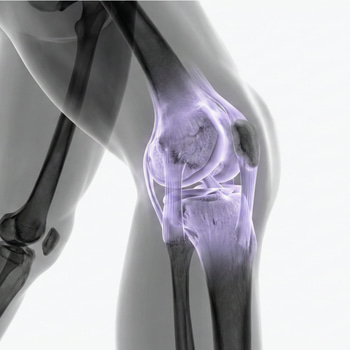
One of the most common reasons for knee pain when walking up stairs is so-called patellofemoral pain. This means pain around or behind the kneecap, where the kneecap slides against the thighbone when you bend and extend the knee. Walking up stairs, squatting, getting up from a chair and sitting with a bent knee for a long time usually provoke the problem.
The explanation is mechanical. When you walk up stairs, the pressure between the back of the kneecap and the thighbone increases. If the tissues there are already sensitive, or if the muscles around the hip and thigh do not relieve the load well enough, it can hurt even without anything being “broken”.
The pain is usually located at the front of the knee or diffusely “inside” the knee. It often comes on insidiously rather than after a clear trauma. Some also describe creaks, snaps or a feeling that the knee does not feel completely stable, but without it actually jumping out of joint.
Common causes - overload, osteoarthritis or meniscus damage
In younger and middle-aged people without a clear injury, stair pain is often due to overload in the kneecap joint. It can come after a rapid increase in training, more running uphill, many lifts, a new training regimen or a sedentary life where the muscles have become weaker. Weakness or poor control in the thigh and hip muscles, tightness and sometimes foot position can contribute to poorer load distribution.
In people over 45 years of age, osteoarthritis is another common explanation. Knee osteoarthritis often causes load-related pain, stiffness and difficulty in performing activities such as climbing stairs, standing up or walking longer distances. The diagnosis is often made clinically, i.e. based on age, symptoms and examination, and X-rays are not routinely needed if the picture is typical.
Sometimes the problem lies in the meniscus, the knee's shock-absorbing cartilage disc. Meniscus damage often causes more localized pain in the joint space on the inside or outside of the knee, and can cause swelling, aching when twisting, clicking or locking. If the knee locks up or feels like it is really locking up, it should be evaluated medically.
Why does it often hurt more going down than up?
Many people wonder why going down stairs feels worse than going up stairs. When you walk down, the thigh muscle has to slow down your body weight while your knee is bent. This increases the load on the kneecap joint and places higher demands on strength and control than walking on level ground.
This is also why people with patellofemoral pain often say that they can cope with everyday life quite well until they encounter a steep staircase, a hill or many floors in a row. The same thing can be noticed when you squat, stand up from a low sofa or have sat for a long time with bent knees in a meeting, in a car or at the cinema.
However, if the pain is dominated by morning stiffness, swelling or pain even at rest, the picture may point in a different direction, for example osteoarthritis or inflammatory joint disease. Then it is not enough to just think “overexertion”.
What can you do yourself to reduce the pain?
The first step is often to reduce the load that provokes the most, without becoming completely still. Temporarily reducing deep squats, running uphill, jumping or many stairs can calm the pain. At the same time, low load usually works better, for example cycling with light resistance, walking on flat ground or other exercise that does not trigger obvious pain.
The treatment that has the strongest support for patellofemoral pain is exercise-based rehabilitation. Exercises that strengthen the thigh muscles and hip muscles, and improve control when the knee is loaded, are central. In some cases, taping or foot inserts can be a complement, but they do not replace exercise.
In knee osteoarthritis, the principle is similar but the goal is a little broader: to reduce pain, improve function and keep the joint moving. Exercise, weight control if overweight and knowledge of how symptoms vary over time are basic treatment. Resting completely usually makes the joint stiffer and everyday life more difficult.
Some practical ways to relieve stress in everyday life can be:
- take one step at a time on the stairs for a period
- hold the railing and shorten your stride
- avoid deep knee angles when the pain is at its worst
- check your shoes if they are worn or unstable
- return to exercise gradually instead of “testing the limit” every day
When should you seek medical attention for knee pain when walking up stairs?
You should seek medical attention if your knee is clearly swollen, locking, giving way after an injury or if you cannot put normal weight on your leg. The same applies if the pain came after a trauma, such as a twisting injury, fall or sports injury. Such symptoms are more indicative of structural damage than simple overload.
Also seek medical attention if the symptoms do not improve within a few weeks despite appropriate load, or if you have recurring pain that limits work, exercise or sleep. For those with symptoms that suggest osteoarthritis, a clinical assessment can help distinguish between expected strain problems and signs of another joint disease.
If knee pain is combined with fever, redness, pronounced increase in temperature or rapid swelling, it should be assessed urgently. In this case, infection or other more acute joint disease needs to be ruled out.
Knee pain on stairs is therefore not a diagnosis in itself, but a load pattern that provides clues. Often, a lot can be influenced with the right explanation, smart load management and training that matches the cause. The earlier you catch the pattern, the less risk there is that you will start to compensate with poorer movement patterns and reduced activity.