Quick version
Vein sampling is a fast and safe method for getting a detailed picture of your health. By analyzing the composition of the blood, you can detect imbalances, monitor body functions and identify early signs of illness, often before symptoms occur.
At Testretningen, sampling is carried out at affiliated clinics by trained healthcare personnel according to medical guidelines. Every step in the process is carefully designed to ensure high quality, minimal impact on the sample and reliable analysis results.
For you as a customer, this means a safe, smooth and professional experience - with clear answers that give you better insight into your health.
What is venipuncture?
Venipuncture involves taking blood from a peripheral vein, usually in the crook of the arm (vena mediana cubiti), for laboratory analysis. The blood is collected in specific test tubes with different additives depending on the analysis to be performed, such as EDTA, serum or citrate.
Venous blood can be used to analyze a range of biochemical, hematological and hormonal parameters. This provides a detailed and medically reliable picture of the body's physiological functions - including organ function, nutritional status, hormone balance and signs of inflammation, infection or metabolic effects.
What is venipuncture used for?
Blood tests are a fundamental part of modern diagnostics and are used both in the clinical investigation of symptoms and for preventive purposes. Many disease states affect the composition of the blood at an early stage, which makes venous sampling an important tool for early detection and follow-up.
Venous blood analysis can provide information on:
- Hematological parameters, such as hemoglobin, erythrocytes and iron status
- Endocrine functions, including sex hormones and thyroid hormones
- Metabolic markers, such as glucose and blood lipids
- Inflammatory processes and infections via specific biomarkers
Venous sampling can analyze, among other things:
- Blood status and iron levels to detect anemia, for example
- Hormones such as testosterone , estrogen and thyroid values
- Blood sugar and blood fats linked to metabolism and cardiovascular health
- Inflammation markers and signs of infection
Preparations for venous sampling
In order for the test results to be accurate, it is important that the right preparations are made before the sample is taken. The patient should have been given clear information and the opportunity to ask questions, and in some cases fasting is required before the test.
- The patient's identity is checked
- Rest for at least 15 minutes before sampling
- Any specific instructions, such as fasting, are followed
- The correct test tube and analysis conditions are ensured
Body position and stress can affect certain blood values, which makes these steps important for obtaining an accurate result.
How venous sampling is done
Venous sampling is a standardized medical procedure that is performed in several steps to ensure high quality, patient safety and reliable analysis results. Each step is carefully designed to minimize the risk of sources of error and influence on the test result.
Preparation of materials
Before sampling, the nurse prepares all necessary materials, such as a tourniquet or blood pressure cuff, cannula, test tubes and disinfectant. The equipment is carefully checked to ensure that it is sterile, properly handled and has not passed its expiration date.
Identification and labeling
The patient's identity is always verified against a referral or order before sampling begins. The test tubes are correctly labeled before or immediately after sampling to minimize the risk of mix-ups and ensure traceability throughout the analysis chain.
Traction - to make the vein visible
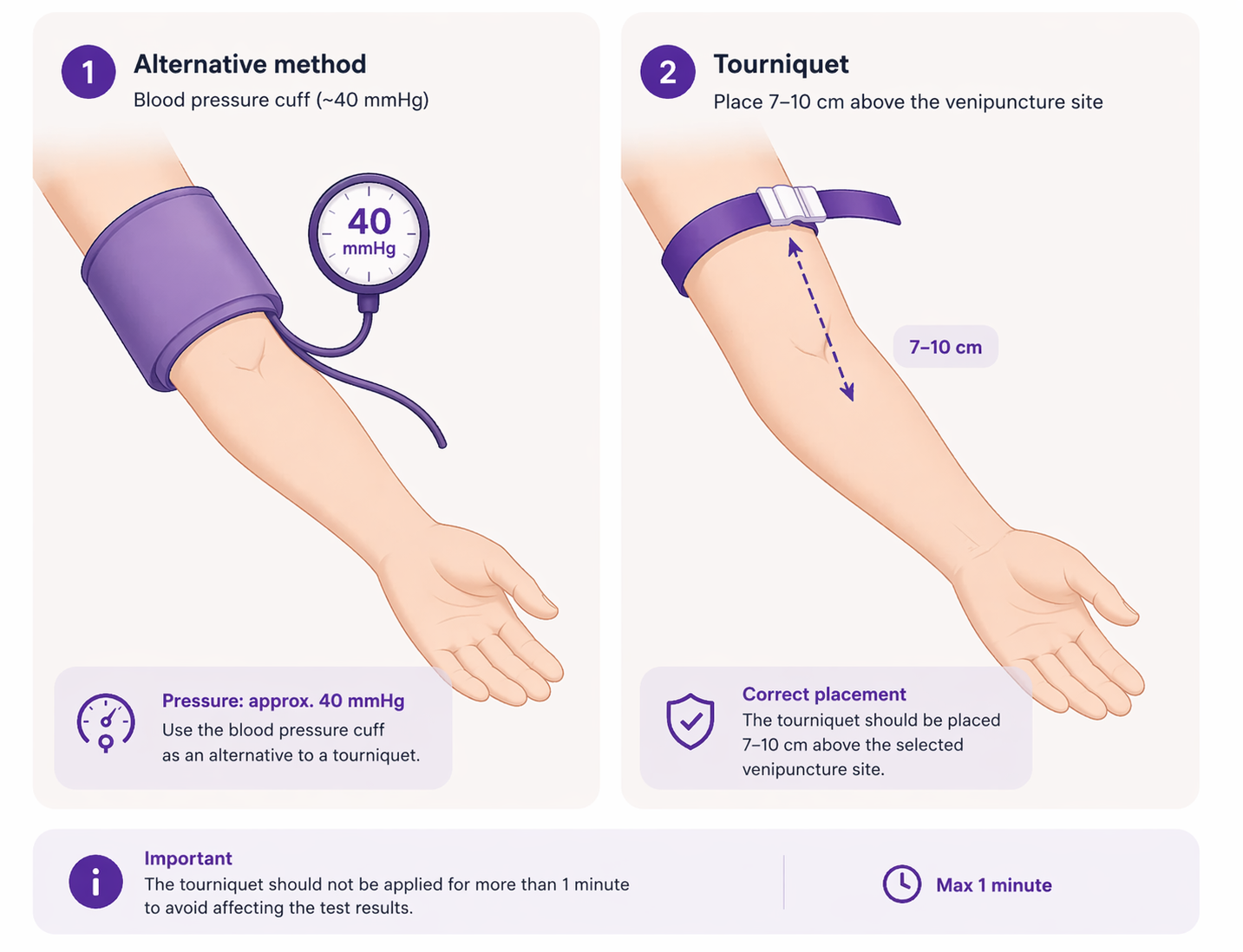
To facilitate sampling, a tourniquet or in some cases a blood pressure cuff is applied around the upper arm. This increases the venous pressure and makes the veins more prominent and easier to puncture.
The tourniquet is usually placed approximately 7–10 cm above the planned puncture site. It is important that the tourniquet is not left in place for too long, as this can affect the composition of the blood and thus the test results. As a guideline, the stasis should not be tightened for longer than one minute.
In some situations, a blood pressure cuff is used as an alternative, often with a pressure around 40 mmHg, for a more controlled stasis.
Performing the sample
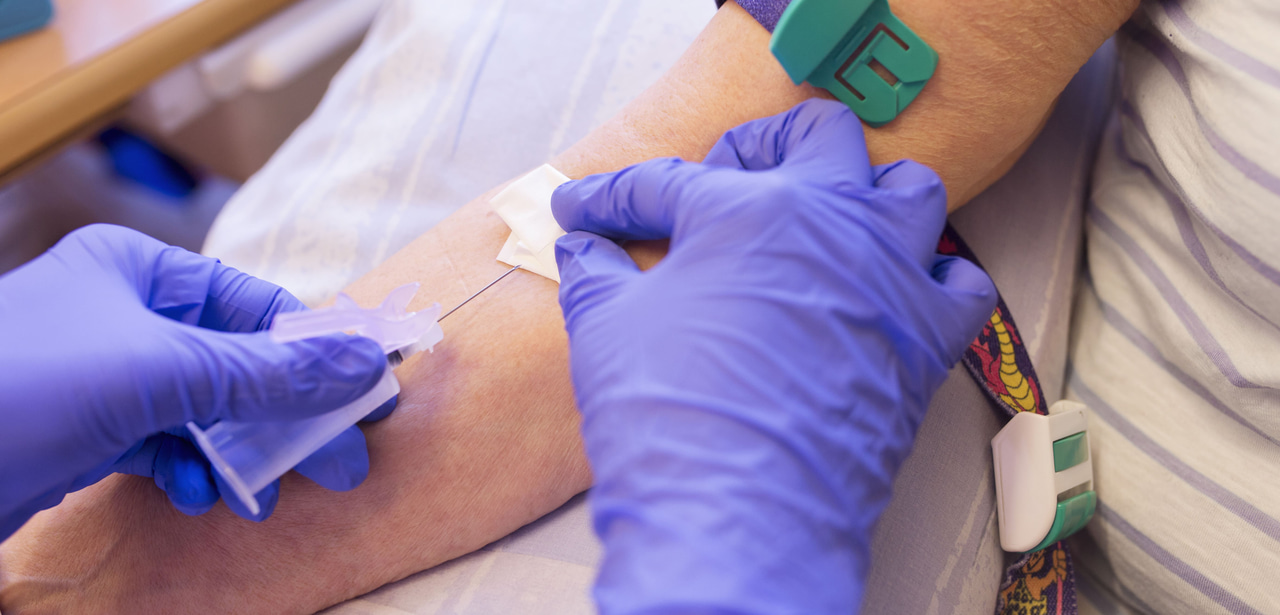
Once a suitable puncture site has been identified, the skin is thoroughly disinfected with antiseptic and allowed to air dry. This is an important part of reducing the risk of infection and ensuring a safe sample.
A cannula is then inserted into the vein at a low angle (approximately 10–15 degrees), which minimizes discomfort and ensures that the tip is correctly placed in the vessel. When the cannula is positioned correctly, a stable blood flow to the test tubes is established.
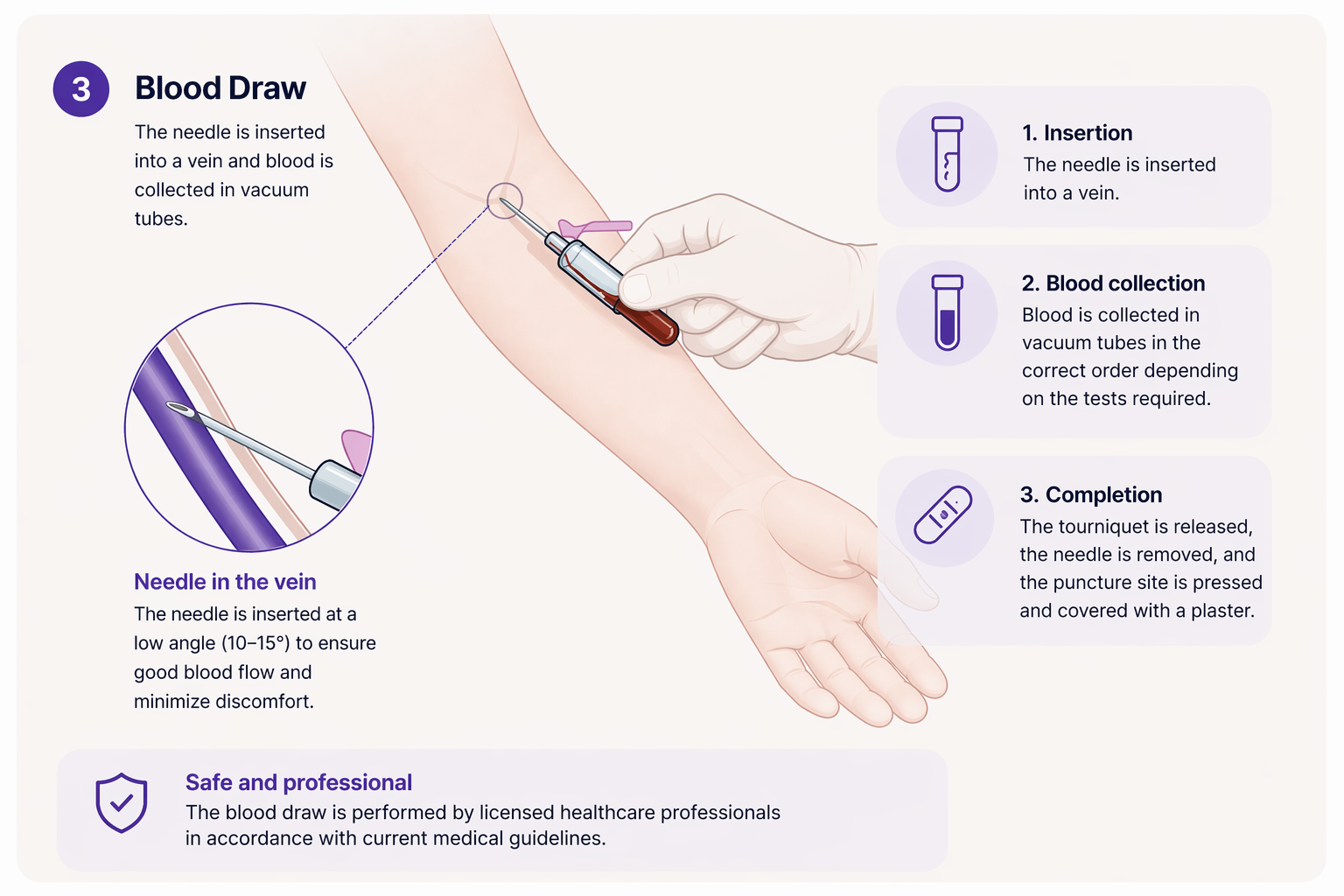
The blood is collected in vacuum tubes that are filled in a specific order depending on which analyses are to be performed. To reduce the risk of affecting the test results The stasis is released as soon as blood flow has started. The patient is observed throughout the procedure and the blood flow is adjusted if necessary.
When the sample is taken, the cannula is removed with a firm one-handed grip. The insertion site is compressed immediately to minimize bleeding and the risk of bruising, and then covered with a plaster.
- The cannula is inserted into the vein at the correct angle and position.
- Blood is collected in one or more test tubes depending on the analysis.
- The stasis is released early to ensure reliable test results.
- The test tubes are filled and mixed according to current guidelines.
- The cannula is removed and the insertion site is compressed and plastered.
After the sample
After the blood sample has been taken, the samples are stored according to current procedures and transported to the laboratory as quickly as possible for analysis.
Hygiene and safety
All affiliated clinics follow basic hygiene procedures to minimize the risk of infection and ensure patient safety.
- Disinfection of hands and work surface
- Use of protective gloves and aprons
- Sterile handling of all materials
These procedures are a fundamental part of safe venous sampling.
Documentation and quality assurance
After the sample has been taken, the procedure is documented in the patient's medical record. This includes any difficulties, complications and whether anesthetics have been used.
The time of sampling is also recorded, which is important for the interpretation of certain analyses.