






Ovulation test for those who want to get medically certain confirmation that ovulation has actually occurred. All samples are taken at the same time and are adapted for correct interpretation based on the specified cycle phase.
What is the purpose of the ovulation test?
An ovulation test or ovulation test is an analysis designed to confirm ovulation afterwards. By analyzing hormonal changes that occur after the egg has been released, you get an objective basis for determining whether ovulation has occurred in the current cycle. Knowing whether you have ovulated or not can be a valuable support when trying to get pregnant or when investigating cycle-related issues.
The blood test is not intended to predict the exact day of ovulation, but to provide reliable confirmation based on venous blood samples. The hormone pattern can also contribute to a better understanding of when ovulation usually occurs in relation to your cycle.
What can the ovulation kit show?
By analyzing carefully selected hormones, the analysis can provide information about:
- Ovulation has occurred in the current cycle.
- How the body has responded hormonally after ovulation.
- Which phase of the menstrual cycle the results correspond to.
- If the hormone pattern deviates from what is expected in relation to your age.
What analyses are included?
All analyses are performed by an accredited laboratory in Sweden for the highest possible quality and reliability. The test results are reviewed by a licensed physician who checks for any deviations. The following blood tests are included in the ovulation kit:
- : The most important marker to confirm that ovulation has occurred. Elevated levels in the luteal phase indicate that ovulation has occurred.
- : Provides information about hormonal signaling and cycle phase in relation to ovulation.
- : An estrogen that helps interpret the hormonal balance around ovulation and provides context to progesterone and LH levels.
When should the sample be taken?
To enable correct interpretation, it is recommended that sampling be done approximately 5–7 days after estimated ovulation, during the so-called luteal phase. All samples are taken at the same time.
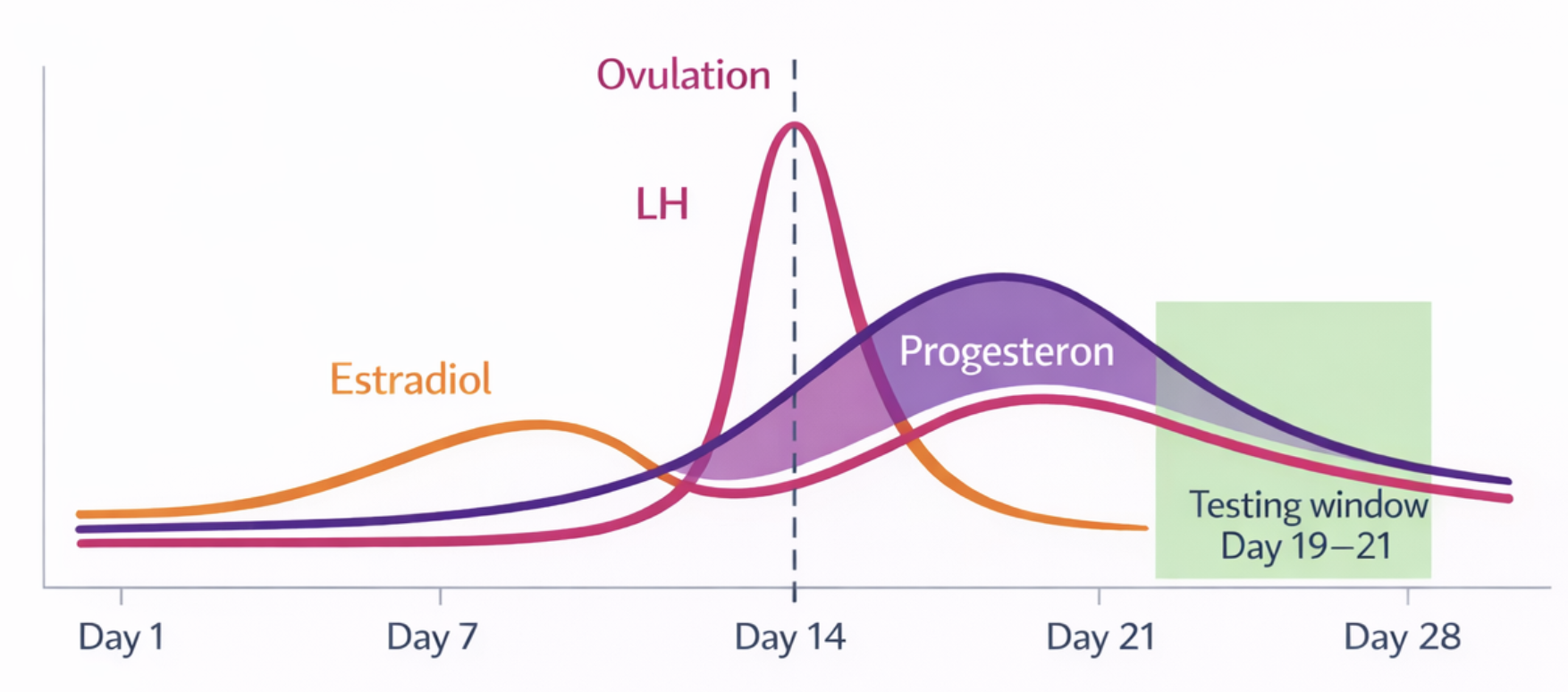
If the sample is taken too early or too late in the cycle, the interpretation can be affected, which makes the right timing particularly important.
In combination with our ovulation calculator, it becomes easier to choose the right day for sampling.
To ensure the most reliable results possible, it is recommended that the sample is taken in the morning. Avoid intense physical exercise and stress 1–2 days before sampling, as this can affect hormone values.
In addition to the above, you should also consider the following:
- Know your cycle: Keep track of the first day of your last period and approximate cycle length, as this is important for interpretation.
- Diet and fluid intake: Maintain a normal diet and fluid intake in the days before sampling.
- Abstain from nicotine and alcohol: These can affect certain hormonal markers and should be avoided before sampling.
The ovulation kit provides a clear hormonal basis and can be used as a complement when contacting a gynecologist or other healthcare provider. The test provides increased understanding of your menstrual cycle and should be seen as a tool for making more informed decisions about fertility and pregnancy planning.