






Quick version
Spinal stenosis in the lumbar spine is a common age-related condition in which the space for nerve structures decreases, centrally or laterally. Symptoms vary depending on the type of stenosis, but impaired walking ability and leg symptoms are common. MRI of the lumbar spine is the first choice for diagnosis and forms the basis for correct assessment and further planning.
The lumbar spine consists of five vertebrae that protect nerve structures that transmit signals to the legs. In spinal stenosis, the space in the spinal canal (central) or in the lateral nerve passages (recess/foramen) decreases, which can lead to pressure on nerve roots and cause pain as well as sensory and motor symptoms. The narrowing usually develops slowly and is in most cases linked to age-related degenerative changes.
Who is affected by spinal stenosis?
Spinal stenosis in the lumbar spine primarily affects people over 60 years of age and the incidence increases with age. Many people may have radiological signs of stenosis without clear symptoms, while others develop pronounced functional problems.
Common symptoms of lumbar stenosis are as follows:
- Pain, feeling of fatigue or numbness in one or both legs
- Reduced walking distance (need to stop and rest)
- Worsening when walking and standing, relief when sitting or in a forward bending position
- Feeling of weakness or poorer control in the legs
The classic symptom picture of central stenosis is called neurogenic claudication (pseudoclaudicatio).
Primary causes of spinal stenosis in the lumbar spine
The dominant cause of spinal stenosis is primarily degenerative changes in the spine that often interact:
- Spondylosis and facet joint hypertrophy.
- Hypertrophy of the ligamentum flavum.
- Disc degeneration with reduced disc height and disc bulge.
- Narrowing of the neuroforamina.
- Degenerative spondylolisthesis (vertebral slippage).
Some people also have a congenitally narrow spinal canal, which means that even moderate age-related changes can cause symptoms earlier.
Secondary causes
More unusual causes may be:
- Previous back surgery.
- Fractures or traumatic changes.
- Tumors or infections.
- Inflammatory joint diseases.
Different types of stenosis - What is the difference between central and lateral
In central stenosis, the narrowing is localized in the spinal canal itself. This often causes bilateral symptoms from the legs (sometimes with lateral dominance). Typically, the symptoms:
- Worsen when walking and standing.
- Relieved when sitting or bending forward.
- Improved during activities involving flexion, such as cycling or walking uphill.
Back extension (straightening the back) often provokes the discomfort, while flexion tends to provide relief.
Lateral stenosis
In lateral stenosis, the nerve root is affected in the recess or in the nerve exit (foramen). The symptom picture is more similar to sciatica or root involvement (rhizopathy):
- Often unilateral leg pain.
- Pain that can occur both during activity and at rest.
- Possible reduced sensation, muscle weakness and positive Lasègue test.
In practice, a mixed picture of central and lateral stenosis is common.
Clinical assessment
Suspicion of lumbar stenosis is mainly based on the history. Clinical examination often shows few or no clear neurological deficits. Neurological findings must be peripheral to be explained by lumbar spinal stenosis.
Signs of central nervous system involvement, such as positive Babinski, gait ataxia or fasciculations, suggest a different etiology and should prompt investigation of, for example, the cervical/thoracic spine or other neurological cause.
Imaging – first choice MRI, second choice CT
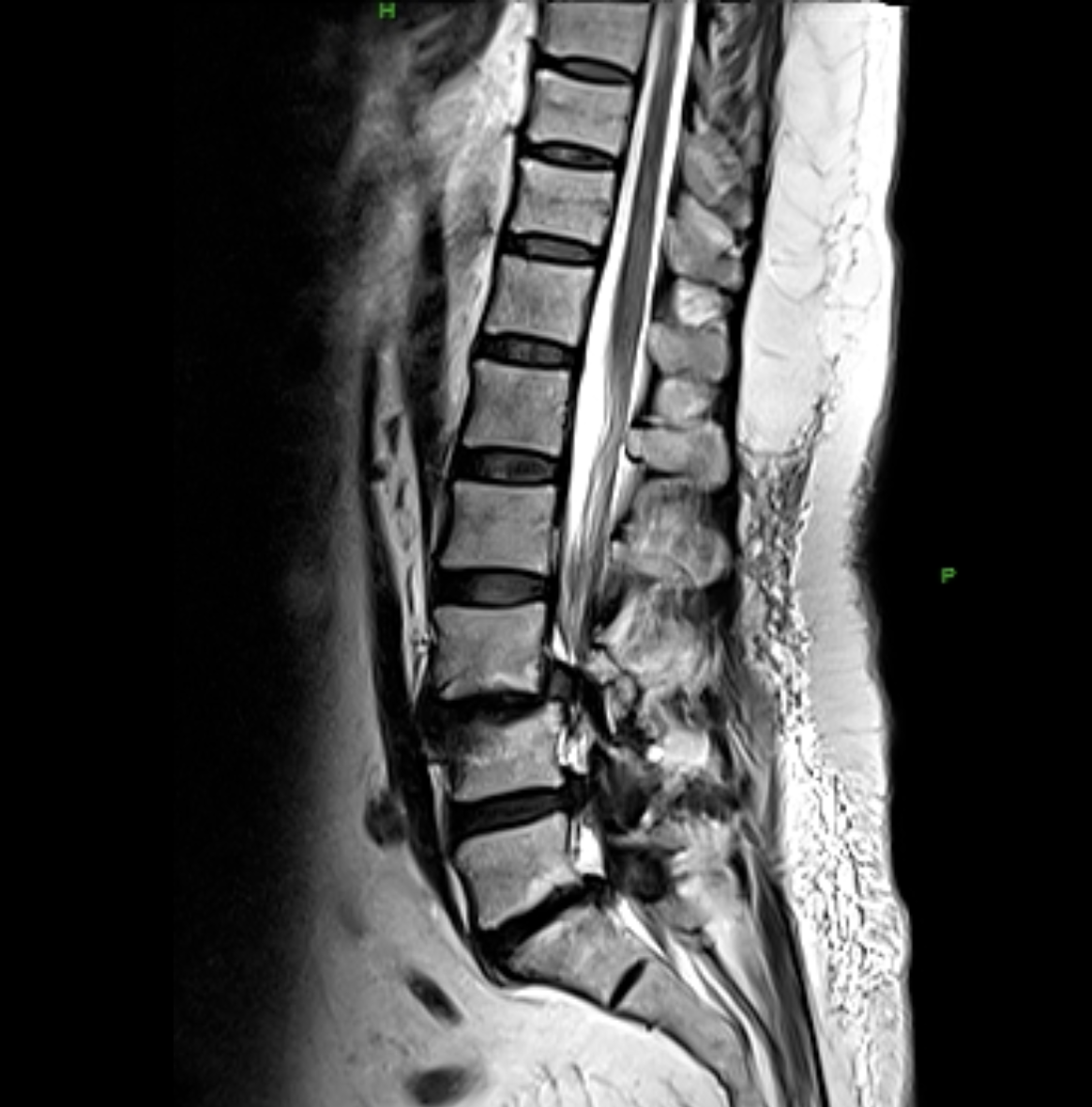
MRI of the lumbar spine is the first choice when spinal stenosis is suspected in the lumbar spine. MRI provides detailed information about the space of the spinal canal, the conditions of the nerve roots, as well as the discs, ligaments and facet joints. This means that MRI is often sufficient both to confirm the diagnosis and to provide evidence for a possible specialist assessment. If spinal stenosis or other back-related symptoms are suspected, we offer MRI examination of the lumbar spine, which you can read more about.