








Quick version
Cold sores are most often caused by herpes simplex virus type 1 (HSV-1) and are very common – a large part of the population carries the virus, often without knowing it. Once infected, the virus remains in the body in a dormant form and can cause recurrent outbreaks, for example during stress, infection or a weakened immune system. However, many people experience no or very mild symptoms throughout their lives.
A blood test can be used to determine whether the immune system has formed antibodies against HSV-1 or HSV-2, which can provide a greater understanding of previous or ongoing herpes infection and help put symptoms in context.
For those of you who want to know if you carry the herpes simplex virus, we offer the opportunity to order a blood test for herpes antibodies.
Despite how common it is, there is often uncertainty about what herpes actually is, how it is transmitted and whether you can get tested. Here we go over what you need to know – and how you can find out if you have herpes.
What is herpes?
Herpes is a chronic viral infection caused by the herpes simplex virus. There are two main types of herpes:
- HSV-1 – most often causes cold sores (oral herpes)
- HSV-2 – most often causes genital herpes
However, both types can occur both around the mouth and in the genitals. Once infected, the virus remains in the body in a dormant form and can be reactivated in cases such as stress, infection, hormonal changes or a weakened immune system.
How common is herpes?
Herpes simplex virus is very common in Sweden. It is estimated that between 60 and 80 percent of the adult population carries HSV-1, the type that most often causes cold sores. Many are infected without knowing it, as the infection often causes mild symptoms or no symptoms at all.
The infection usually occurs early in life. Many people get herpes in childhood through close contact, for example through kissing or sharing cutlery with someone who carries the virus. It is therefore not a virus that is inherited genetically, but a virus that is contracted through contact.
In rare cases, a child can be infected by their mother during childbirth, but this is unusual and differs from the usual route of infection. Herpes is not transmitted through the genetic material and is not congenital in the same way as genetic diseases.
Because herpes is so widespread, it is entirely possible to carry the virus throughout life without ever developing obvious cold sores. For others, the virus can be activated periodically, for example during stress, infection or a weakened immune system. HSV-1 is much more common than HSV-2, and many people who carry the virus never develop any obvious outbreaks. Others experience recurring cold sores with varying frequency.
How is herpes transmitted?
Herpes is transmitted through direct skin or mucous membrane contact with the virus. The most common routes of transmission are:
- kissing or close contact with someone who has cold sores.
- oral sex.
- contact with saliva or mucous membranes.
The risk of infection is greatest when blisters or sores are visible, but the virus can also be transmitted when there are no symptoms, so-called asymptomatic viral shedding. Most people are infected through close contact with someone who already carries the virus. Because herpes is so common, infection often occurs without people knowing about it and it is rarely possible to determine exactly when or from whom you were infected.
Getting herpes is not a sign that something is “wrong” – it is a very common viral infection that most people live with without any major problems.
What does herpes look like?
Cold sores caused by herpes often develop in several distinct stages. An outbreak usually begins with a local sensation of tingling, itching or burning in the skin around the mouth, often before any visible changes occur.
The following changes can then be seen:
- small, tight fluid-filled blisters on reddened skin.
- blisters that burst and turn into open, superficial sores.
- formation of a crust that gradually heals.
The course usually takes between 7–14 days, but can vary between individuals and between different outbreaks. The image above shows a typical example of what a cold sore may look like during the different phases of the outbreak.
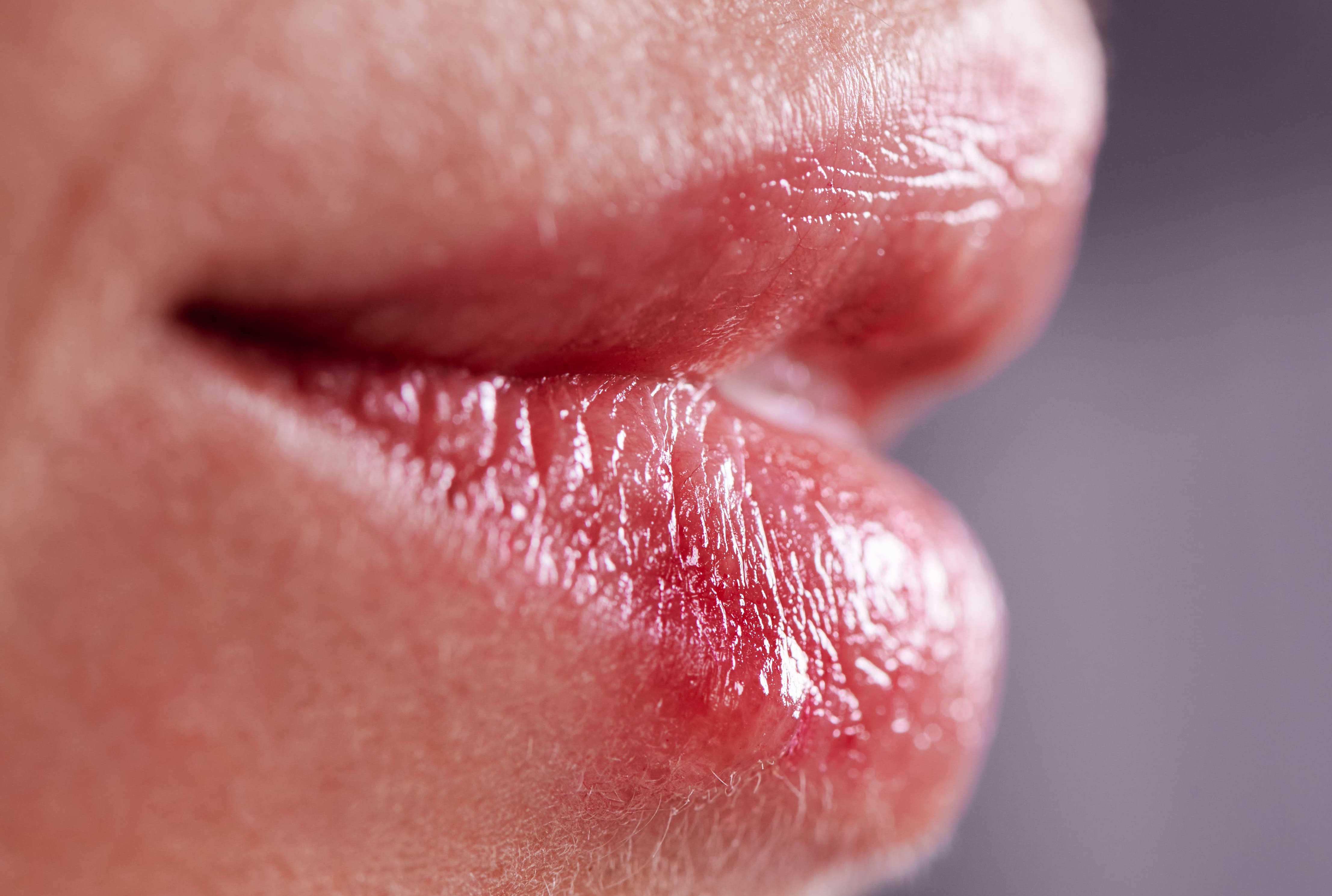
It is important to know that herpes does not always cause classic blisters. Some people only get redness, small cracks or a burning sensation without obvious blisters, which can make it difficult to determine the cause based on appearance alone.
Can you test for herpes?
Yes. It is possible to test whether you are carrying the herpes simplex virus through a venous blood test that analyzes antibodies to both HSV-1 and HSV-2.
An antibody test can show:
- if you have previously been in contact with HSV-1, which most often causes cold sores.
- if you have previously been in contact with HSV-2, which most often causes genital herpes.
The blood test shows whether the immune system has formed antibodies against the herpes simplex virus and can thus provide information about a previous or ongoing herpes infection. However, the test cannot determine exactly when the infection occurred or whether a specific ongoing sore is caused by herpes. Here you can read more about herpes blood test and how the test is taken.
Treatment and self-care
Unfortunately, herpes cannot be cured, but the symptoms can be alleviated. Antiviral drugs, such as acyclovir or valaciclovir, can shorten outbreaks and reduce symptoms if they are started early. For most people, self-care is sufficient, while others with frequent or troublesome outbreaks may benefit from drug treatment in consultation with their healthcare provider.