







Quick version
MRI whole body is an established and radiation-free magnetic resonance imaging examination that is used for preventive purposes to provide a broad medical overview of the body's internal organs and structures. The examination has become increasingly available in private care and is performed by many people who want to detect possible changes at an early stage, even without symptoms.
- MRI whole body is a popular preventive examination in private care.
- The examination covers the brain, neck, chest, abdomen, pelvis, spine and hips.
- Arms and legs are not included, despite the name whole body.
- The selection of areas is based on medical relevance and early detection of disease.
- The examination is always performed in consultation with a licensed physician.
- After the examination, medical follow-up and further referral are carried out if necessary.
More and more people are choosing to have a full-body MRI scan as part of a more proactive approach to their health. It is not primarily about suspecting illness, but about wanting to understand their body better, get a broad medical overview and detect any changes at an early stage – before symptoms occur. For many, the examination means increased security, clearer knowledge and better conditions to make informed decisions about their health.
An established examination but a name that can be perceived as misleading
The concept of full-body MRI can be perceived as the entire body being literally examined from head to toe. In practice, however, it is important to know that full-body in this context is an accepted industry term, rather than an exact anatomical description. In Sweden, whole-body MRI refers to a standardized magnetic resonance imaging (MRI) examination that usually includes the following areas:
- Brain
- Neck
- Cervical spine
- Thoracic spine
- Lumbar spine
- Thoracic (chest)
- Abdomen
- Pelvis
- Hip
However, neither arms, hands, thighs, knees, lower legs or feet are included in this type of examination. Despite this, the term whole-body is consistently used in private care, as the examination covers the organ and structural systems where the majority of serious diseases and medically relevant findings usually occur.
Why does the examination focus on these areas in particular
The areas included in a whole-body MRI are selected based on medical relevance and clinical experience. The focus is on those parts of the body where serious diseases most often occur, where changes can be difficult to detect early, and where imaging diagnostics with magnetic resonance imaging provide the greatest diagnostic value.
Magnetic camera examination of the brain is included as a central part of the whole-body MRI to be able to screen the brain and the central nervous system. This is particularly relevant because conditions such as tumors, vascular changes, inflammatory diseases and neurodegenerative changes can often develop without clear early symptoms. Furthermore, the the neck is also analyzed in the same examination to enable assessment of, among other things, the thyroid gland, lymph nodes and other important structures. Both benign and more serious changes can occur in the neck region, which can otherwise be difficult to detect at an early stage without diagnostic imaging.
The chest, abdomen and pelvis contain the body's vital internal organs, such as the lungs, liver, kidneys, pancreas, intestines and genitals. Many diseases in these organs do not cause any or very diffuse symptoms in the early stages and can therefore be difficult to detect without diagnostic imaging. MRI technology enables a detailed assessment of tissues, organ structure and any abnormal findings.
The spine, pelvis and hips are included because these structures are not only central to the body's stability and mobility, but can also be affected by inflammatory conditions, tumors or degenerative changes that do not always cause clear symptoms initially. However, if you have clear symptoms from a specific body part, such as the knee, shoulder or foot, a dedicated MRI examination aimed at that particular area is recommended instead. Full-body MRI is therefore not intended to replace targeted diagnostics but rather to function as a broad, preventive complement.
Always in consultation with a licensed physician
A full-body MRI examination with us is always carried out in close consultation with a licensed physician. The examination is not a stand-alone or automated service, but a medically anchored process where every step is carried out with patient safety in focus. Before a referral is sent, a medical review is carried out in consultation with a doctor, where health declaration, any symptoms and individual conditions are assessed. This ensures that the examination is medically relevant and correctly designed for you.
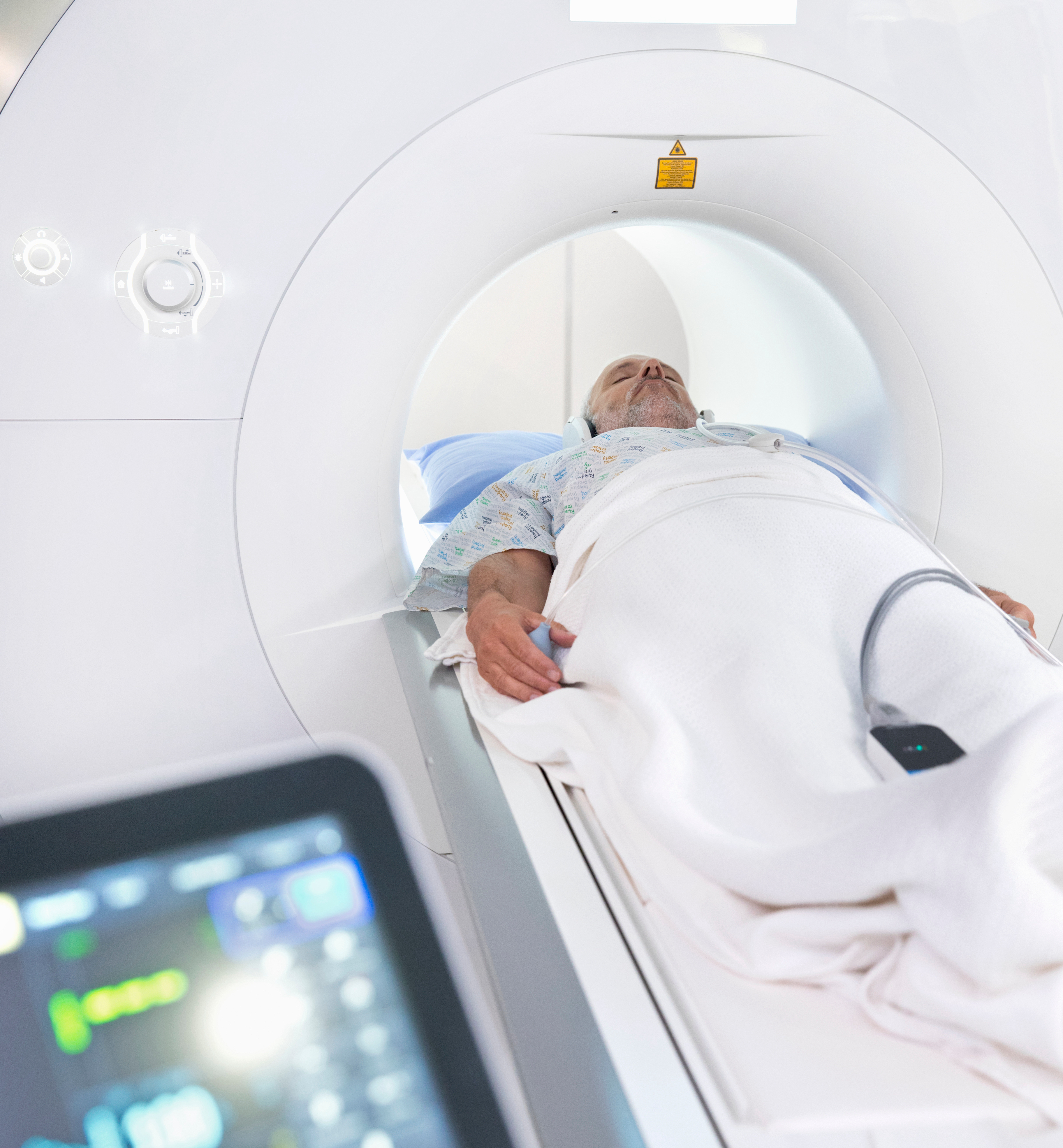
After the examination is completed, the images are reviewed by a radiologist and are then followed up with a personal medical opinion by a doctor at our office. If necessary, further dialogue with the doctor takes place in order to:
- explain and put the findings in a medical context.
- answer any questions and anticipate the radiologist's final answer.
- determine whether follow-up or additional examination is needed.
- refer further within the healthcare system in the event of clinically relevant or alarming findings.
When performing a full-body screening, you have access to a licensed physician both before and after the examination, which creates a safe and coherent chain of care, from referral to follow-up and also for further measures if necessary.
The same established examination with high medical standards
We offer the established full-body examination carried out by Sweden's leading private healthcare provider in radiology. The examination is performed according to well-proven protocols and with modern MRI technology, where image quality, medical precision and clear follow-up are the focus. For those of you considering a preventive full-body scan, there is the opportunity to order and read more about MR helkropp directly here at the test clinic.